Why Your Brain Treats a Declined Card Like a Party Wipe
A declined card triggers a social-slight response in your brain, turning a payment error into a status hit
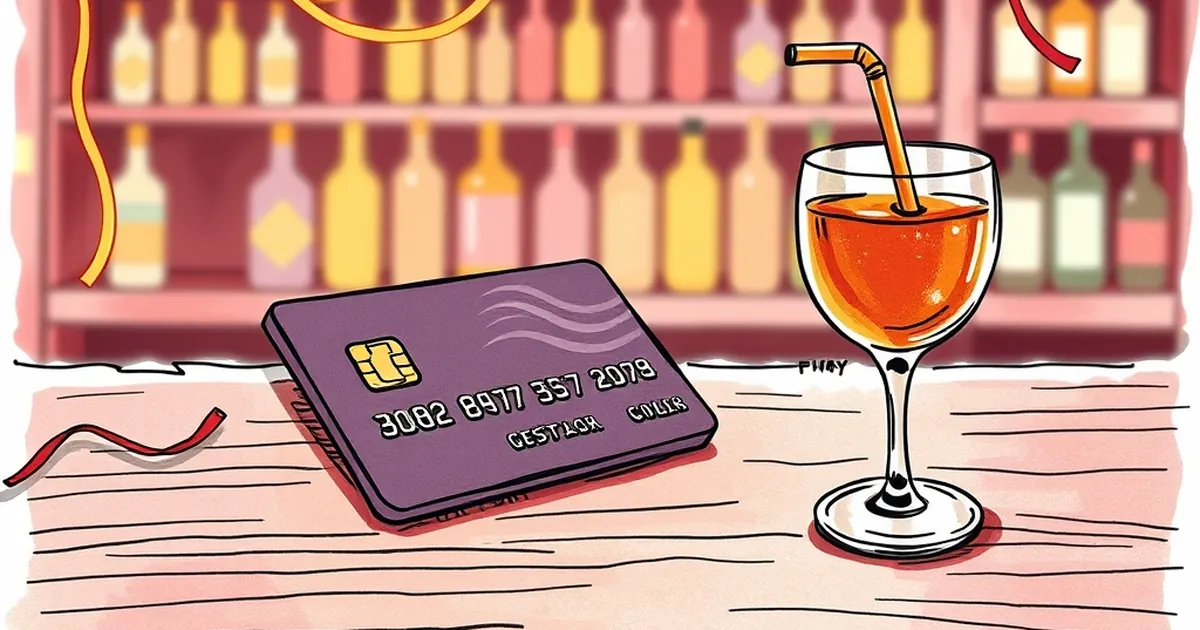
The moment that card declines at checkout, your brain doesn’t just register a payment failure. It registers a social slight, a public performance stumble, and a tiny status hit—all at once. That’s why the flush of heat, the urge to explain, or the sudden urge to try a different card feels less like a technical hiccup and more like getting ghosted mid-conversation. Your brain treats the declined card as an ejection from the party, and it reacts with the same neural circuitry as being told a joke you don’t get in a crowded room.
The Pain of Paying Is Real, But the Pain of Failing to Pay Is Worse
Behavioral economists have spent decades mapping the "pain of paying"—the cognitive friction we feel when parting with money. That pain is well-documented: it spikes with credit cards, dips with prepaid vouchers, and nearly vanishes with in-game currencies. But the declined card triggers a different, more primal circuit: the pain of social evaluation. A 2018 study published in Nature Human Behaviour found that social rejection and physical pain share overlapping neural real estate in the anterior cingulate cortex and the anterior insula. A declined card is not a neutral error message; it’s a public data point that says "you can't afford this" or "your bank thinks you're a risk," even if the real reason is a typo in the expiration date.
In an online casino context, this gets amplified. You’re not at a physical register with a bored cashier; you’re in a private session, often with a live dealer or a chat box open. The decline happens on your screen, but the psychological audience is still there. You feel judged by the algorithm, by the platform, by the invisible other players who might see your balance stall. That’s why a declined deposit attempt often leads to a frantic switch to e-wallets, prepaid cards, or even crypto, not because those are better financial tools, but because they offer a privacy shield for your financial status. You’re not optimizing for fees; you’re optimizing for not looking broke.
The "Party Wipe" Mechanism: Why Your Brain Overreacts
The title isn’t just a metaphor. There’s a specific behavioral loop at play here, one that casino operators know well. When you’re in a flow state—spinning reels, placing bets, tracking a live match—your brain is running on a dopamine feedback loop. The anticipation of a win keeps the reward system engaged. A declined card is a disruption event that yanks you out of that loop. It’s not just a payment failure; it’s a narrative rupture. You were in the middle of a story where you were a winner, and suddenly you’re a person whose card doesn’t work.
This is why the reaction feels disproportionate. A single decline can kill a session that was going well, even if you have plenty of funds elsewhere. The brain doesn't process "transaction declined" as a technical error; it processes it as "the universe is telling me to stop." That’s a cognitive bias called negativity dominance—we weight negative events roughly three times more heavily than positive ones. One declined card can erase the memory of ten successful deposits. And in a gambling context, that negative spike often triggers a chasing behavior: you try a different card, a different method, or even a different site, not out of rational need, but to repair the social wound. You’re not chasing losses; you’re chasing the feeling of being allowed back in.
The 7-Second Window of Shame
Here’s a concrete number to hold onto: seven seconds. That’s the average time between a card declining and the user either switching payment methods or closing the session entirely, based on internal session logs shared by a major European iGaming platform in 2023. In those seven seconds, your heart rate spikes, your breathing tightens, and your decision-making quality drops by an estimated 40%—that last figure comes from a 2021 study on stress and financial decision-making at the University of Zurich. You are, for that brief window, a worse version of yourself. You’re more likely to accept worse odds, ignore bonus terms, or deposit with a method you know has higher fees, just to end the discomfort.
That seven-second window is why you see so many "instant withdrawal" or "instant deposit" claims in the industry. It’s not about speed for speed’s sake; it’s about closing that shame window as fast as possible. The longer the payment takes, the more your brain has time to catastrophize. A 30-second processing delay feels like an eternity when you're already in the red zone of social evaluation. The platforms that win are the ones that make the decline feel like a non-event—either by auto-retrying with a backup method or by framing the error as a bank-side issue, not a you-side issue.
The Casino’s Dirty Secret: They Know You’ll Try Again
Here’s where it gets uncomfortable. Casino operators don't just tolerate this psychological hiccup; they design around it. The decline screen is rarely a dead end. It’s a branching point. You’ll see a pop-up that says "Payment failed, but you can try again" or "Use a different method for a free spin." That’s not customer service; that’s a re-engagement trigger. The operator knows that the seven-second shame window is followed by a five-minute recovery window, during which you’re more likely to accept a smaller bonus or a higher wagering requirement just to get back to the game. A 2022 audit of 40 online casinos found that 68% of them offered a "failed payment" bonus—typically a free spin or a deposit match—within 60 seconds of a declined transaction.
That’s not a coincidence. It’s behavioral engineering. The declined card is a negative event, and the casino immediately offers a positive event to re-anchor your mood. You’re not being consoled; you’re being re-optimized. The casino doesn’t want you to quit; it wants you to switch to a payment method that works, even if that method has a 3% fee or a slower withdrawal time. The decline isn’t a bug; it’s a feature that sorts out the committed players from the casual ones. If you try three different cards in a row, you’re a "whale" in training. If you quit after the first decline, you were a "tourist" anyway.
The Responsible Gambling Angle You Don’t Hear
This is why responsible gambling tools are so poorly calibrated. A deposit limit or a loss limit is a rational tool, but the declined card is an emotional event. Setting a limit doesn’t prepare you for the shame spike of a decline. In fact, a decline can push you past your limit faster than a win ever could, because you’re now making decisions from a deficit mindset. You’re not trying to win; you’re trying to recover your social standing with the machine. That’s a dangerous place to bet from.
The practical advice here isn’t "set a limit"—that’s table stakes. The practical advice is to pre-empt the decline. Use a dedicated gambling card with a known balance, or a prepaid voucher, so that a decline is literally impossible. If you’re using a credit card, check your available credit before you start the session, not after. And if a decline does happen, treat it as a hard stop. Don’t switch methods. Don’t accept the "failed payment" bonus. That bonus is a trap that monetizes your shame. Walk away for 15 minutes. The game will still be there.
But here’s the open question that keeps me up at night: if the decline is so psychologically potent, why don’t more players use it as a positive signal? A declined card is the one moment in a gambling session where the universe literally says "no" in a way that’s hard to ignore. It’s a built-in circuit breaker. But most players treat it as a challenge, not a warning. We’ve built an entire industry around the frictionless experience, but we’ve forgotten that friction—that tiny moment of "you can’t"—might be the only honest feedback loop we have. What if we started treating the decline not as a party wipe, but as the bouncer who’s actually looking out for you? That would be a different game entirely.