Declined cards sting like a 2-AM party wipe
A declined card triggers a sting of public shame—here’s the psychology behind that painful payment moment
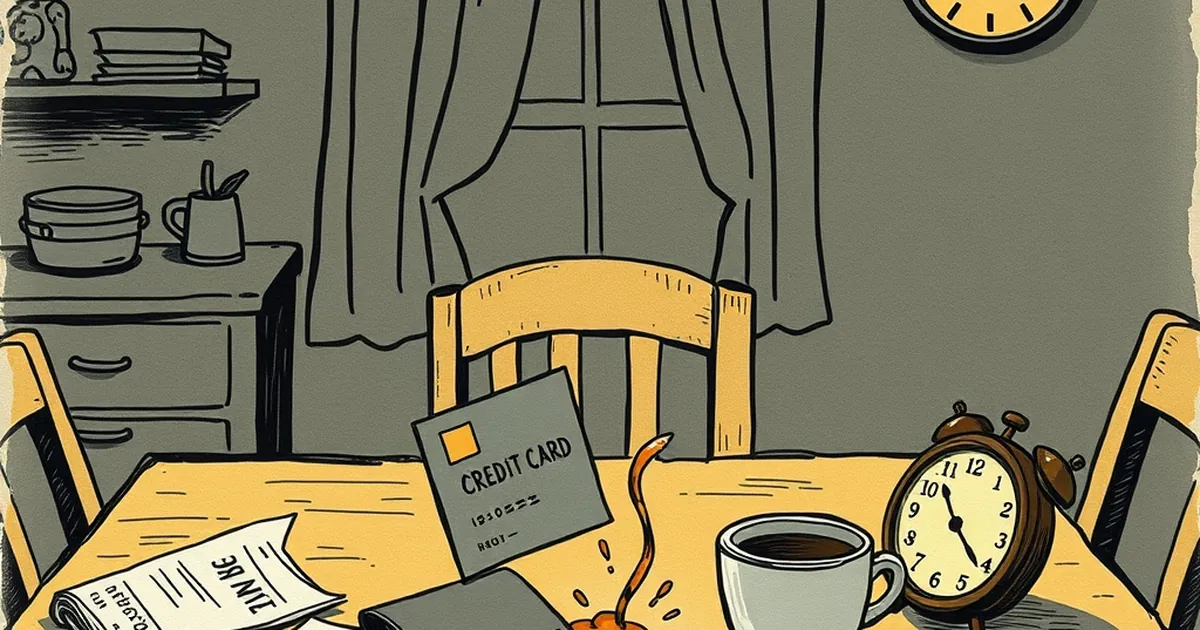
It’s a uniquely modern form of public embarrassment, isn’t it? You’re at the checkout, the terminal beeps, and the screen flashes that dreaded red light. The card is declined. In that split second, your brain doesn’t just process a payment failure; it processes a full-blown social and psychological event. We often talk about the friction of payments in terms of UX design or conversion rates, but the real story is happening in our limbic system. Why does a declined card feel like a personal rejection, and what does that tell us about the architecture of trust, risk, and reward that underpins the entire global payments ecosystem?
The Pain of Friction: Why Rejection Physically Hurts
Let’s start with the sting. Researchers at UCLA, led by Naomi Eisenberger, demonstrated years ago that social rejection activates the same neural regions as physical pain—specifically the dorsal anterior cingulate cortex and the anterior insula. While their study used brain-scanning games involving virtual ball-throwing, the application to payments is glaringly obvious. When a transaction is declined, it isn't just a technical error; it’s a micro-rejection by the system. You are, in effect, being told "no" by an invisible algorithmic authority.
This is why the "2-AM party wipe" metaphor is so apt. At that hour, you’re likely tired, your cognitive resources are depleted, and your ego is more vulnerable. A decline at 2 PM might be annoying; a decline at 2 AM feels catastrophic. It’s the intersection of loss aversion and social scrutiny. Daniel Kahneman and Amos Tversky taught us that losses loom larger than gains. But here, the "loss" isn't just the goods you can't buy; it's the loss of face, the loss of momentum, and the sudden, unwelcome shift from "consumer" to "suspect." The payment terminal becomes a judge, and you’ve just been found lacking.
The Reward Loop: Variable Reinforcement and the "Tap" High
But to understand the sting, we have to understand the pleasure of the tap. The entire modern payments industry is built on a behavioral principle known as variable-ratio reinforcement. This is the same schedule of reward that keeps people pulling the lever on a slot machine—but let’s keep our focus on the legitimate, non-gambling aspects of this psychology. When you tap your card or phone to pay, you are engaging in a rapid micro-transaction that usually yields a positive outcome: the green checkmark, the satisfying beep, the receipt printing.
The key is the variable nature of it. If every transaction worked flawlessly, we’d stop noticing. It would become as invisible as breathing. But because there is a tiny, unpredictable chance of failure—a frozen screen, a chip reader hiccup, a bank’s fraud algorithm misfiring—the successful transactions release a tiny hit of dopamine. This is why contactless payments feel so satisfying. The speed creates a low-stakes, high-frequency loop. We are not gamblers, but we are creatures of habit, and the payments app has gamified the simple act of buying coffee.
This creates a psychological contract. We agree to participate in this system because the reward (speed, convenience) usually outweighs the risk (decline, fraud flag). When the decline happens, it’s not just a system error; it’s a breach of that contract. The reward loop is broken, and the frustration is amplified precisely because we had been conditioned to expect the green checkmark.
The Fraud Paradox: When "Security" Feels Like Betrayal
Here is where the intersection gets particularly messy: risk management. Banks and networks like Visa and Mastercard employ some of the most sophisticated predictive models on the planet. These models are designed to detect anomalies—a purchase in a foreign country, a sudden high-ticket item, a pattern break. The intention is to protect you from fraud. But from a behavioral standpoint, these protective measures often feel like arbitrary punishment.
Consider the "travel alert" conundrum. You fly to a new country, you pull out your card to pay for a taxi, and it’s declined. The bank is protecting you from a hypothetical thief, but the immediate, tangible effect is that you are stranded and embarrassed. This is a failure of trust calibration. The system is exhibiting extreme loss aversion on your behalf, but it fails to account for the emotional cost of the false positive. It’s a classic decision-making under uncertainty problem: the bank weighs the cost of a fraudulent transaction (let’s say $500) against the cost of a declined legitimate transaction (which they see as $0). But the psychological cost to the customer is not zero—it’s a loss of trust that can lead to churn.
We saw this play out in a fascinating study by the Federal Reserve regarding Check 21 and mobile deposits, but the principle applies here: when consumers perceive the "gatekeeper" as overly aggressive, they don't feel safer; they feel controlled. The variable reinforcement loop turns sour. You start to hesitate before tapping, which kills the very frictionless experience the industry is trying to build.
Competitive Play: The Game of "Will It Go Through?"
Let’s talk about the competitive angle—not in a sports sense, but in the internal game we play with ourselves. For many, the act of paying is a private challenge. You know your balance is tight, or you know you’re cutting it close to your credit limit. The tap becomes a moment of truth. This is where the psychology of risk-taking meets the payment rail.
We all have that friend who swipes their card with a theatrical "here we go" look. They are engaging in a micro-risk assessment. The potential reward is the acquisition of goods; the potential loss is the humiliation of a decline. This is a competitive play against your own financial history. It’s you versus your past spending habits. When you win—when the payment goes through despite your fears—you get a rush that is disproportionate to the act of buying groceries.
This is also why "card sorting" is a real behavior. We all have a mental hierarchy of cards. We know which one has the highest limit, which one has the best rewards, and which one is the "risky" one we use only when we’re feeling lucky. The choice of which card to tap is a decision under uncertainty. Are you willing to risk the embarrassment of a decline on the Amex for the points, or do you play it safe with the debit card? This micro-strategy is a daily exercise in behavioral economics, played out in queues at convenience stores worldwide.
The Forward Path: Designing for Graceful Degradation
So, what do we do with this knowledge? The future of payments isn't just about faster rails or better encryption; it's about graceful degradation. We cannot eliminate risk, but we can redesign the moment of failure to be less psychologically brutal.
The most practical shift is moving from a binary "Approved/Declined" to a contextual "Pause." Instead of a flat rejection, imagine a terminal that prompts: "Hold on, let me double-check that with your bank." This simple linguistic shift reduces the sting of rejection because it reframes the failure as a system issue, not a personal one. It buys time for the algorithm to re-evaluate without triggering your loss aversion.
Furthermore, we need to push for "soft declines" on the issuer side. If a bank suspects fraud, why not approve the transaction but immediately trigger an in-app notification asking for verification after the fact? The risk of fraud increases slightly, but the customer experience improves exponentially. We are already seeing this with AI-driven scoring that looks at behavioral biometrics—how you hold your phone, your typing speed—rather than just transaction velocity. This allows the system to build a more holistic trust profile, reducing the false positives that cause the 2-AM wipe.
The ultimate goal is to make the payment system feel less like a gatekeeper and more like a partner. We need to acknowledge that the emotional weight of a decline is a real cost, and we must design for it. The next time your card is declined, don't just feel the sting. Recognize it for what it is: a clash between cold probabilistic logic and the very human need for smooth social standing. The industry is finally waking up to the fact that the former must learn to accommodate the latter, or risk losing us entirely.