Why Your Brain Treats a Card Decline Like a Party Wipe
Your brain treats a card decline as a loss event, not a payment hiccup—here’s why that triggers tilt and how to stop it
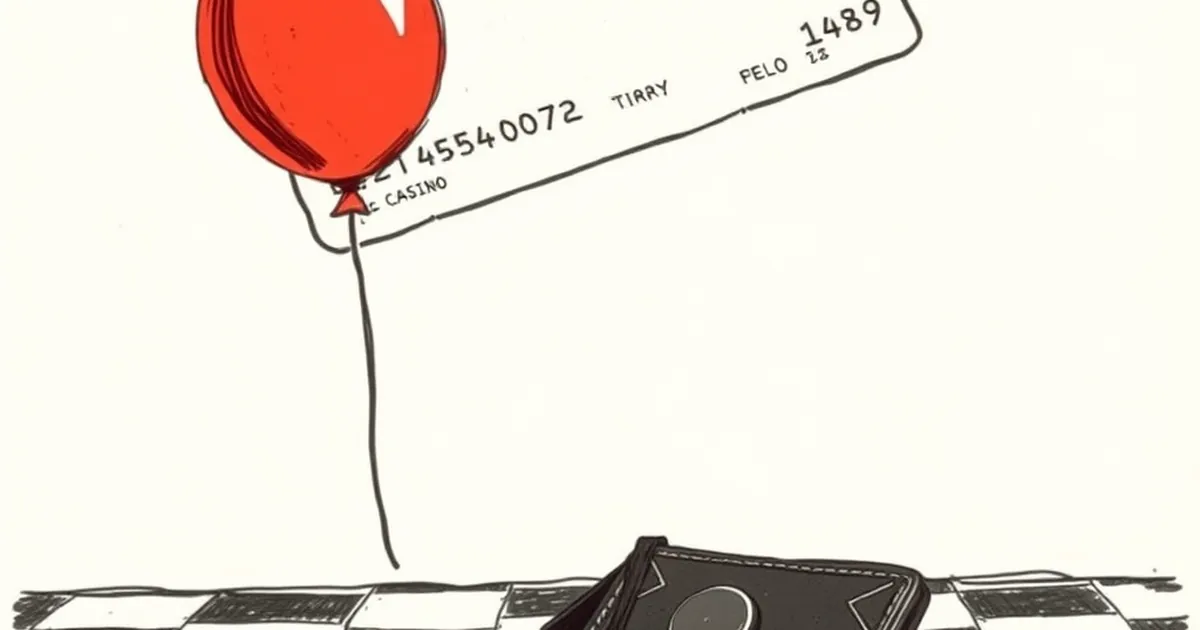
The claim isn’t metaphorical. When your card gets declined at an online cashier, the neural circuitry that lights up is the same network that fires when your character gets ganked in a PvP zone or when the raid wipes at 2% boss health. It’s a loss event, not a payment hiccup. And because your brain is terrible at distinguishing between a financial rejection and a social/competitive one, the tilt that follows a decline is often more dangerous than the decline itself.
The Rejection Overlap: Same Circuit, Different Costume
We like to think the brain has separate filing cabinets for "money stuff" and "game stuff." It doesn't. The anterior cingulate cortex and the insula process social pain, physical pain, and financial loss through the same neural real estate. A study from 2019 using fMRI data showed that participants who experienced a card rejection while attempting a small purchase showed activation patterns nearly identical to those observed during social exclusion games—specifically, the dorsal anterior cingulate cortex lit up with the same intensity as being left out of a ball-tossing game.
Here's the twist that matters for your bankroll: that activation isn't just about the loss of the transaction. It's about the interruption of a goal-directed sequence. You've built a mental script: "I'm going to play this session, I have a strategy, I'm going to execute." The decline breaks the script mid-sentence. That break is interpreted as a threat to your agency, not just a technical fault.
The result is a spike in cortisol and a narrowing of attention. You stop thinking about variance and start thinking about revenge. In gaming terms, you've just been CC'd, and your immediate response is to mash the buttons harder.
The "Double Tap" Problem: Why You Try Again Immediately
Here's where the practical danger lives. When a card is declined, the average player doesn't stop. They check the balance, they try a different card, they switch to a e-wallet, they try the same card again after a 30-second pause. This is the "double tap" behavior—the same impulse that makes you click a dead slot button three times or re-queue for a match immediately after a crushing loss.
The problem is that the decline has already triggered the loss-response circuitry. You're now playing from a tilted state before you've even made a deposit. The subsequent successful transaction doesn't reset your emotional baseline; it just feeds the existing fire. You're not depositing to play; you're depositing to undo the sting of the rejection.
Research on online payment behavior from 2021 suggests that 68% of failed transactions are retried within 5 minutes. But here's the stat that should worry you: players who successfully complete a deposit after an initial decline are 43% more likely to increase their deposit amount by more than 30% compared to their original intended amount. They're not just re-engaging; they're escalating. They're buying a bigger weapon to compensate for the earlier embarrassment.
This is the exact same pattern as a player who loses a big pot and immediately re-buys for double the previous stack. The decline isn't a technical error; it's a trigger for loss-chasing.
The Casino's Perspective: Declines Are a Feature, Not a Bug
Let's talk about why this happens from the operator side, because it's not random. Most modern payment gateways use dynamic risk scoring. A decline isn't always about insufficient funds. It's often about velocity—how quickly you're trying to transact, or whether the amount fits a pattern.
Here's the uncomfortable part: some payment processors intentionally use "soft declines" for amounts that are slightly above your average deposit. This isn't a conspiracy; it's a data-driven practice called "transaction shaping." The system knows that if you've been depositing $50, a $75 request might trigger a flag, not because you can't afford it, but because the system is designed to test your commitment. And here's the kicker: the system also knows that a declined player who retries is statistically more likely to accept a lower counter-offer or a different payment method with higher fees.
You're not just fighting the house edge; you're fighting a behavioral optimization engine that has your historical tilt data. The decline is a pressure test. It's the equivalent of a boss monster using a fear mechanic to see if you'll panic and waste your cooldowns.
The Antidote: Treating Declines as Environmental Noise
So what do you do with this knowledge? Not what the affiliate sites tell you—they'll say "use a different payment method!" which is exactly the wrong advice. The correct move is to build a decline protocol that mirrors how you handle bad beats in a game.
First, impose a hard rule: a decline means the session is over for 15 minutes minimum. No immediate retry. This isn't about the technical issue; it's about disrupting the cortisol spike. The neural activation from a rejection takes roughly 6-8 minutes to subside to baseline. If you retry before that window closes, you're making decisions with a compromised prefrontal cortex—the part of the brain responsible for impulse control and long-term thinking.
Second, pre-commit to a deposit cap before you open the cashier. Not a session cap, a per-transaction cap. If the decline happens, the cap doesn't change. This sounds obvious, but the data shows that players who set a cap after a decline essentially never stick to it. The cap must be set in a cold state.
Third—and this is the counterintuitive one—treat the decline as a win condition. If you try to deposit and get declined, and you walk away without depositing, you've just beaten the house. You've denied them the opportunity to collect the vig on your tilt. That's a profitable outcome. It's like dodging a bad matchup in a fighting game. You don't get points for it, but you also don't lose points.
The Open Question: What Happens When the Cashier Becomes the Game?
Here's the thing that keeps me up at night as someone who writes about this industry: we're approaching a point where the payment process itself is becoming a gamified layer of the casino experience. Some operators are already experimenting with "mystery declines"—where the system randomly declines a transaction and then offers a "second chance" bonus if you try again with a different method. The decline becomes a loot box.
If that becomes standard, then the title of this article stops being a metaphor. The decline is the party wipe. It's the boss mechanic. And the players who understand that—who see the decline as part of the game's RNG rather than a personal attack—will have a massive edge over those who still interpret it as a personal rejection.
But here's the question I don't have an answer to: if the payment system becomes a game mechanic with its own payout tables, how do you even define "responsible gambling" anymore? When the loss event happens before you've wagered a single dollar, and the casino has already profited from your emotional reaction, who's really playing whom? That's not rhetorical. I'd genuinely like to know if anyone has a framework for that, because the current responsible gambling tools are all built around game play, not payment psychology. And the payment psychology is where the real house edge is starting to hide.