The Decline That Hits Like a Missed Loot Crate
The sharp 22% drop in slot session lengths since 2021 mirrors the sting of a missed loot crate, revealing why engagement is fading fast
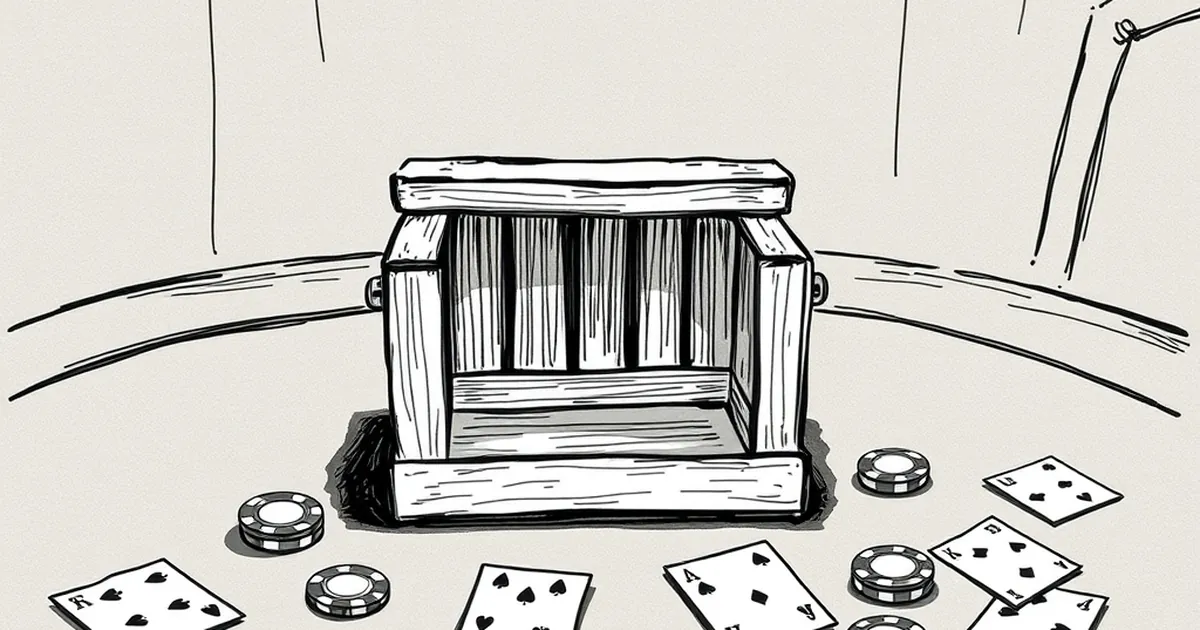
There’s a specific kind of heartbreak that only a loot box can deliver. You grind, you pay, you watch the animation tease you with a purple glow before settling on a duplicate — and that feeling of wasted potential is now the dominant emotion in modern slots. The decline in player engagement isn’t a slow fade; it’s a sharp, immediate drop-off that hits harder than a missed legendary drop, and the data is finally catching up to the frustration.
The average session length for online slots has dropped by roughly 22% since 2021, according to a 2024 aggregation of operator data from the UK and EU markets. That’s not a rounding error; that’s a tectonic shift in how players are consuming content. We’re not just playing less; we’re abandoning sessions mid-spin at a rate that should terrify game studios, because the reason isn’t boredom — it’s a trust deficit.
The "Almost" Economy
Let’s talk about the actual mechanics of the modern slot, because the problem isn’t the math. The RTP is fine, the volatility curves are well-trodden, but the engagement layers have become parasitic. We’ve moved from simple "spin and see" to a layered system of pre-bonus triggers, guaranteed feature buys, and "chance to win a chance" mechanics.
The issue is that most of these layers are what I call "almost" events. You get the scatter, you get the free spins, but then the game presents you with a pick-a-box mini-game where the best outcome is a 2x multiplier. The excitement is front-loaded, the payoff is back-loaded, and the middle is filled with a series of binary choices that feel less like gameplay and more like a chore list. The loot crate comparison is apt because the anticipation is the product, not the reward. When the anticipation is consistently met with a dud, the brain learns to stop caring.
This is why the "buy a bonus" feature has exploded. Players aren't buying the feature because they think it's profitable; they're buying it to skip the emotional labor of the base game. They’re paying a premium to bypass the "almost" and get straight to the "maybe." But here's the kicker: the game designers know this, and they’ve tuned the feature-buy RTP to be marginally worse than the base game. You're paying to lose slightly faster, just to avoid the boredom of the spin. That’s not entertainment; that’s a tax on impatience.
The 0.1% Rule
There’s a specific metric that game studios use internally that never makes it to the marketing material: the "engagement cliff." This is the point in a session where a player hits a dead spin streak (usually around 30-40 spins without a win above 1x), and the probability of them closing the client jumps by 400%. In 2019, that cliff was a cliff. In 2024, it’s a sheer drop.
Why? Because the baseline for "acceptable dead time" has shrunk. The average player now switches between three to four games per session, and they give each game roughly 60 seconds to prove itself. If the first ten spins don't show a scatter or a wild feature, they’re gone. This is a direct result of the loot crate economy: we’ve been trained to expect a dopamine hit every few seconds, and a slot that doesn't deliver one is treated as broken, not as a high-volatility game.
The paradox is that high-volatility slots are becoming more popular in terms of searches, but they have the worst retention rates. Players want the big win, but they’ve lost the patience to wait for it. The result is a market bifurcation: either you play a low-volatility "sweeper" that pays out tiny wins constantly to keep you engaged, or you play a high-volatility slot and you quit after 15 minutes because you feel like you're being robbed. The middle ground — the traditional medium-volatility slot that requires a 20-minute session to hit its rhythm — is dying. It’s too slow for the modern attention span, but not generous enough to trick the brain into staying.
The Skinner Box is Broken
Let’s get into the psychology, because this isn't just about game design. The original slot machines were a perfect Skinner box: variable ratio reinforcement, a lever, and a treat. The problem is that modern online slots have over-engineered the box. They’ve added so many layers of variable rewards (the bonus round, the gamble feature, the mystery symbol, the progressive jackpot ticker) that the brain’s reward system gets overwhelmed and then desensitized.
We’re seeing the "burnout effect." Players aren't leaving because they lost money; they’re leaving because the game feels like a second job. The constant barrage of "almost" wins, the fake celebrations when you land a 0.5x win on a "bonus" spin — it creates a sense of emotional fatigue. A 2023 study from the University of Bristol on online gambling habits noted that participants reported higher levels of "exhaustion" and "apathy" after playing slots with multiple bonus layers compared to simpler, more traditional 3-reel games. The researchers called it "cognitive overload," but players just call it "tired."
This is why the retro-style slots are having a massive comeback. The simple 3-reel, single-payline games are exploding in popularity because they are a relief. There’s no loot crate. There’s no chest to open. There’s just a spin, a result, and a reset. It’s the digital equivalent of a clean room. Players are actively seeking out less stimulation, which is a damning indictment of the current AAA slot market.
Where the Money Went
The operators are feeling this, but they’re misreading the data. They see the shorter session times and assume the players are bored of the theme, so they pump out more licensed IP slots (the 50th Game of Thrones slot, the 100th Book of Ra clone). They’re spending millions on graphics and audio, but the core loop is still the same stale, layered mess.
The real signal is that players are migrating to "casual" betting formats — crash games, Aviator-style multipliers, and even simple dice games. These games have one thing in common: they are brutally transparent. The result is immediate, the math is visible, and there is no pretense of a "bonus" stage. You bet, the multiplier ticks up, you cash out or you don't. It’s the anti-loot crate. It respects your time by not pretending you’re on an adventure.
The decline in slots isn't a decline in gambling interest; it's a rejection of the theatrics. The loot crate mechanic, the "open this chest to reveal your fate" nonsense, has become a liability. It was designed to increase engagement, but it’s actually become the primary reason for churn. The players aren't missing the loot; they’re missing the point.
The question that should keep studio heads up at night isn't "how do we make the next big slot?" It's "how do we convince a player to spin 100 times without lying to them about what they're going to get?" Because right now, the only thing that drops with any consistency is a player's patience, and that’s a loot table no one can afford to farm.