Why Your Brain Treats a Card Decline Like a Bad Loot Drop
Discover why a card decline triggers the same brain response as a bad loot drop, and how this shapes your spending habits
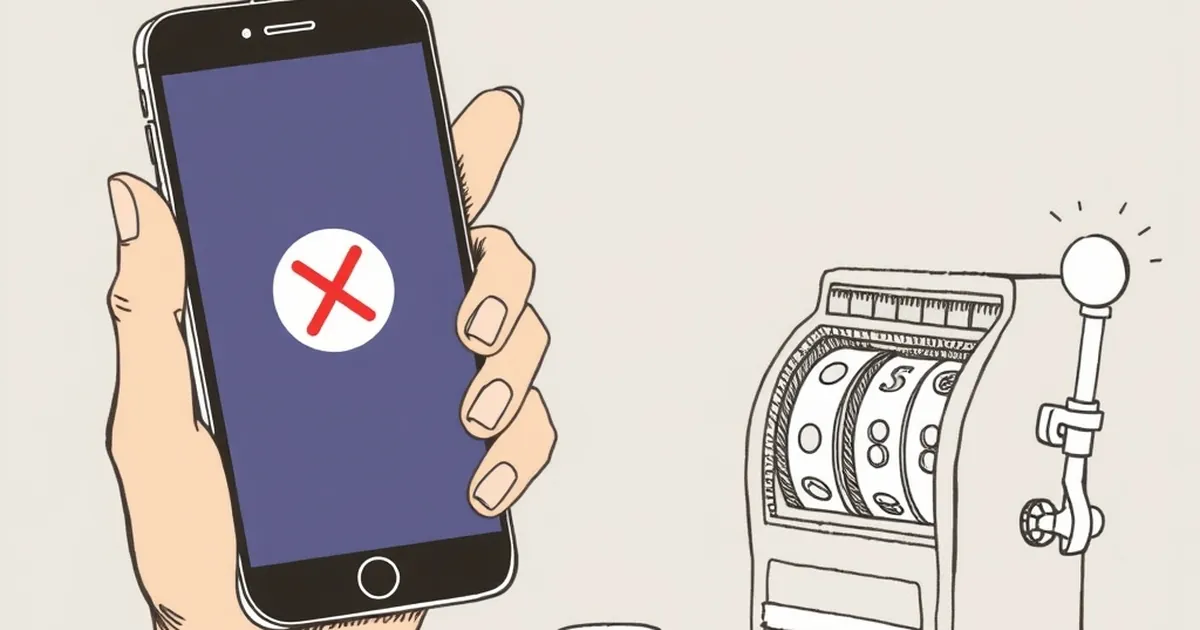
The first time you hit "deposit" and watch the spinner spin, only to get a flat, red "Transaction Declined," your brain doesn't just register a payment failure. It registers a loss event, firing in the same neural circuits as when you miss a 1-in-100 jackpot spin by one symbol. Functionally, your brain is treating a bank’s fraud filter like a slot machine’s random number generator, and the decline feels like a bad loot drop—not an administrative hiccup.
This isn't a metaphor. It’s a quirk of how our reward systems evolved to handle uncertainty, and it explains why a declined card can ruin your session mood more than losing a hand of blackjack. The sting isn't about the money; it's about the interruption of an anticipated reward loop.
The Expectation Engine: Why "Pending" Feels Like a Spin
When you enter your card details and hit submit, your brain releases a small pulse of dopamine in anticipation of the outcome. This is the same neurochemical that fires when you click "spin" on a slot or "deal" in poker. The brain isn't waiting for the result; it’s already calculating the potential reward—the game, the bet, the action.
A card decline is the equivalent of the reels stopping on two matching symbols and then a third that is just off. The brain's "prediction error" signal goes haywire. It expected a binary outcome (win/lose) but instead got a null state (neither win nor lose, just stop).
This null state is psychologically worse than a loss. With a loss, the narrative is clear: "I lost, let's try again." With a decline, the narrative is murky: "The system rejected me." This triggers a different, more primitive response—the fear of social exclusion or system rejection. It’s the same feeling you get when a vending machine eats your dollar without giving you a soda. It's not the dollar; it's the denial of the exchange.
The "Loot Box" Mechanics of Banking Fraud Filters
Here’s where the iGaming analogy gets uncomfortably precise. A modern bank's fraud detection system is a probabilistic model. It scores your transaction on a scale from "definitely human" to "definitely a bot stealing a card." This scoring is opaque, non-deterministic, and feels random to the user.
Consider that a typical bank flags roughly 2.5% of all legitimate online transactions as false positives. That’s the number to hold onto. In a session where you make five deposits, there’s a significant cumulative chance that one will be flagged. The bank isn't judging you; it's running a statistical regression on your IP address, device fingerprint, and purchase velocity.
But your brain doesn't see a statistical regression. It sees a game with hidden rules. When the decline hits, you immediately start testing hypotheses: "Was it too fast? Should I use a different amount? Is my card cursed?" This is classic "loot box" behavior—trying to reverse-engineer a reward schedule that is actually just a random threshold.
The cruelest part is that the decline often happens after the bank has already placed a hold on the funds. Your balance shows the money gone, but the casino never got it. That's the equivalent of a game showing you the epic loot drop animation, only to have the server crash before it hits your inventory. The asset exists in limbo, and your brain is left with a "phantom reward" feeling.
The Anger is About Agency, Not Money
Let’s be clear about what you’re actually feeling. You’re not upset about the amount of money (usually). You’re upset about the loss of control. In a slot game, you can adjust your bet, change the game, or walk away. You have agency.
With a card decline, you have zero agency. You cannot negotiate with the fraud algorithm. You cannot explain to it that you are, in fact, the legitimate cardholder who just wants to play a few rounds of blackjack. You are reduced to a data point, and the data point failed the test.
This is why people get irrationally angry at their bank's app but not at a losing slot machine. The slot machine is honest about its randomness. The bank's algorithm is dishonest—it presents itself as a security measure, but to the player, it's just another layer of RNG (Random Number Generator) that has no payout table. You can't see the odds of a decline, you can't calculate the house edge of your bank's security protocol, and you certainly can't hit a bonus round to reverse it.
The frustration is a direct result of an invisible system imposing a "loss" on you without any possibility of a "win" to offset it. It's a game with only negative outcomes.
The "Re-Entry" Tilt and the Cycle of Retries
The most dangerous behavioral consequence is what happens after the decline. This is where the "bad loot drop" mentality turns toxic. Instead of stopping, many players immediately retry with a different amount, a different card, or a different payment method.
This is the definition of "tilt" in poker—making irrational decisions out of frustration. The brain, desperate to resolve the prediction error, will try to force the win. You might attempt a deposit of $47.35 instead of $50 to see if the odd number trips the algorithm differently. You might switch to a wallet service and pay a higher fee just to get the action going.
The problem? This behavior increases the likelihood of further declines. The fraud algorithm sees a flurry of rapid, failed attempts from the same device and lowers your trust score. You are now trapped in a negative feedback loop where your attempts to fix the problem make the problem worse. It’s the iGaming equivalent of chasing losses, but you’re chasing a deposit confirmation instead of a winning hand.
This is why you should treat a card decline like a server maintenance message. It is not a challenge. It is not a puzzle. It is a system telling you to wait. The smart move is to step away for 20 minutes, not to change your password and try a different browser.
A Question on the House Edge of Trust
Here’s the open question I keep circling back to: if banks are running on probabilistic models that produce 2.5% false positives, and players are treating those false positives as a personal loss event, what does that do to the overall "house edge" of the player's mood? We talk about RTP (Return to Player) percentages and volatility indices, but we ignore the "Payment Friction Coefficient."
If a slot has a 96% RTP but causes you to have a 10-minute anxiety spike every time you try to fund it, is the game actually fun? Or are we just getting better at building games that are fun, wrapped in payment rails that are designed to be cautious?
The next time you get a decline, notice the flush of anger. Recognize it for what it is: a misfire of your reward system reacting to a broken interface. But also ask yourself—is the casino responsible for how the bank treats you? Or is the bank just the ultimate high-volatility game, where the only payout is the relief of finally seeing "Transaction Approved"? Because if that relief feels good, you might just be playing the wrong game.