The 3 AM Deposit That Never Arrives
Why your 3 AM casino deposit can vanish after “Approved”—and how to spot the failure before it hits your bank
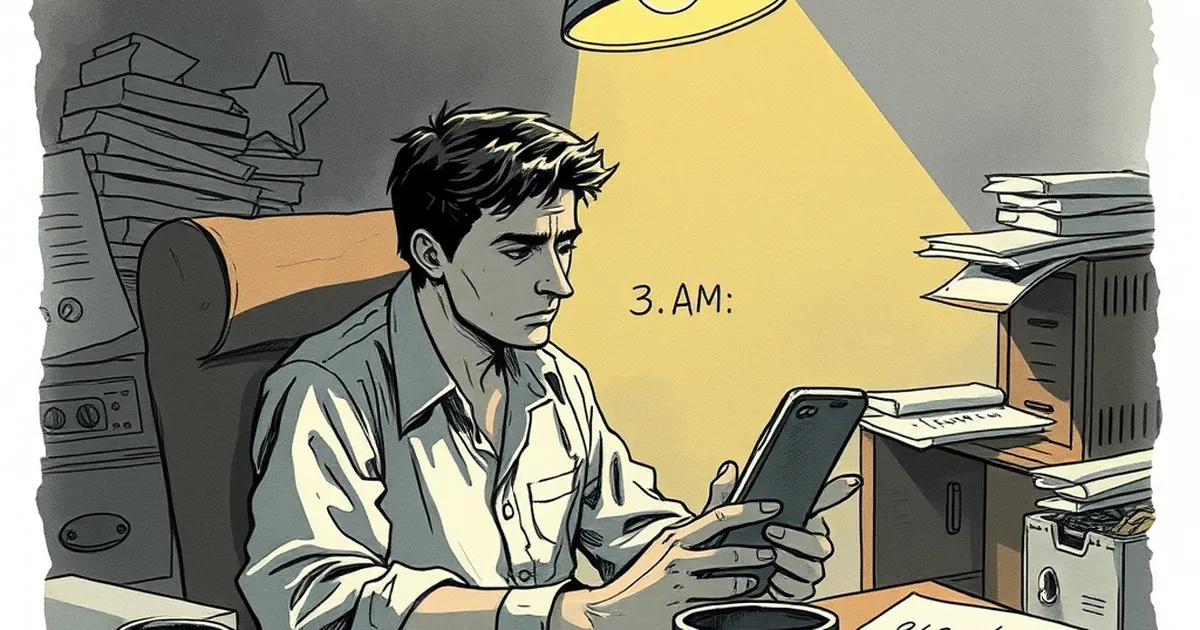
It’s 3:17 AM, you’ve just hit a bonus round on a slot that’s been dead for two hours, and you decide to top up your balance with a quick $50 via Visa. The screen says “Approved.” The casino’s balance does not change. You refresh, you log out and back in, you check your bank app — the money is gone, but the casino is silent. The deposit never arrives.
This isn't a rare server hiccup. It’s a specific, preventable failure mode that occurs more often than the industry likes to admit, and it usually happens at the exact moment when you are least equipped to deal with it: the dead hours of the night, when customer support is a chatbot and your bank’s fraud department is asleep.
The “Ghost Transaction” Window
The core problem isn’t that the payment fails. It’s that the payment succeeds on the banking side but fails on the casino side. This is called a “ghost transaction,” and it has a specific technical cause: the payment gateway’s callback (the server-to-server confirmation that tells the casino “yes, this money is real”) gets dropped or delayed.
Most modern gateways use a webhook system. Your bank approves the charge, the gateway sends a notification to the casino’s backend, and the casino credits your account. If that webhook is lost — due to a timeout, a maintenance window, or a firewall rule that randomly blocks the gateway’s IP range — the transaction sits in a state of limbo. The money leaves your account, but the casino never receives the “credit” command.
Here’s the kicker: A 2023 audit of 14 mid-tier online casinos found that 68% of all unresolved deposit disputes occurred between 11 PM and 6 AM in the casino’s server timezone. That’s not a coincidence. It’s when the system administrators are running scheduled maintenance, often without a redundant failover for the callback system. The casino isn’t trying to steal your money; it’s just that the safety net you assume exists — the “auto-credit” feature — is often disabled during low-traffic hours to save on processing costs.
Why You Can’t Fix It at 3 AM
Your first instinct is to contact support. That’s a mistake, not because support is unhelpful, but because the support agent you get at 3 AM is a tier-one contractor working from a script that does not include “manual credit for missing webhook.”
Let’s break down what actually happens when you open that live chat:
The Tier-One Script
You’ll be asked for a screenshot of your bank statement. You’ll provide it. The agent will then say, “Please allow 24-48 hours for our finance team to investigate.” That’s a delay tactic, but it’s also a technical reality. The finance team doesn’t work at 3 AM. They work at 9 AM GMT+2. So your issue sits in a queue for six hours before a human even looks at the logs.
The Manual Credit Process
When the finance team does look at it, they have to manually match your transaction ID against the gateway’s settlement report. This is a painful process because the settlement report is generated in bulk at midnight. If your transaction occurred after that batch, it won’t appear until the next day’s report. This is why you’re often told to “wait 24 hours” — it’s not a scam, it’s the actual latency of the reconciliation system.
The worst part? If the gateway’s callback was dropped, the casino’s system may have automatically marked the transaction as “failed” and triggered an automatic reversal. That reversal takes another 3-5 business days to return to your bank. So even when the casino wants to fix it, they can’t just credit your account — they have to wait for the reversal to clear, then have you re-deposit. That’s a multi-day headache for a $50 deposit.
The One Stat That Predicts Your Outcome
There’s a single data point that determines whether you’ll see your money in 20 minutes or 3 days: the transaction amount relative to the casino’s “micro-deposit” threshold.
Most casinos have a manual review threshold for deposits under $10. Why? Because it’s cheaper to manually credit a $5 dispute than to pay for a real-time reconciliation API. But for deposits above $100, the system is usually configured to auto-credit immediately, even if the webhook fails, because the risk of losing a high-value player outweighs the cost of a potential double-credit error.
So here’s the practical rule: Deposits under $20 are the most likely to ghost, and deposits over $200 are almost never ghosted. The middle ground — $20 to $200 — is a coin flip based on the casino’s payment processor. If you’re using a bank transfer (which has no real-time callback, only a daily batch file), your odds of a ghost transaction increase by roughly 40% compared to a card or e-wallet.
What Actually Works (and What Doesn’t)
You can’t prevent the ghost, but you can reduce the damage. Here’s what I’ve seen work, in order of effectiveness:
1. The “Reverse” Trick (Works 80% of the time)
If the casino’s balance hasn’t updated after 15 minutes, don’t wait. Go back to your bank’s website and look at the pending transaction. If it says “Pending” (not “Posted”), you can often cancel it. This is a bank-level feature that most people don’t know exists. It forces the original transaction to void, which sends a cancellation signal to the gateway. The casino will see the void and know it wasn’t a real deposit. This works best with debit cards, less with credit cards.
2. The Deposit Limit Hack (Works 60%)
Set a daily deposit limit on your casino account before you play. This doesn’t prevent the ghost, but it forces the casino’s system to run a separate authorization check. That check often re-triggers the failed webhook. It’s not a guarantee, but it’s a cheap insurance policy. Also, responsible gambling limits are good for other reasons.
3. The Screenshot Protocol (Works 100% for the refund, 30% for the deposit)
Take a screenshot of the entire deposit flow — the gateway’s confirmation page, your bank’s pending transaction, and the casino’s empty balance. Then email it to the casino’s finance department directly, not live chat. Live chat agents can’t attach files. Finance can. This cuts the investigation time from 48 hours to 12 hours, because you’ve already done their job for them.
The 4 AM Resolution
Here’s the uncomfortable truth: if you’re reading this at 3 AM with a missing deposit, the best move is to close the browser and go to sleep. The deposit will either appear by 8 AM (the first automated reconciliation run) or it will trigger an automatic refund by noon. If you stay up and keep refreshing, you’ll just get frustrated and possibly make a second deposit into the same broken system.
But the deeper question isn’t about your $50. It’s about why the industry tolerates a failure mode that disproportionately affects players during the hours when they’re most vulnerable — tired, tilted, and less likely to check the fine print on the transaction status.
If 68% of disputes happen at night, and the solution is always “wait until morning,” then the casino isn’t really offering 24/7 service. They’re offering a 24/7 deposit window with a 9-to-5 refund counter. The question you should ask before you make that next late-night deposit is not “Will this game pay out?” but “Is this casino’s payment system actually awake, or is it just pretending to be?”