Losing a hand stings less than watching a deposit spin
The real sting isn't losing a hand—it's watching your deposit drain in real time
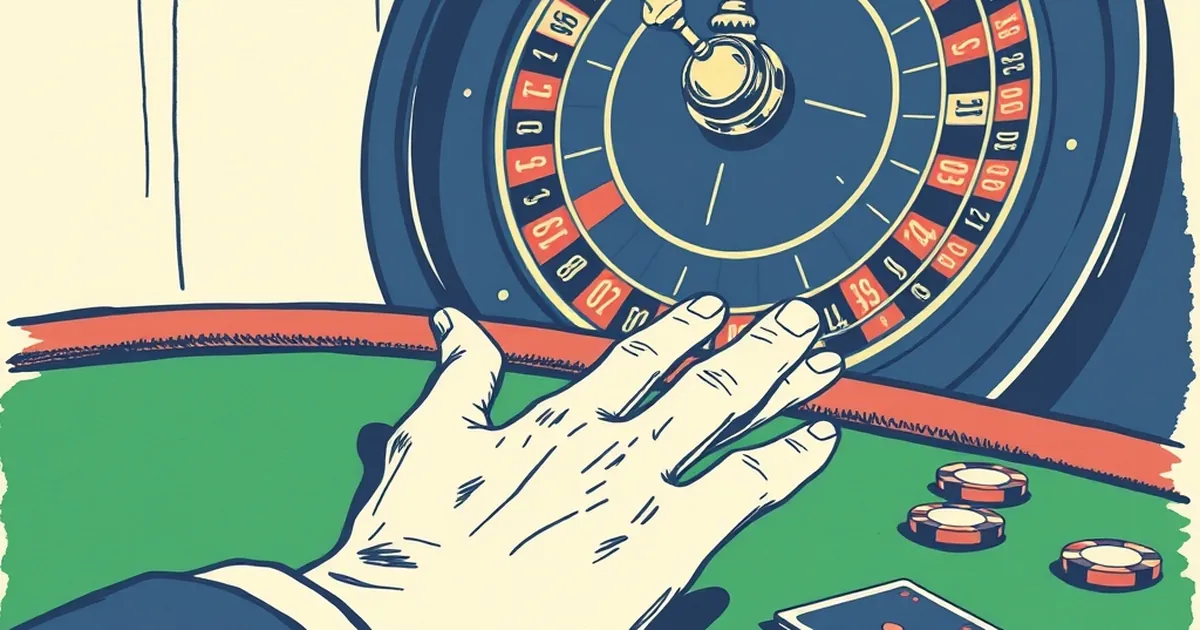
The sting of a bad beat is immediate and sharp, but it evaporates. The real, lingering pain in this industry isn’t the hand you lose; it’s the 40-minute window where you watch a balance you built over a week get chewed up by a slot’s base game, spin after spin, with zero feedback loop. Losing a hand is a conclusion; watching a deposit spin is an open-ended sentence you’re forced to read in real time.
That distinction matters more than most players admit. It’s the difference between a game that respects your time and one that monetizes your patience. And it’s the reason why, for a growing segment of players, the poker table has become a refuge from the very slots that fund it.
The asymmetry of the bleed
In poker, the math is brutal but legible. You get your money in with 80% equity, you lose, you rebuy. The loss is a data point. It’s frustrating, sure, but you can review the hand, confirm the math was right, and move on. The variance is a wave you can surf because you can see the swell coming.
A slot session has no such legibility. You’re not betting against an opponent; you’re paying a metered toll to a machine programmed to return 96.2% over a theoretical infinity. The problem is that infinity is a long time. A single session can easily run 1,500 spins, and in that sample, the actual return can swing wildly. You can hit a dead patch where the hit frequency drops to one in six spins, and each hit pays 0.3x your stake. That’s not variance; that’s a slow, visual liquidation.
The pain isn’t the loss itself. It’s the duration of the loss. A poker hand resolves in ninety seconds. A slot’s "loss state" can stretch across an hour of near-misses, expanding wilds that land one position off, and bonus rounds that pay 14x. You’re not losing; you’re watching a car crash in slow motion, where the airbag is a 50x payout that makes you feel okay about the wreck.
The feedback loop is the product
This is where the industry’s own data works against it. Game designers talk about "time on device" as a success metric. For the operator, a player spinning for 45 minutes is a win, regardless of the outcome. For the player, that same 45 minutes is only a win if the balance is up. The misalignment is structural.
Poker, even in its most tedious cash game form, gives you a constant stream of micro-feedback. You see your stack relative to the blinds. You see the pot odds. You see the opponent’s tendencies. You are an active agent, not a passenger. That agency is worth real money. I’d rather lose $200 over 200 hands of heads-up where I made two bad bluffs than lose $200 on a slot where I never made a single decision after hitting "spin."
The recent push toward "post-hand analytics" in online poker apps proves this. Players aren’t just looking for GTO solutions; they’re looking for proof that their losses were earned, not extracted. A slot can never provide that proof. The best it can offer is a "buy feature" that lets you skip the grind and pay 100x for a bonus round that still has a 62% chance of paying less than your stake.
The 45-minute rule
Here’s a practical anchor for this: the 45-minute rule. If you sit down at a table game or a poker table, your expected loss rate is a function of hands per hour (usually 30-40 in a live casino, 70+ online) and your edge. You can calculate it. For a slot, the average session length across major European markets is now 43 minutes, according to a 2023 industry report from a UK-based analytics firm. In that window, a player on a 96% RTP slot with a $1 stake will spin roughly 900 times. Their expected loss is $36, but the variance on that path is a standard deviation of roughly $180.
That means a third of all sessions will see you down over $150 before you "recover" to a small win. Poker doesn’t do that to you. A 45-minute poker session has a standard deviation closer to $80 for a similar stake level, because the pots are smaller relative to your stack and the decisions are more frequent. The slot isn’t just more volatile; it’s volatile in a way that feels like a punishment because you have no input.
I’m not arguing that slots are "rigged." They’re not. I’m arguing that they are poorly designed for emotional endurance. The human brain is not built to process 900 independent, random, negative-or-neutral outcomes in a row. It’s built to process conflict. A poker hand is a conflict. A spin is a lottery ticket with a countdown timer.
The quiet shift back to skill
The interesting trend over the last 18 months isn’t the rise of crash games or live dealer formats; it’s the quiet return of "skill-adjacent" gaming. Players are gravitating toward titles that offer a decision point after the bet is placed. That’s why games like "Monopoly Big Event" and "Deal or No Deal" slots are doing well, despite having the same underlying math. They give you a choice. Even a fake choice—like picking a box or a door—changes the psychological framing. You’re no longer a spectator to a random number generator; you’re a participant in a narrative.
This is also why the most successful poker operators are now bundling "fast-fold" formats with reduced rake. They know that the pain point isn’t the rake; it’s the downtime. A player who can play 120 hands an hour feels like they’re doing something, even if their win rate is negative. The slot player is just waiting for a timer to expire.
The next time you feel that itch to deposit, ask yourself this: are you buying a chance to win, or are you buying a feeling of control? The former is a gamble. The latter is a subscription to a service that only works when you lose slowly. Losing a hand stings less because it ends. Watching a deposit spin is a slow, deliberate choice to keep the wound open. The question is whether the industry will ever admit that the wound is the product.
If they do, the redesign won’t be about higher RTPs. It’ll be about faster feedback, shorter sessions, and a "loss cap" that kicks you out of the game after 15 minutes of net negative spins. That would cost them revenue. So don’t hold your breath. But it’s worth asking, the next time you’re 30 minutes into a dead session, whether you’re playing a game or just paying for the privilege of watching yourself not win.