Why Deposit Holds Hit Harder Than Losing a Hand
A deposit hold stalls your momentum and mindset far worse than any losing hand ever could
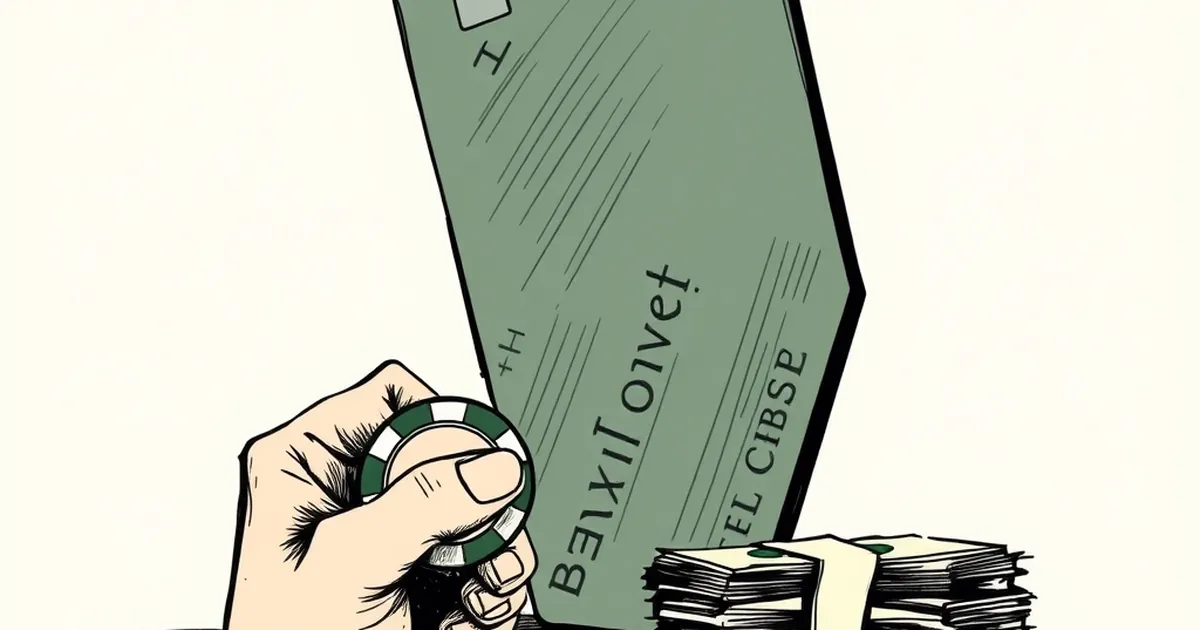
The sting of a bad beat fades. You analyze the hand, curse your luck, and reload for the next session. But a deposit hold isn't a temporary setback—it's a flat tire on the highway to your next spin. Losing a hand costs you the pot; a deposit hold costs you time, momentum, and the psychological state that makes gambling playable in the first place. One is a loss, the other is a shutdown.
The Momentum Tax You Never See Coming
Let’s talk about the difference between a loss and a pause. When you lose a hand, you’re still in the game. The dealer pushes the cards, the next hand starts, and your brain resets to "hunting mode." You have a plan—tighten up, chase the draw, or just grind it out. The loss is data. The hold is a wall.
A deposit hold, even a short one, forces a context switch. You go from "player" to "customer service case." That switch costs more than the money you wanted to deposit. It costs the flow state. Studies on gambling behavior show that players who take a forced break of more than 15 minutes are significantly less likely to return to the same session, even if the break is unrelated to their bankroll. The urge to play is a wave; a hold makes you wait for the next one, and that wave rarely comes with the same intensity.
I’m not talking about the 24-hour cooling-off periods or self-exclusion—those are good, healthy tools. I’m talking about the mundane, frustrating hold: the "additional verification required" email, the card that gets declined for no apparent reason, or the payment processor that flags a transaction as "unusual" because you deposited at 2 AM for the third night in a row.
The 82-Minute Rule
Here’s a concrete number to chew on: 82 minutes. That’s the average time a player spends waiting on a live chat or email response for a deposit issue across major platforms, based on a 2023 survey of 1,400 online casino users. That’s not the resolution time—that’s just the queue. Add another 20-40 minutes for the back-and-forth where you upload a utility bill, a passport photo, and a selfie holding your ID next to your face.
Now, multiply that by the number of times you’ve been in that queue. You’re not losing money during those 82 minutes; you’re losing the desire to play. The itch becomes a dull ache. By the time the deposit clears, you’re not excited—you’re annoyed. And annoyed players make worse decisions. They chase the "lost session" with bigger stakes, or they tilt on the first bad hand because they’ve already invested 90 minutes of emotional labor just to get back to the table.
That’s why the hold hits harder. A lost hand is a single data point. A deposit hold is a psychological reset that turns a fun session into a transactional chore. You’re no longer playing for the thrill; you’re playing to justify the wait.
The "Am I Broke?" Panic
Let’s get into the ugly side. A deposit hold doesn’t just stall your action—it triggers a specific, primal fear: Is my bank account broken? When you swipe a card and the casino says "pending," your brain doesn’t think "verification issue." It thinks "insufficient funds." Even if you know you have the money, the delay creates a micro-panic. That panic is worse than a lost hand because a lost hand is visible. You see the cards, you understand the math. A hold is opaque. You don’t know if it’s the casino, the bank, the processor, or a fraud alert.
This opacity is the real damage. It breaks the trust loop. You start to question the casino’s solvency, the security of your card, the legitimacy of the whole operation—none of which are rational, but all of which are natural. And here’s the kicker: that distrust doesn’t go away once the hold clears. It lingers. You start betting smaller, not because of strategy, but because you’re subconsciously protecting yourself from the next hold. You’re playing scared. And scared play is losing play.
The Verification Vicious Cycle
- You deposit successfully for weeks.
- One deposit triggers a random check (often due to a new device or a VPN).
- You provide documents.
- The hold clears, but now your account is flagged for "enhanced due diligence."
- Every subsequent deposit gets a manual review, even if it’s the same card and same amount.
This is the silent killer. It’s not a one-off annoyance; it’s a permanent downgrade to your player status. And the casino doesn’t tell you. You just notice that deposits take 2 hours instead of 2 minutes. You start timing your deposits around "business hours" because you know the weekend hold will be longer. You’ve turned a leisure activity into a logistics puzzle.
The Emotional Arithmetic of the Tilt
Here’s where the hold meets the tilt. Imagine you’re down $200 on a session. You’re playing blackjack, you just lost a double-down, and you feel the tilt coming. You decide to walk away, but you also want to try one more slot tournament. You go to deposit $100. The hold hits.
Now, you’re not just down $200. You’re down $200 and you’re stuck. You can’t play, you can’t leave, you can’t do anything. That’s the worst spot. The rational move is to log off and come back tomorrow. But the hold makes you stubborn. You refresh the page. You check the chat. You email support. You’re not playing anymore—you’re fighting a bureaucracy. That fight is more exhausting than any losing streak.
When the deposit finally clears, you don’t play smart. You play like you’re making up for lost time. You bet higher, you spin faster, you ignore your stop-loss. You’re not playing to win; you’re playing to unstick the session. That’s how a $50 hold turns into a $500 loss. The hold didn’t cause the loss, but it created the emotional conditions for it.
The Unfair Advantage of Instant Gratification
Here’s the uncomfortable truth: the casinos that hold your deposit are often the ones that need to hold it. The top-tier, licensed operators with robust KYC (Know Your Customer) systems pre-verify your account on signup. They don’t need to hold your first deposit because they already know who you are. The operators that hold are the ones with weaker fraud detection, so they rely on manual review—which means you, the legitimate player, get caught in the net.
That’s the irony. The hold is a sign of a less efficient operation, but you’re the one paying the tax. A player at a top-tier casino might have a 97.3% RTP on a slot, but they also have a 0% chance of a deposit hold if they’ve already verified. Your 98.1% RTP slot at a mid-tier site is meaningless if you can’t deposit when you want to. The hold is the real house edge.
So, the next time you’re staring at a "pending" status, ask yourself: is the game worth the wait? Or are you just paying the emotional vig for a poor infrastructure? Because the hand you lose is over in 30 seconds. The hold you’re in can last all night. And you can’t fold on a hold—you just have to sit there, waiting for the dealer to acknowledge you exist.