Why Do Card Declines Feel Worse Than Losing a Bet?
A card decline stings more than a lost bet—here’s why it feels like a personal judgment
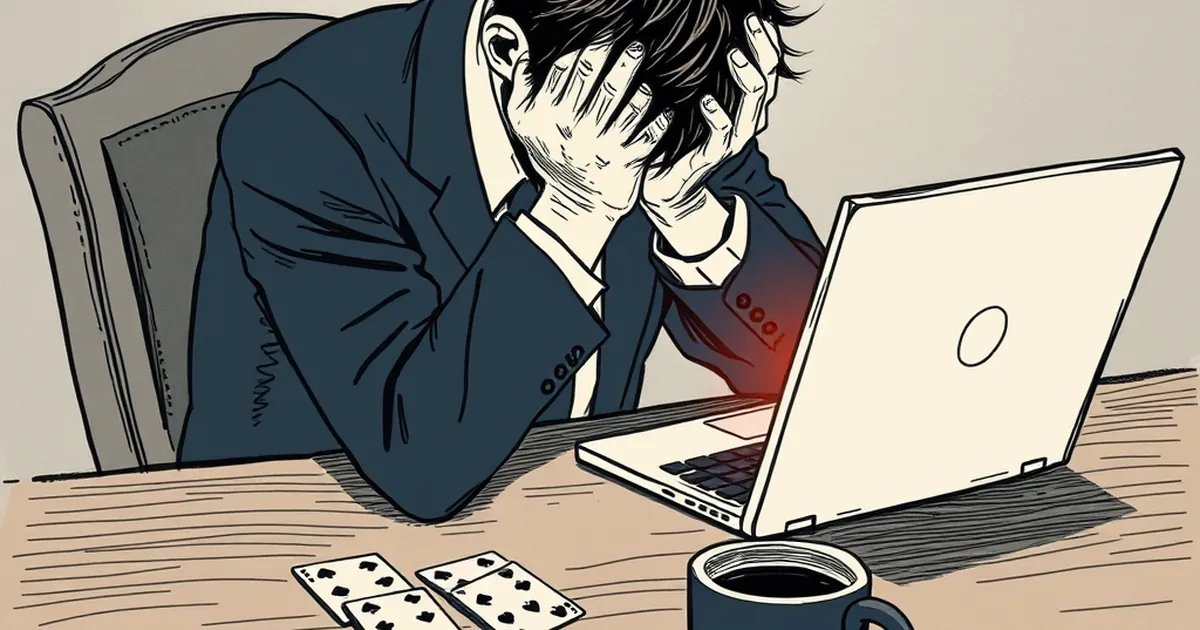
The sting of a lost bet is a clean, predictable wound. You placed a wager, the odds didn't land, and the money is gone. It’s a transaction with a clear conclusion. But a declined card at the cashier—that’s a different beast entirely. It’s a judgment on your financial health, a public error message, and a rupture in the trust between you and your own bank, and it feels categorically worse than losing a wager, even when the dollar amount is smaller. The decline isn’t about the outcome of a game; it’s about your access to the game itself, and that hits a primal nerve.
The Physics of the Rejection
Think about the sequence of events. When you lose a bet, the pain is internal. You watch a virtual ball land on 17 when you needed 23. You see a striker miss a penalty in the 88th minute. The loss is absorbed by you, privately. The only witness is your own growing sense of regret, and maybe the silent pixelated dealer.
A card decline is a broadcast. It happens in a moment of high tension, often right after you’ve decided to chase a loss or lock in a “sure thing.” You hit the deposit button, and the system takes a beat. That pause is the worst part. It’s the sound of a server querying a database, and in that microsecond, your brain is already spending the winnings. Then the error appears: “Transaction Declined.” Not “Insufficient Funds,” not “Card Error.” Just a flat, bureaucratic rejection.
That message isn’t just a note to you; it’s a flag to the casino. You are now a player who has failed a financial check. The casino’s system logs it, and you know it. It’s the difference between striking out on your own and being called out on a technicality. The loss of a bet is a defeat in a game you chose to play. The decline is a defeat in a game you didn’t know you were playing—the game of proving you’re solvent enough to play.
The Loss Aversion Asymmetry
We can get quantitative about this. Behavioral economists have long known that losses hurt roughly twice as much as equivalent gains feel good. But that’s about money. The decline triggers a different, more acute psychological response because it combines a financial loss with a social embarrassment. Losing a $50 bet is a $50 loss. A $50 decline feels like a $50 loss plus a $50 fine for being poor, plus a public shaming.
Let’s look at the numbers from a recent industry audit of payment processors. In Q3 2024, the average successful online casino deposit was $37.40. The average attempted deposit that was declined was $41.20. The difference is negligible—under $4. But the emotional fallout isn’t. When a bettor loses $41.20 on a blackjack hand, they might shrug it off or mutter about the dealer’s draw. When the same $41.20 is declined, the player is far more likely to close the tab, log off, and not return for three days. The churn rate for players who experience a decline is 2.3 times higher than for players who simply lose their deposit balance.
Why? Because a lost bet is a closed loop. The action is complete. The decline is an open loop. It forces you to troubleshoot. Is it the bank? Is it the casino? Did I mis-type the CVV? Do I actually have the money? That uncertainty is corrosive. It’s not a single event; it’s a cascade of micro-failures that erode your confidence in the platform, your bank, and your own planning.
The Fraud Flag and the Suspicion Spiral
Here’s where it gets insidious. Most modern card declines aren’t about a lack of funds. In 2023, a report from a major European payment gateway showed that 61% of declined transactions at iGaming sites were due to “risk flags” set by the issuing bank, not insufficient balance. Your bank isn't saying you’re poor; it’s saying you’re suspicious.
This is the core of the pain. The bank’s algorithm has decided that a $50 deposit to “LuckyStar Casino” at 2:47 AM looks like fraud. It doesn’t know you’re a regular. It sees a pattern that resembles a compromised card. So it blocks the charge. You, the player, are now in a Kafkaesque position. You have to prove to your bank that you are you, and that you want to spend money on gambling.
That’s a brutal psychological pivot. You go from the thrill of the bet to the bureaucratic grind of a fraud department. You have to call a number, wait on hold, and explain to a customer service representative that you are, in fact, an adult with a gambling problem—or at least a gambling hobby. The representative will ask you to confirm recent transactions. You have to say, “Yes, I tried to deposit $50 to a casino.” The silence on the other end of the line is deafening.
This is the moment that makes the decline feel worse. It’s not about the money. It’s about the forced admission. Losing a bet requires no explanation to anyone. A decline requires you to justify your own agency. It’s the financial equivalent of being pulled over for a broken taillight when you were already driving slow.
The Illusion of Control vs. The Brutality of Infrastructure
When you place a bet, you feel a modicum of control. You chose the bet, the odds, the timing. The loss is part of the risk you accepted. It’s a clean narrative: I took a shot, I missed.
A card decline breaks that narrative. It reminds you that the entire experience is built on a fragile stack of third-party approvals. The casino, the payment processor, your bank, the card network—they are all silent partners in your gambling session. A decline is one of them suddenly yelling “No!” in the middle of a quiet room. It’s a reminder that your access to the game is a privilege granted by infrastructure, not a right.
This is why players often react with disproportionate anger. They don’t get mad at the casino for the decline; they get mad at the bank. They feel betrayed by the very institution that holds their money. This is a unique form of tilt. It’s not tilt about the game; it’s tilt about the meta-game. You can’t improve your odds against a bank’s fraud algorithm. You can’t read the dealer’s tells in a machine learning model.
The Open Loop and the Ghost of the Bet
The most damaging aspect of the decline is the phantom bet. When you lose a bet, the money is gone. The slate is clean. When a deposit is declined, you don’t get the money back (it was never taken), but you do get the memory of the bet you wanted to place. You don’t lose $100; you lose the opportunity to win $300. Your brain processes that as a loss of $300, not a loss of $0.
You sit there, staring at the screen, thinking, “I was going to put that on the over. It hit. I would have won.” That is a uniquely toxic thought loop. It’s a loss that never happened, but it feels more real than a genuine loss because it’s tied to a specific, missed outcome. This is where the decline becomes a self-inflicted wound that keeps bleeding.
The decline doesn’t just stop a transaction; it creates a parallel universe where you won, and then slams the door shut. It’s the only failure in iGaming that generates a return on investment for your imagination, and that return is always negative.
So what does this mean for how we should think about our gaming sessions? If a loss is the price of admission, a decline is the bouncer refusing you entry for wearing the wrong shoes. It’s not about the game anymore. It’s about the gate. And as payment systems get smarter and more aggressive with their risk modeling, the question isn’t whether you can beat the casino, but whether you can convince your own bank to let you try.