The slot's paytable hides a rule the help page skips
Slot paytables often reveal rules the help page omits, and the paytable usually matches what the reels actually do
5 min read
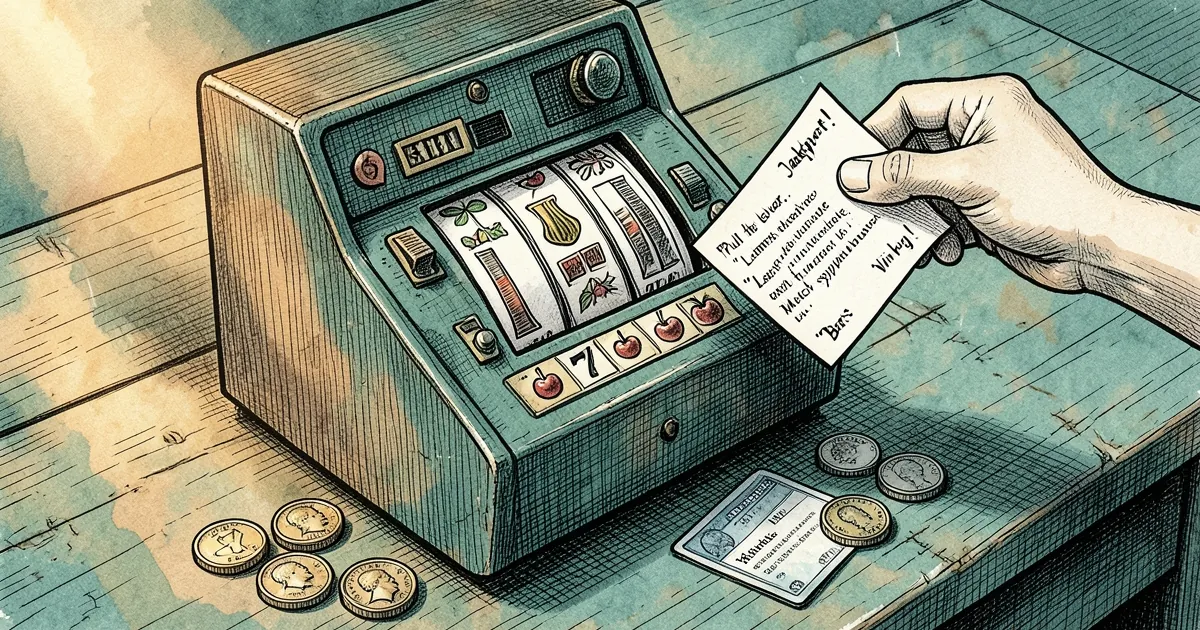
Most slots hide at least one rule that only exists in the paytable, not in the help page. The paytable is the table of symbol combinations and their payouts, usually reachable from a small "i" or "?" button. The help page is the longer prose section that explains the game, the bonus features, and often the RTP. The two documents are supposed to describe the same machine, but they frequently disagree, and the paytable is usually the one that matches what the reels actually do. The help page is marketing copy with a legal review; the paytable is the spec sheet.
Here is the pattern. Open almost any modern video slot, tap the paytable, and read the scatter section carefully. Then open the help page and read the same section. In a large share of games, the help page will say three scatters trigger the free spins feature. The paytable will say three scatters trigger the feature and the fourth scatter pays a fixed multiplier, or the paytable will show a scatter paytable with entries for three, four, and five scatters, while the help page only mentions the trigger. Neither is technically lying. The help page is describing the feature; the paytable is describing the paytable. But the player who reads only the help page will assume the fourth scatter is worthless, and that assumption costs money.
Two documents, one machine, different jobs
The help page exists to explain the game to someone who has never played it. It is written by a content team, reviewed by compliance, and usually translated into a dozen languages. It is long, it is cautious, and it is often out of date because the game was reskinned for a new market and nobody rewrote the prose.
The paytable is generated from the game's math model. When the math model changes, the paytable regenerates. The help page does not always follow. This is the same structural gap that shows up elsewhere in the industry: a slot's published RNG audit is annual, but the paytable can change on a Tuesday, and the audit document will not mention it. The paytable is closer to the actual machine.
That does not make the paytable perfect. It makes it the better of the two sources, and the one you should read first.
What the paytable shows that the help page skips
The most common omissions, in rough order of how often they appear:
Scatter payouts beyond the trigger. A paytable that lists 3, 4, and 5 scatters is telling you the fourth and fifth scatter have a cash value. The help page often only says "3 or more scatters trigger free spins." If the paytable shows a 4-scatter cash prize, that prize is real, and it is paid in addition to the feature or instead of it depending on the game.
Wild multipliers that apply only on certain reels. The help page says "wilds substitute for all symbols." The paytable says "wild on reel 3 doubles the line win." That second sentence is the one that changes how you read a near-miss.
The minimum bet for feature eligibility. Some games only award the bonus round at or above a certain stake. That limit is frequently in the paytable's small print and absent from the help page. It is the same species of hidden cap as a bonus meter that fills quickly but tops out at a number the terms bury — the cap is real, it is just not where you were told to look.
Line pay direction. Left-to-right versus both ways is a paytable fact, not a help-page fact. A game that pays both ways at the same symbol values is a different machine from one that pays left-to-right only, and the RTP difference between those two configurations can be a full percentage point or more.
The RTP question the paytable answers better
The help page usually states the RTP as a single number. The paytable, in many games, does not state RTP at all — but the paytable's structure tells you which version of the game you are playing. A 3-reel slot and its 5-reel reskin can share a theme, a provider, and a help page template while paying 96% and 94% respectively. The paytable is where the reel layout and symbol values live, and those are the inputs that produce the RTP.
This is why the RTP badge on the lobby banner is the least reliable number on the screen. The badge is a marketing asset. The paytable is a math asset. When they disagree, believe the paytable, and when the help page and the paytable disagree about a rule, believe the paytable.
A quick way to check
Before you spin, do this:
- Open the paytable and screenshot the scatter and wild sections.
- Open the help page and read the same two sections.
- Note every rule that appears in one and not the other.
- If the paytable shows a payout the help page does not mention, assume the payout is real until you see it fail.
That last step matters. Providers do ship paytables with stale entries. But the base rate favors the paytable, and the cost of checking is thirty seconds.
Why the gap persists
The help page is a compliance document first and a player document second. It has to satisfy regulators in every jurisdiction the game is licensed in, which means it errs toward saying less. The paytable is a game-design document. It has to be accurate enough for the math to reconcile, because the math is what the audit tests.
There is also a simpler reason: nobody owns the gap. The help page belongs to content. The paytable belongs to math. The two teams ship on different schedules, and the QA process checks each document against its own spec, not against the other. The result is a machine described twice, in two languages, with the more accurate description tucked behind a small icon most players never tap.
This is the same failure mode you see in bonus terms, where a summary card reduces nineteen pages of terms to three words, and in withdrawal pages that lag behind the verification system. The pattern is consistent: the player-facing summary is smoother than the underlying rule, and the underlying rule is the one that pays out.
So the open question is not whether the paytable is more accurate than the help page. It usually is. The question is why the industry continues to treat the help page as the authoritative description when the paytable is the one generated from the math. A player who reads only the help page is reading the marketing version of a contract. A player who reads the paytable is reading the contract. The gap between them is small, but it is not zero, and over enough spins a non-zero gap is the whole game.