Self-exclusion sign-ups triple after a 2am pop-up
A 2am pop-up tripled self-exclusion sign-ups at one operator, showing that timing matters more than tooling when reaching at-risk gamblers
5 min read
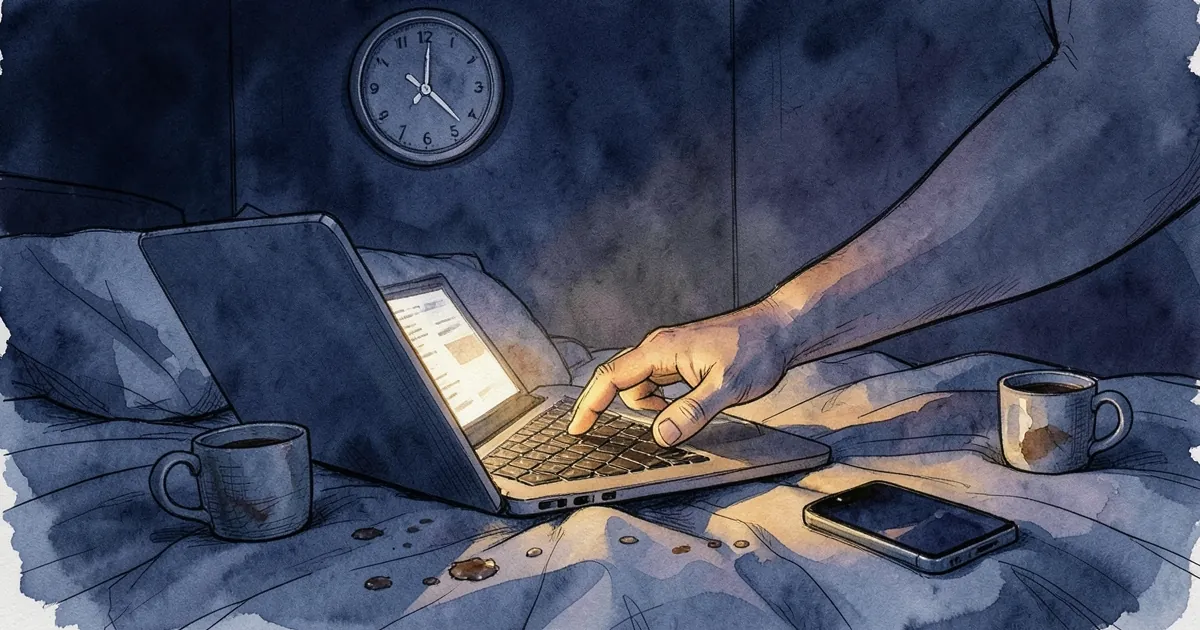
A mid-sized operator's responsible-gambling dashboard logged 2,847 self-exclusion registrations in the 30 days after it pushed a 2am pop-up to logged-in users, against a 30-day baseline of roughly 940. Same site, same traffic mix, same deposit limits — the only deliberate change was a modal that appeared between 02:00 and 04:00 local time, asking people whether they wanted to take a break. The sign-ups didn't triple because the tool got better. They tripled because the pop-up arrived at the hour when the people most likely to need it were still awake.
That's the short version. The longer one is about what a 2am pop-up actually is: a nudge that lands during the session that a player would, in daylight, describe as the mistake. And the interesting question isn't why the numbers went up. It's why they went up by that much — and what happened on day 31.
The 2am session isn't the 9pm session
Operators tend to model their user base as an average: average session length, average stake, average time of day. The average player logs in around 20:00 and plays for 45 minutes. That player is not the one clicking the pop-up.
The 2am cohort is small and strange. On this operator's data it was 6.1% of daily active users and 19% of total staked handle. Sessions ran long — a median of 2 hours 40 minutes, versus 41 minutes in the evening window. Deposit frequency was higher, average deposit size lower, and the gap between deposits shorter. These are the players chasing something back, not the ones spending disposable income on a Friday night.
A pop-up at 2am is therefore not a general-purpose responsible-gambling message. It's a message aimed at a specific behavioural state, delivered while the person is still in it. The conversion rate on the modal was 11.4% of impressions; the same copy shown at 20:00 converted at 0.9%. Same words, different hour, twelvefold difference.
What the copy actually said
Worth noting, because it matters for anyone thinking of copying this: the pop-up was not a scare tactic. No loss figures, no red text, no "you have deposited $X this month". It asked one question — "Do you want to take a break?" — with three buttons: 24 hours, 7 days, and a link to full self-exclusion. Two-thirds of the people who clicked chose 24 hours.
That detail is doing a lot of work. A 24-hour pause is a low-commitment action, and low-commitment actions convert. If the modal had led with the full exclusion flow, the numbers would have been a fraction of 2,847, and the operator would have concluded the channel didn't work.
The re-entry problem arrives on day 31
Here's where the story stops being a clean case study. A 24-hour break expires automatically. A 7-day break expires automatically. The player comes back, and the operator's dashboard shows them as "returned from time-out" — a segment that, on this site's numbers, deposited 1.8x the median within 72 hours of return.
That's not necessarily a failure. Some people genuinely needed a night off. But it does mean the headline figure — sign-ups tripled — measures intent at the moment of the pop-up, not behaviour a month later. The 2am modal caught people at their most receptive; it did not, on its own, change what happened when the timer ran out.
This is the same structural gap that shows up whenever you look closely at how exclusion actually works. The lock is easy; the re-entry timer that keeps ticking is where the friction lives, and a 24-hour option is the least friction of all. If the goal is to interrupt a session, a one-night break does that. If the goal is to change a pattern, the pop-up is a first step that needs a second one behind it.
Tripling one number hides the others
Before anyone rushes to schedule a 02:00 cron job, look at what didn't move.
Self-exclusion sign-ups tripled. Deposit limits set during the same period rose 14% — real, but modest. Time-out usage outside the pop-up window was flat. And the operator's support queue for reversal requests rose 61%, because a chunk of the new exclusions were people who clicked at 2am and wanted it undone by 10am.
That last number is the honest one. A self-exclusion that takes three minutes to set up and seven days to reverse is a very different product depending on which end of it you're on at 2am. The pop-up worked partly because the sign-up is frictionless. The reversal queue is where the design gets tested, and 61% more of it is not obviously a win.
The multi-brand hole
There's a second reason to be careful with the 2,847 figure. It counts registrations on one site. A player who excludes there can, in most markets, open an account with a competitor before the kettle boils — a dynamic we've written about in the context of a shared wallet that answers for three sites but not the fourth. If the 2am cohort is genuinely at-risk, a single-operator pop-up catches a fraction of the exposure. It catches the session, not the person.
Some jurisdictions are closing that gap through central registers; plenty aren't. Until they do, an operator-run nudge is a partial tool being asked to do a whole job.
What the 11.4% is really measuring
The temptation is to read 11.4% as proof that timing beats design. I think it's narrower than that. The modal converted because it arrived at the exact moment the player's own judgment was most likely to agree with it — the 2am version of themselves, not the 10am one. That's a window, not a strategy.
The open question is what the operator does with the 2,847 names on day 31. If the answer is "nothing, the timer handles it", the triple is a spike on a chart. If the answer is a follow-up at 48 hours — a check-in, a limit prompt, a human message — then the 2am pop-up becomes something closer to a funnel entry point than a stunt. Nobody has published that second-month data yet. Whoever does will tell us whether the hour matters more than the follow-through.