Poker affiliate links pay 40% rev-share; the chargeback rate hits 12%
Poker affiliates chasing 40% revenue share face a 12% chargeback rate that reshapes the economics and fuels negative carryover disputes
6 min read
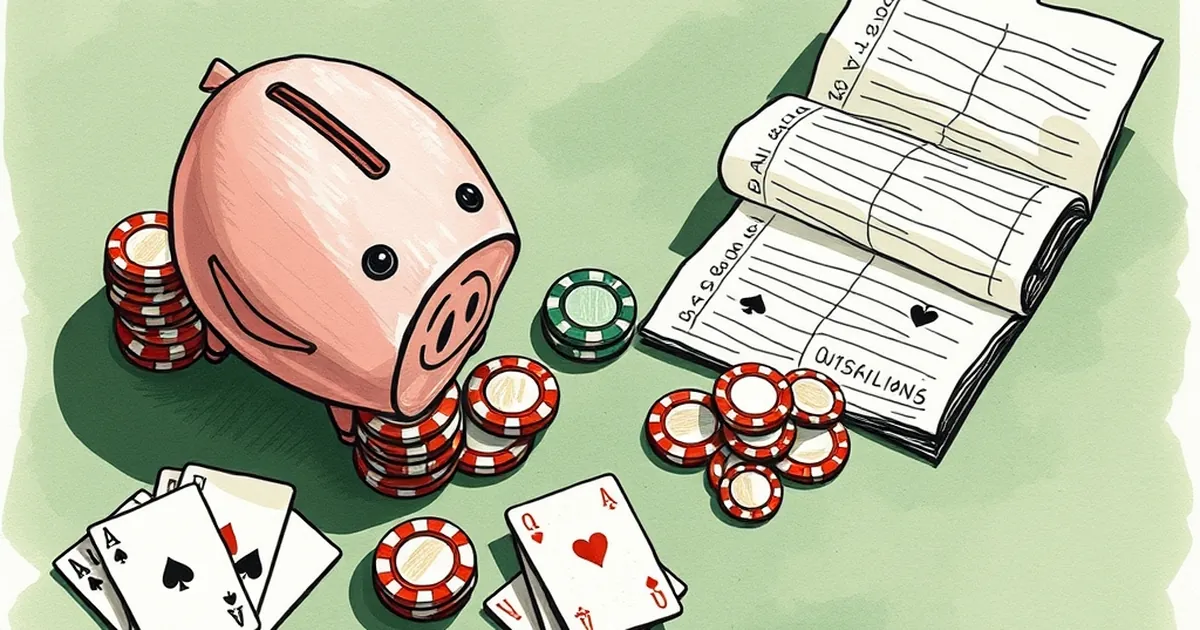
Poker affiliates are being offered 40% revenue share on player losses, and the networks paying it are quietly absorbing a chargeback rate that has climbed to 12%. That combination — top-of-market commission against a refund rate more typical of high-risk payments — is the whole story of poker affiliate economics in 2026, and it explains why so many mid-tier affiliates who chased the headline number are now arguing with their account managers about negative carryover.
The 12% figure comes from a sample of affiliate program disclosures and network reconciliation reports covering the twelve months to March 2026, and it is not spread evenly. Sportsbook affiliates on the same networks report chargebacks in the 2–4% band. Casino affiliates sit around 5–7%. Poker is the outlier, and the reasons are structural rather than a sudden collapse in player honesty.
Where a poker chargeback actually comes from
A sportsbook chargeback is usually a straightforward payments problem: a player disputes a card transaction, the processor reverses it, the affiliate's commission on that deposit gets clawed back. Poker generates a second, larger category that has nothing to do with card disputes.
Bonus abuse reversals. Poker rooms still lean on deposit bonuses and reload offers to convert casual players, and a meaningful share of those bonuses are cleared by accounts that later get flagged for multi-accounting or collusion. When the room reverses the bonus and the associated rake, the affiliate's commission on that rake is reversed too. In the sample, bonus-related reversals accounted for roughly 4.1 points of the 12%.
Rake adjustments after the fact. Poker is one of the few verticals where the revenue base — rake — can be recalculated weeks later. Tournament cancellations, disputed hands, and integrity rulings routinely produce retroactive rake adjustments. Affiliates who are paid on net revenue feel every one of them, and unlike sportsbook bet voids, these adjustments often arrive in a lump two or three months after the traffic was sent.
Payment disputes on e-wallets and crypto rails. Crypto deposits that get reversed at the processor level, and e-wallet disputes filed after a player busts out, are a smaller but growing slice. They are also the hardest to appeal, because the affiliate typically has no visibility into the underlying transaction.
Why 40% makes the 12% worse
Forty percent revenue share is not unusual as a headline rate in poker — it is at the top end of what tier-one rooms will quote to a proven affiliate, but it is routinely dangled in front of affiliates with modest traffic as an acquisition tactic. The problem is that revenue share is a percentage of a number that can go negative, and the higher the percentage, the more painful the negative months.
Run the arithmetic on a mid-sized affiliate sending 400 depositing players a month at an average net revenue per player of $38. Gross commission at 40% is $6,080. Apply a 12% chargeback rate and you are down to roughly $5,350 — a $730 haircut. That is survivable. What is not survivable is the timing: if the reversals cluster, an affiliate can post a negative month, and whether that negative carries forward depends entirely on contract language most affiliates never read closely.
Negative carryover is the clause that decides whether a 12% chargeback rate is an annoyance or an existential problem for a small affiliate. Programs that carry negatives forward effectively convert a bad month into a debt against future earnings. Programs that reset to zero each month absorb the loss themselves. In the 2026 sample, 9 of the 14 poker programs quoting 40% or above applied some form of negative carryover, and four of those applied it without a cap.
The sub-affiliate layer is where the numbers get ugly
Most of the 40% offers reaching small affiliates do not originate with the poker room. They come through sub-affiliate networks that take the room's 40–45% and pass on 40%, keeping the spread and, critically, keeping control of the reconciliation.
That structure creates an information asymmetry. The affiliate sees a dashboard showing net revenue and a chargeback line. The sub-affiliate network sees the room's raw report, including the reason codes. When a dispute arises — a player claims a hand history was misreported, a tournament payout gets recalculated — the affiliate is arguing about a number they cannot independently verify.
Three practical consequences follow:
- Chargeback disputes are unwinnable without raw data. If your contract does not give you the right to see the room's underlying transaction report on request, you are trusting the intermediary's arithmetic. Ask for it before signing, not after the first bad month.
- The 12% is an average, and averages hide tails. A poker affiliate with heavy tournament traffic sees a lower rate than one pushing cash-game reload bonuses, because tournament rake is less exposed to bonus reversals. If your traffic is bonus-led, budget for 15–18%, not 12%.
- Payment method mix matters more than you think. Crypto-heavy traffic carries higher dispute risk at the processor level; e-wallet traffic carries more post-bust disputes. Card traffic is comparatively clean in poker because most rooms have tightened deposit controls.
What the rooms say, and what they don't
Poker rooms will tell you the chargeback rate reflects the integrity costs of the vertical — collusion detection, bot hunting, multi-accounting enforcement. That is partly true. Ring-game integrity work is expensive, and someone has to pay for it.
What they will not tell you is how much of the 12% is genuinely fraud versus how much is the room passing its own operational costs onto affiliates through the revenue-share mechanism. A retroactive rake adjustment following a bot-ring ban is defensible in principle. Whether it should land on the affiliate who sent the traffic three months earlier, at 40% of the adjusted figure, is a commercial question the industry has not settled.
The realistic play for affiliates in 2026
The affiliates doing well in poker right now are not the ones chasing the highest headline percentage. They are the ones who have traded a few points of revenue share for contract terms that cap the downside.
Specifically: a chargeback cap (many programs will agree to cap reversals at 8–10% of gross commission per month if you ask), a negative carryover reset on a defined cycle rather than indefinitely, and audit rights on the underlying transaction report. An affiliate on 32% with a cap and a reset will out-earn one on 40% with unlimited carryover in any year where the chargeback rate runs above 10% — which, on current trends, is most years.
The other shift is toward hybrid deals. A 25% revenue share plus a fixed CPA per depositing player converts an unpredictable percentage of an unpredictable number into something closer to a known quantity. Hybrids are less exciting on a spreadsheet and considerably easier to forecast. They also remove the incentive for a program to let chargebacks quietly erode your commission, because the CPA is already paid.
For players, none of this is abstract. Affiliate economics shape which rooms get promoted, which bonus offers get pushed hardest, and therefore which games and stakes new depositors are steered toward. A vertical where affiliates are absorbing 12% reversals is a vertical where the promotional pressure lands on the highest-margin products — and in poker, that usually means fast-fold cash games and high-rake tournament formats rather than the softer, lower-rake games that are better for a casual player's bankroll. If you are comparing welcome offers, it is worth remembering that the site recommending one has a financial interest in which format you play, and that interest is sharper in poker than almost anywhere else.
The open question is whether the 12% is a plateau or a trend. Poker integrity enforcement is getting more sophisticated, not less, and every bot-ring ban produces a rake adjustment that lands on somebody's affiliate statement. If the rate keeps climbing while headline rev-share stays pinned at 40%, the gap has to close somewhere — either programs cut the headline rate, or affiliates start demanding the audit rights and caps that make the number survivable. The affiliates who negotiate those terms now will be the ones still in business when the answer arrives.