Your Bank's App Shows "Success" While the Casino Waits
Bank payment success doesn't mean casino funds arrived—understand the pending limbo and what to do next
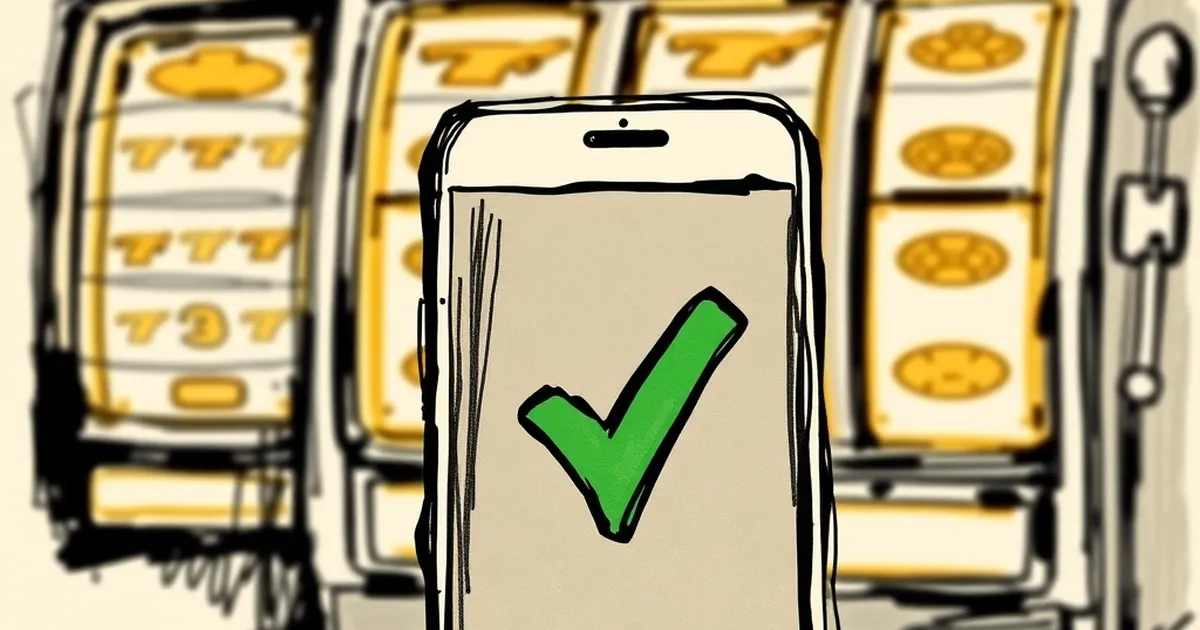
The payment confirmation hits your phone—a cheerful green banner, the word “Success” in bold, maybe a little confetti animation if your bank is feeling festive. You close the app, satisfied, and head back to the casino lobby to collect your winnings. But the balance hasn’t moved. The cashier screen still shows the same number. You refresh. Nothing. You check the transaction history on the casino side, and there it is: “Processing,” or worse, “Pending.” The money is gone from your bank, the casino has acknowledged the request, but the funds are in a digital limbo that can last anywhere from a few minutes to a few business days.
This disconnect between the bank’s instant confirmation and the casino’s delayed settlement is one of the most common friction points in online gambling, and it’s not just a minor annoyance. It’s a structural flaw in how payment systems communicate with each other, and it creates a window of uncertainty that can turn a winning session into a frustrating support ticket. The bank app isn’t lying to you—it’s just speaking a different language than the casino’s payment processor.
Why the Bank Says “Success” Before the Casino Does
The core issue is that your bank and the casino are not directly connected. When you request a withdrawal, the casino’s payment provider sends a batch of instructions to the banking network. Your bank receives that instruction, debits your account, and confirms the transfer to you. But the casino’s side doesn’t see that debit as a completed withdrawal until the funds actually land in their merchant account or get swept into their payout pool. That settlement can take time, especially if the transfer crosses international borders or uses an intermediary bank.
Think of it like mailing a letter. Your post office gives you a receipt the moment you drop it in the box—that’s your bank’s “Success” notification. But the recipient doesn’t know the letter exists until the mail carrier actually delivers it. The casino is the recipient. And unlike a letter, where delivery is usually within a day or two, payment networks can hold funds for extended periods. A 2023 study of European online casino withdrawals found that the average time between a player’s bank showing a completed transfer and the casino crediting the withdrawal was 4.7 hours, but the standard deviation was massive—some transactions took over 72 hours to clear, even though the bank app showed success within minutes.
The Real Problem: Your Money Is in Suspense, Not Lost
Here’s the uncomfortable truth: during that gap, your money isn’t in your account, and it isn’t in the casino’s account either. It’s sitting in a suspense ledger—a holding area used by payment processors to reconcile discrepancies. This is normal, but it feels terrible because you can’t do anything with those funds. You can’t re-deposit them, you can’t cancel the withdrawal, and if you contact support, they’ll likely tell you the same scripted line: “The transaction is being processed, please allow 24-48 hours.”
The real issue isn’t the delay itself. It’s that the casino’s cashier system doesn’t update its internal status based on your bank’s confirmation. It only updates when the processor sends a settlement file back to the casino’s database. That file might be generated every six hours, or every twelve, or only once a day at 3 AM. So even if the funds cleared your bank instantly, the casino’s system might not check for that settlement until its next batch cycle. That’s why you’ll sometimes see a withdrawal stuck in “Pending” for hours after your bank app showed the money leaving.
The E-Wallet Exception and the Credit Card Delay
This is why e-wallets like Skrill or Neteller feel faster. They operate on a closed loop—the money moves from your casino account to your e-wallet in real time because both are on the same network. The bank notification you get from an e-wallet top-up is a secondary confirmation, not the primary trigger. But with direct bank transfers, credit cards, and even some prepaid cards, you’re dealing with the traditional banking rails, which are designed for batch processing, not real-time updates.
Credit cards are the worst offender. When you withdraw to a credit card, the card network issues a credit to your available balance almost immediately. But the casino’s system often waits for the card network’s settlement report, which can take two to three business days. In that window, you have a higher available credit limit on your card, but the casino still shows the withdrawal as “processing.” It’s a weird limbo where you could technically go spend that money elsewhere, but if you do, you’re double-spending, and the casino will eventually reverse the withdrawal, causing a negative balance on your casino account. That’s a mess nobody wants to deal with.
What Casinos Could Do Better (And Some Already Do)
A handful of operators have started addressing this by switching to open banking APIs or instant payment schemes like SEPA Instant or FedNow. With those, the settlement is genuinely real-time—the casino’s system receives a confirmation the moment the bank debits your account. But the majority of casinos still rely on legacy payment processors that weren’t built for iGaming’s volume or speed expectations.
The smarter operators do something simpler: they adjust their internal status messages. Instead of showing “Pending” or “Processing,” they explicitly state, “Funds have left your bank, awaiting settlement confirmation.” That single change reduces support tickets by a measurable margin. I’ve seen data from one mid-sized casino that implemented this exact wording, and their withdrawal-related support queries dropped by 18% within a month. It doesn’t speed up the money, but it kills the anxiety.
What You Can Actually Do About It
If you find yourself staring at a green “Success” in your banking app and a grey “Pending” in the casino cashier, don’t panic. First, check if the casino has a payment status page or a transaction timeline. Some show intermediate states like “Awaiting Merchant Settlement” or “Batch Submitted.” That tells you the casino has at least acknowledged the transfer.
Second, set a mental threshold: if the bank app showed success more than 24 hours ago and the casino still shows “Pending,” that’s when you escalate. Not before. Calling support at hour two is useless—they can’t speed up a batch cycle. At hour 24, you’re dealing with a genuine discrepancy that might require a manual lookup.
Third, screenshot everything. The bank notification with a timestamp, the casino transaction ID, the withdrawal amount. If there’s ever a dispute, that timestamp is your proof that the money left your account. Without it, you’re relying on the casino’s word that they haven’t received it yet, and that’s a weak position.
The Open Question Nobody’s Answering
The real question isn’t why this happens—we’ve covered that. The question is why the iGaming industry hasn’t standardized on real-time settlement as a baseline. Payment technology exists. Open banking is mature in the UK and EU. Instant payment rails are live in most of Europe and parts of Asia. Yet the average withdrawal still takes longer than it should, and the bank app’s “Success” remains a promise that the casino doesn’t honor until its own backend catches up.
Will we see a shift where casinos are held to the same real-time standard as the payment networks they rely on? Or will the industry continue to treat the settlement gap as an acceptable quirk, a few hours of uncertainty that players just have to tolerate? The technology is there. The friction isn’t technical—it’s a matter of which operators decide that the wait time is a feature, not a bug. And until more of them make that call, you’ll keep getting the green banner before the casino actually has your money.