Why Your Card Network Rewards You Like a Mobile Game
Discover why credit card rewards tap into the same psychological triggers as mobile games—and how your brain keeps you coming back for more
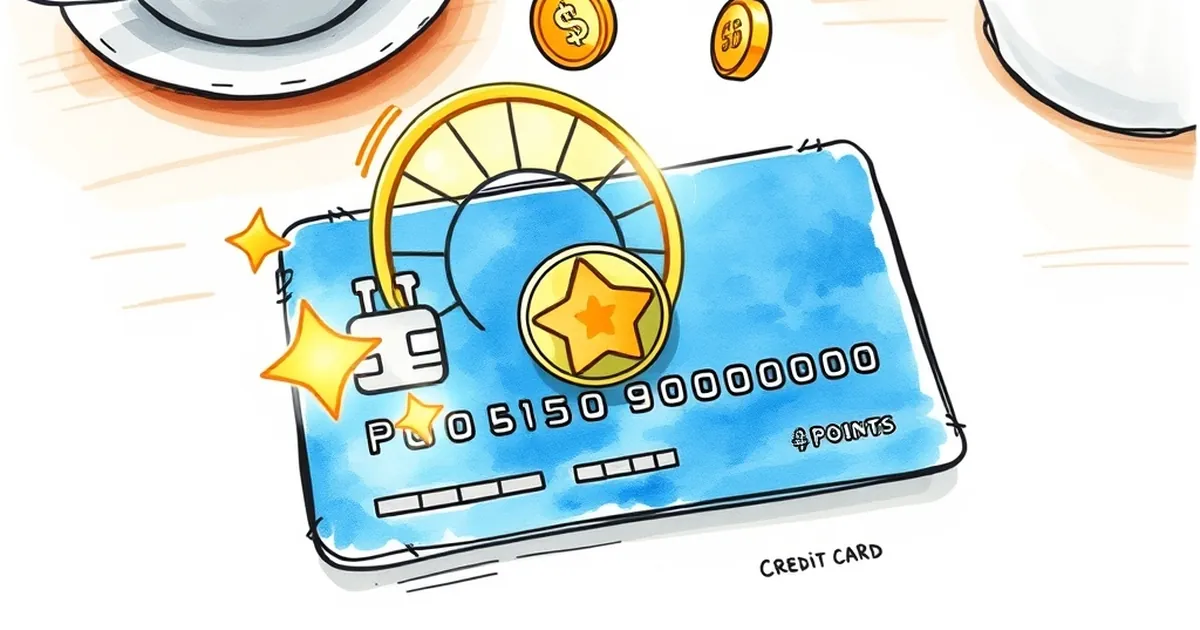
You swipe, tap, or insert your card. A few seconds later, a notification buzzes on your phone: “You earned 75 bonus points.” It feels good. It feels like a tiny win, a little hit of something that makes you want to do it again. But why does a bank or a card network care about making you feel something? The answer, as it turns out, has very little to do with finance and everything to do with how your brain responds to uncertainty and reward — the same psychological architecture that makes a mobile game so hard to put down.
The Variable-Ratio Slot Machine in Your Wallet
The most powerful tool in the behavioral psychologist’s kit — and by extension, the mobile game designer’s — is variable-ratio reinforcement. Discovered by B.F. Skinner in the 1950s, this principle states that a reward given after an unpredictable number of actions is far more addictive than a reward given every single time. In Skinner’s classic experiment, a pigeon that received a food pellet after a random number of pecks would peck the lever frantically, long after the food stopped coming. The uncertainty itself was the fuel.
Now look at your credit card rewards. If every purchase gave you a flat, predictable 1% cash back, you’d yawn. But most premium card networks layer in uncertainty. You might earn 1 point per dollar on groceries, but suddenly — ding — you get 5x points on a random Uber ride because you hit a quarterly category. Or you receive a “bonus offer” for a specific online store that only appears in your app if you haven’t used the card in three days. The timing is variable. The bonus amount is variable. The category itself is variable. Your brain doesn’t register “I earned 2% back.” It registers “I just won something.”
This isn’t a metaphor. A 2019 study published in Nature Communications showed that the brain’s dopamine system responds more strongly to unexpected rewards than to expected ones. When you check your rewards balance and see a mysterious “bonus adjustment” of 500 points you didn’t account for, your brain lights up the same way it does when a mobile game chest unexpectedly drops a rare item. The card network isn’t paying you back. It’s training you.
Loss Aversion: The Unseen Fee That Motivates
Kahneman and Tversky’s prospect theory taught us that losses hurt roughly twice as much as equivalent gains feel good. Mobile games exploit this ruthlessly — think of the “daily streak” that resets to zero if you miss a day. You don’t log in to gain a reward; you log in to avoid losing your streak.
Card networks have copied this playbook with surgical precision. Consider the “annual fee waiver” or the “spend threshold” for a sign-up bonus. The typical offer reads: “Spend $4,000 in the first three months to earn 60,000 points.” That sounds like a gain. But watch what happens if you spend $3,900. You don’t just miss out on the 60,000 points. You feel the loss of them, as if they were already in your pocket. The network has reframed the bonus as something you can lose if you don’t complete the task. The same psychology that makes you panic about losing a 30-day streak in a puzzle game makes you panic about missing that spend target by $100.
One concrete example: In 2022, a major card network launched a promotion where users could “unlock” a higher rewards rate on all spending for the next month — but only if they made at least 15 transactions in the current month. The reward itself was modest (a 0.5% bump). The real hook was the fear of falling short. Data from the issuer showed that users who enrolled in the promotion increased their transaction frequency by over 40% in the qualifying period, even though the financial upside was negligible. They weren’t chasing a big gain. They were avoiding a small loss.
The “Loot Box” of Category Bonuses
Mobile games have perfected the “loot box” — a randomized bundle of rewards that you purchase or earn without knowing exactly what’s inside. The uncertainty creates a dopamine spike that a fixed reward cannot match. Card networks don’t call them loot boxes, but the mechanism is identical.
Think about rotating category bonuses. Every quarter, your card might offer 5% cash back on a new set of categories: gas stations, then grocery stores, then streaming services, then home improvement. You don’t know which category will appear next. The network could announce the next quarter’s bonus on a random Tuesday. You check your app not because you need to know, but because you want to know. That act of checking — that small, voluntary engagement — is the real product. The network wants you in the app because that’s where they can show you offers, cross-sell you products, and collect data on your interests.
One of the most successful recent implementations is the “spend-based unlock.” A card might say: “Spend $500 in the next two weeks to unlock a mystery bonus worth up to 10,000 points.” The range is deliberately wide (anywhere from 500 to 10,000 points). That variance is the lure. The user doesn’t know if they’ll get a tiny bonus or a jackpot. They spend the $500 anyway, because the possibility of a big win feels more real than the probability of a small one. This is the same cognitive bias that makes people overpay for lottery tickets with huge jackpots despite astronomically low odds.
The Social Leaderboard You Didn’t Sign Up For
Mobile games often feature leaderboards, even if they’re hidden. You may not see everyone’s score, but you might see that your “friends” have earned more coins than you this week. That social comparison triggers a competitive drive that has nothing to do with the game’s quality.
Card networks are now quietly building social layers into their rewards programs. Some premium cards now display your “rewards percentile” — “You earned more points than 78% of cardholders in your tier.” Others send you a monthly “rewards summary” that compares your spending habits to “similar cardholders” in your city. You are not told who these people are, but the implication is clear: someone out there is beating you. Someone is optimizing better. You feel a subtle pressure to spend more strategically, more frequently, to climb an invisible ladder.
This is not an accident. A 2021 study in the Journal of Consumer Research found that consumers who received social comparison feedback about their credit card spending increased their overall transaction volume by 12% over a six-month period, even when the comparison was anonymous. The feeling of being “below average” is uncomfortable. The card network turns that discomfort into swipe fees.
What This Means for Your Wallet (and Your Attention)
This isn’t a conspiracy theory or a call to cut up your cards. The behavioral architecture described here is simply good product design — for the issuer. The question is whether it’s good for you. The same dopamine loops that make a mobile game “engaging” can make a rewards program “sticky.” But sticky doesn’t mean profitable for you.
The practical takeaway is simple: you can use these systems without being used by them. The first step is to recognize the reward schedule. When you see a “bonus offer” or a “spend challenge,” ask yourself: Am I doing this because it’s a good financial decision, or because my brain wants to resolve the uncertainty? If the answer is the latter, you can safely ignore it. The 500 bonus points are not worth the $200 of unnecessary spending.
The second step is to set your own thresholds. Decide ahead of time how much you will spend in a category, and ignore the variable-ratio prompts. Treat the rewards as a pleasant surprise, not a goal to chase. Mobile games thrive on open-ended play. Your finances should not.
The future of card rewards will only get more behavioral. Expect more randomized bonuses, more social comparisons, and more “limited-time” offers that exploit the fear of missing out. The networks are not becoming banks; they are becoming game studios. The smart move is to play your own game.