Why Your Card Gets Declined Even With a Perfect Credit Score
Discover why a perfect credit score doesn't prevent card declines, from security freezes to travel triggers and banking glitches
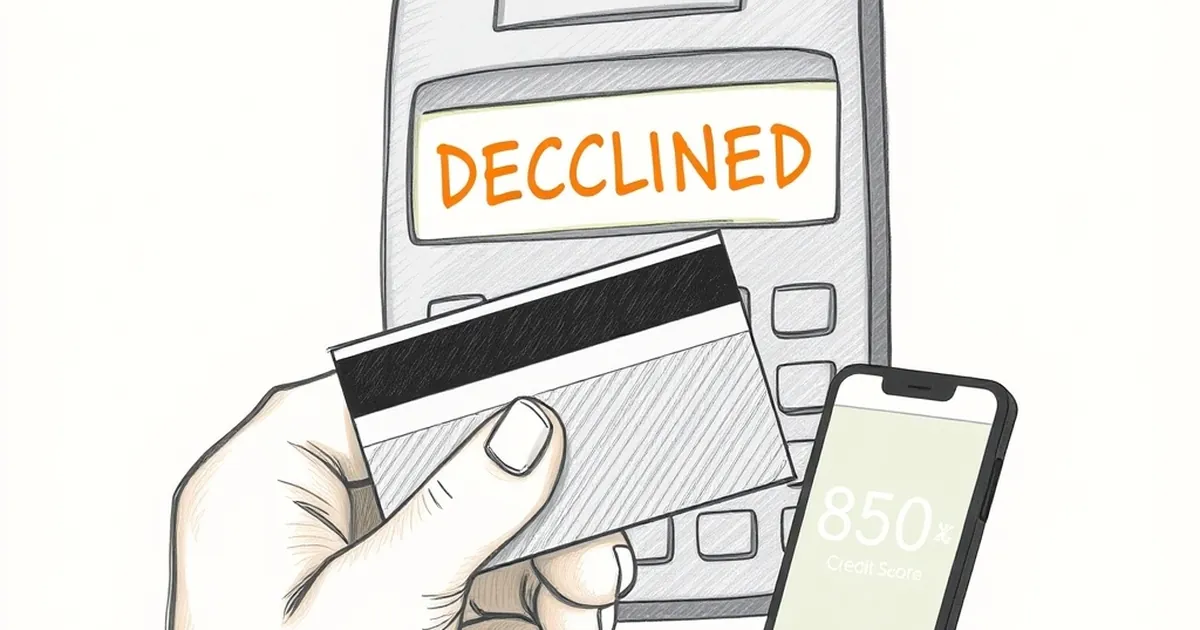
You’re sitting at a restaurant in Tokyo, the bill arrives, you hand over your card with the quiet confidence of someone who’s never missed a payment. The terminal beeps. Red light. Declined.
You try again, maybe a different terminal, maybe a different card. Same result. Your credit score is immaculate—820, maybe 850—but the machine is telling you what your bank statement never would: something is wrong.
It’s a jarring moment, and it happens more often than you’d think. Here’s why your card can get declined even when your financial life looks perfect on paper.
The Security Override Your Bank Never Told You About
Banks and card networks like Visa and Mastercard run sophisticated fraud detection algorithms on every single transaction. These systems don’t care about your credit score. They care about patterns.
If you live in London but your card is suddenly used for a purchase in São Paulo within two hours, the system flags it as impossible. Even if you have a million dollars in the bank and a flawless repayment history, the transaction gets blocked. It’s not personal. It’s physics.
The “Traveling While Perfect” Problem
I once saw a client with a 790 credit score get declined at a hotel in Bangkok. He’d called his bank before the trip—twice—and they’d noted his travel dates. What he didn’t know was that the travel note had expired after 90 days. His trip ran long by a week. The system saw a transaction from a country he was no longer “authorized” to be in.
The takeaway here: Travel notifications are not permanent. Most banks expire them after 30 to 90 days. If your trip extends or you make an unplanned side trip, your card will act like a stranger.
The Hidden Limits on Your Account
Your credit score measures your ability to repay borrowed money. It does not measure how much cash you can spend in a single day. Banks set internal spending limits that are invisible to you until you hit them.
These limits can be surprisingly low, even for high-limit cards. A card with a $20,000 credit line might have a $2,000 daily transaction cap. That’s fine for coffee and groceries. It’s a disaster if you try to buy a laptop or pay a medical bill.
The “Single Transaction” Ceiling
Some cards cap the value of a single transaction at a specific amount, regardless of your total available credit. This is common on prepaid cards and some lower-tier rewards cards, but it can also apply to premium cards if the bank’s risk model flags the merchant category as high-risk.
For example, buying cryptocurrency, gambling chips, or even a high-value airline ticket can trigger a soft block. The system thinks: “This transaction is unusually large for this cardholder.” It doesn’t check your score. It checks your history of transaction size.
The Merchant’s Own Risk Filters
Here’s a layer most people don’t see: the merchant—the store, the website, the hotel—also runs its own fraud checks. Visa and Mastercard might approve the transaction on their end, but the merchant’s payment processor can decline it.
This happens frequently with international transactions. A small shop in Italy might use a payment gateway that automatically rejects cards issued in certain countries, even if the card is perfectly valid. It’s a blunt instrument against fraud, but it catches honest customers too.
The “BIN Attack” Protection
Merchants and payment processors watch for something called a BIN attack. A BIN is the first six digits of your card number, which identify the issuing bank. Fraudsters often test stolen card numbers by running small transactions on dozens of cards from the same bank.
If your bank’s BIN was recently targeted, some cautious merchants will block all transactions from that bank for a few hours or days. Your card is clean. Your bank is fine. But you’re collateral damage in a war you didn’t know was happening.
The Quiet Glitch in the Network
Sometimes, there’s no fraud, no limit, no merchant filter. The system just… hiccups. Visa and Mastercard process billions of transactions daily. The infrastructure is robust, but it’s not perfect.
A routing error can temporarily blacklist your card. A software update at your bank can cause a timeout. A card that was reported lost and replaced last month might still have its old number active in a merchant’s recurring billing system, causing confusion when you try to use the new card.
The “Zombie Authorization” Problem
This one is subtle but common: you authorized a small test transaction weeks ago (like a $1 hold from a gas station or a hotel). That authorization never fully cleared. It sits on your account as a pending charge, consuming a tiny slice of your available credit.
When you try to make a legitimate purchase later, your bank sees your available credit as slightly lower than reality. If the new purchase pushes you over a soft limit, the system declines it. Your credit score is perfect. Your balance is fine. But a ghost transaction is blocking you.
What You Can Actually Do About It
The next time your card is declined and you know your credit is pristine, don’t panic. Do these three things in order:
Call the number on the back of your card. Not the general customer service line—the one printed on the card itself. That number routes you to the fraud department directly. Tell them: “My card was declined. Please check for any security blocks, travel notes, or daily limits.” They can see everything.
Ask the merchant to run the transaction again. Often, a single decline resets the system. A second attempt sometimes goes through because the initial decline cleared the flag. This works more often than you’d think.
Use a different payment method for small transactions first. If you’re traveling or making a large purchase, run a small test transaction—buy a coffee or a snack—to “wake up” your card in the local system. Then proceed with the big purchase.
A Forward-Looking Note on the Future of Declines
The payment industry is moving toward something called “intelligent authorization.” Visa and Mastercard are testing systems that use machine learning to distinguish between a legitimate traveler and a fraudster in real time, without blocking the transaction.
But we’re not there yet. For now, the system errs on the side of caution. A declined card isn’t a judgment on your financial health—it’s a safety mechanism that hasn’t learned to trust you yet. The moment you call your bank, you teach it. And that’s a good thing, even if it’s annoying at the dinner table.