Why Your Card Declines a Casino Deposit You Already Budgeted
Learn why your card declines a casino deposit you already budgeted, and discover the hidden payment friction behind the error
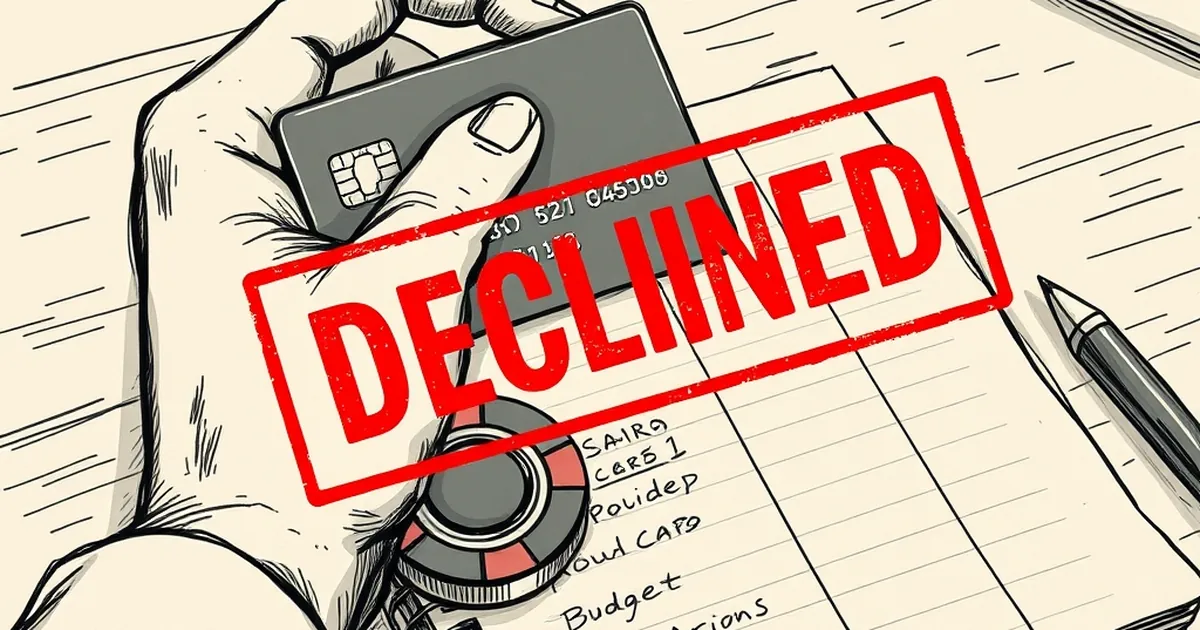
You’ve done the math. You’ve set a hard monthly cap on gambling spend, you’ve transferred exactly that amount into your checking account, and you’ve sat down for a Friday night session with a clear head. The deposit screen shows the amount you budgeted. You hit confirm. And then: Transaction declined by issuer.
The card didn’t run out of money. The bank isn’t broke. Yet the decline code is real, and the game won’t load. This isn’t a glitch or a conspiracy by the casino to ruin your evening. It’s a specific, structural friction built into the payments ecosystem — and it hits exactly the players who are trying hardest to stay in control.
The Bank’s Algorithm Doesn’t Know You Budgeted
The most common reason a card declines a casino deposit, even when the funds are available, is that your bank’s fraud detection system has flagged the transaction as high-risk. This isn’t a judgment call on gambling itself — it’s a pattern-matching engine that has learned that casino deposits are among the most frequently disputed transactions in the payments industry.
According to a 2023 report from the European Payments Council, gambling-related chargebacks account for roughly 22% of all disputed card transactions in the EU, despite representing less than 4% of total card volume. That ratio — 22% of disputes from 4% of volume — means every time your card touches a gambling merchant, the bank’s model sees a roughly 5.5x higher likelihood of a dispute than the average transaction. The algorithm is designed to pre-empt that risk by declining first and asking later.
This is where the budgeting paradox kicks in. A player who deposits exactly £50 once a week, never chases losses, and always stays within a pre-set limit looks less legitimate to the bank’s model than a player who deposits £500 once a month. Why? Because the small, regular, predictable deposits map to the signature of a “responsible gambler” — but the algorithm reads them as a “compulsive gambler trying to micro-deposit around a spending cap.” The machine can’t tell the difference between self-discipline and addiction. It only sees frequency and merchant category code (MCC 7995 for gambling).
The 24-Hour Velocity Rule You Didn’t Know Existed
Most major card issuers — Visa, Mastercard, and increasingly the local schemes in markets like Australia and Canada — apply what’s called a gambling velocity limit at the processor level. This is a per-card, per-merchant-category cap on how many successful gambling transactions can be processed in a rolling 24-hour window. The exact numbers vary by issuer, but the most common threshold is three gambling transactions in 24 hours.
Here’s the kicker: that limit applies across all gambling merchants, not just one casino. If you deposited at PokerStars at 8 PM last night, then made a quick sportsbook deposit at Bet365 at 9 AM this morning, and then tried to fund your slot session at a third site at 10 PM tonight — the fourth attempt, even if it’s from a different operator, will hit the velocity wall. The bank doesn’t care that you’ve never played at that third site before. It sees three gambling transactions in 23 hours and slams the door.
This is especially punishing for players who use a single card for all their gambling. The “three per day” rule is not published in any terms of service you’ve ever clicked “agree” to. It lives in the internal risk playbooks of the issuing banks. If you’ve had two declined deposits in a row across different sites, and you’re certain the money is there, check your recent gambling transaction count. You might be hitting a limit that has nothing to do with your balance.
The “Budgeted Amount” Triggers a Manual Review
Another overlooked reason is what payment processors call the exact-budget trigger. When a player deposits a round number that exactly matches their available balance — say, £100 when the account shows £100.02 — the system flags it as a “drain behavior.” This is a behavioral pattern that banks associate with problem gambling: the player empties the account to the last cent.
The irony is thick. The player who budgets £100, transfers £100 into a separate account, and tries to deposit exactly that amount is doing the textbook responsible thing. The bank sees a player who is about to zero out their transactional balance and flags it for manual review. The decline is automatic, but the hold can last anywhere from 30 minutes to 24 hours, depending on whether the bank’s fraud team is staffed at that hour.
If you want to avoid this, never deposit an amount that’s within 5% of your total available balance on that card. Leave at least a few dollars or euros in the account. The algorithm interprets “almost empty” as “high risk of dispute,” even when the player is operating perfectly within their budget.
The Geo-Fence and the Cross-Border Wobble
This one is becoming more common as global gambling regulation fragments. Even if you’re playing at a licensed casino that accepts your country’s players, the processing gateway for that casino may route your transaction through a different jurisdiction than the one where your card was issued.
Take a concrete example: you’re a Canadian player using a Toronto-issued Visa. You deposit at a casino licensed in Malta. The casino’s payment processor routes the transaction through a UK-based acquiring bank. Your Canadian card issuer sees a charge from a UK merchant, with a Malta-based gambling license, for a player whose IP address shows Ontario. That’s three different jurisdictions on one transaction. The bank’s system doesn’t know whether this is a legitimate cross-border gambling spend or a stolen card being tested by a fraud ring in a gray market. It declines.
This cross-border complexity is why some players find that one card works perfectly at one casino but fails at another, even though both sites are “licensed and legal” for their region. The difference isn’t the casino’s trustworthiness — it’s the payment routing. The decline has nothing to do with your budget and everything to do with the spaghetti of acquirers, gateways, and settlement banks that sit between your card and the casino’s ledger.
A Stat That Captures the Friction
A 2024 study by a UK-based payments consultancy, PXP Financial, found that 18.7% of all first-time gambling deposit attempts using a debit or credit card are declined for non-financial reasons. That means nearly one in five initial deposits fails not because the player is out of money, but because of fraud flags, velocity limits, or routing mismatches. Among second and third deposit attempts, that rate drops to about 6%, because the bank’s model has learned that this specific card-to-merchant pairing is legitimate. The system needs a “trust history” — and the first few attempts are where the friction lives.
What This Means for Your Next Session
If you’re the kind of player who budgets carefully, you’re actually more likely to hit these friction points than a casual, irregular depositor. Your predictable pattern, your exact-budget amounts, and your multi-site play all trigger the very safeguards that the bank designed to protect you from yourself. The system isn’t punishing responsibility — it’s just that the algorithms were built to catch extremes, and disciplined behavior looks extreme to a machine that has only seen chaos.
So what do you do? Keep your budget. Keep your separate account. But change one variable: never deposit the exact balance, never use the same card at more than two gambling sites in a day, and if a decline happens, wait 24 hours before trying again — not 23. The machine learns slowly. You can learn to play around it.