Why Your Brain Treats a Transaction Decline Like a Missed Jump
Why your brain treats a card decline like a missed jump—and what that reveals about human psychology
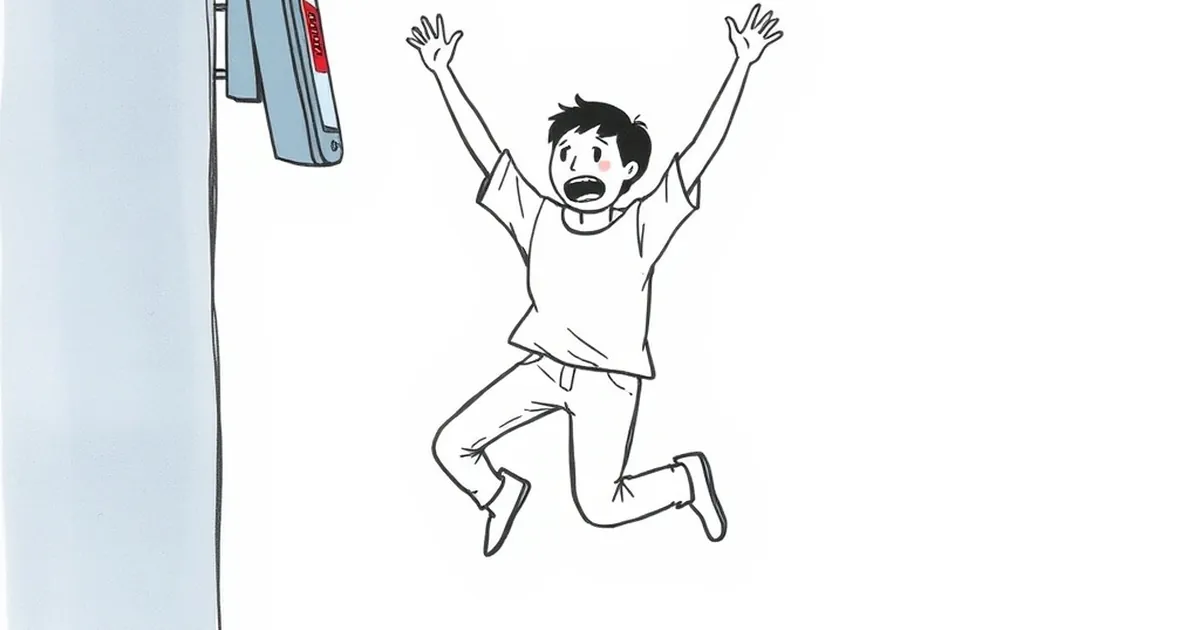
Why Your Brain Treats a Transaction Decline Like a Missed Jump
We’ve all felt it. You tap your phone on the terminal, and instead of the cheerful beep, there’s a pause. Then, the screen flashes red: DECLINED. Your stomach drops. Your face flushes. For a split second, you feel a jolt of something that feels suspiciously like shame, even if you know the card has funds.
Why does a simple payment failure trigger such a visceral reaction? It’s not just about losing a purchase. A growing body of behavioral research suggests that your brain processes a declined transaction using the same neural circuitry that fires when you miss a step on a staircase, fail to catch a falling glass, or lose a point in a competitive game. It’s a prediction error—a moment where the world didn’t deliver what your brain had already counted on.
The Prediction Machine
To understand the sting of a decline, you first have to understand how your brain experiences any routine action. Your mind is not a passive receiver of reality; it is a relentless prediction engine. Every time you reach for a door handle, your brain has already simulated the weight, the texture, and the arc of your arm. Every time you pull out a card or open a wallet app, your brain has already completed the transaction in a micro-simulation.
This is the core principle of predictive processing. The brain constantly generates models of what should happen next, based on past experience. When reality matches the prediction, you feel a smooth, almost invisible sense of flow. When reality mismatches, you get an error signal.
A transaction decline is a spectacular prediction error. You predicted success. The terminal predicted success. The waiter or the checkout screen expected success. But the system said no. That gap between expectation and outcome is where the emotional pain lives.
The Dopamine Gap
This is where the late Daniel Kahneman’s work on prospect theory meets modern neuroscience. Kahneman showed that losses hurt roughly twice as much as equivalent gains feel good. But there’s a more granular layer beneath that: the dopamine prediction error.
Dopamine is often called the "pleasure chemical," but that’s a simplification. Dopamine is the molecule of anticipation and surprise. It spikes when a reward is better than expected. It crashes—literally dips below baseline—when a reward is worse than expected.
When you attempt a payment, your brain releases a small pulse of dopamine in anticipation of the successful outcome. You’re already in the "reward zone." The decline hits that wave and reverses it. The crash isn’t just disappointment; it’s a measurable neurochemical dip. It feels bad because, from your brain’s perspective, you lost something you already had.
The Three Layers of the Sting
A declined transaction isn't a single emotion. It’s a layered experience that hits different psychological systems simultaneously.
Layer 1: The Loss of Agency (The "Missed Jump" Reflex)
Think about the physical sensation of missing a step in the dark. Your body freezes. Your heart rate spikes. Your attention narrows to the immediate threat. This is a startle reflex mediated by the amygdala.
A card decline triggers a similar, albeit muted, reflex. You were in a state of smooth, goal-directed action (completing a purchase). Suddenly, the goal is blocked. Your brain registers this as a failure of your own internal model. You didn't just lose money; you lost control over your environment. This is why people often tap the card again immediately, even knowing it won't work—it’s a motoric attempt to reassert agency, like shaking a stuck video game controller.
Layer 2: Social Evaluation (The "Spotlight" Effect)
This is the part that feels like shame. Payment is a public act. Even in a self-checkout, there’s an implied audience: the machine, the queue behind you, the security camera. A decline triggers what psychologists call the spotlight effect—our tendency to overestimate how much others notice our failures.
In a 2018 study published in the Journal of Consumer Research, researchers found that payment failures in social contexts (like splitting a bill) produced higher cortisol levels than the same failure in private. The brain doesn’t just process the financial setback; it processes the potential reputational damage. "Am I seen as irresponsible? Broke? A fraud?" This social pain activates the same anterior cingulate cortex that processes physical pain.
Layer 3: The Loss Aversion Trap
Finally, the decline activates a raw, economic fear. Kahneman and Tversky’s work is crucial here. We are wired to be loss averse. But a decline isn’t a loss of money you had; it’s a loss of access to money you expected to use.
Your brain treats "potential to spend" as a resource. A decline doesn't just deny you an item; it casts doubt on your entire financial model. Will the next transaction work? Is something wrong with my account? This uncertainty is deeply uncomfortable. It pulls you out of the "safe zone" of routine spending and into a state of hyper-vigilance. You stop being a consumer and start being a problem-solver, scanning your memory for what went wrong.
The Variable-Ratio Trap
Here’s the cruel twist that behavioral psychology reveals: the system that issues declines is designed in a way that actually amplifies the sting.
Payment systems are not purely deterministic. Sometimes a decline is a hard block (no funds). Sometimes it’s a fraud alert (suspicious activity). Sometimes it’s a network glitch. Sometimes the card works on the second try. This inconsistency makes the approval process a variable-ratio reinforcement schedule.
B.F. Skinner famously showed that behaviors rewarded on an unpredictable schedule are the most resistant to extinction. Slot machines use this principle. But so does the modern payment network. You never know if a transaction will succeed or fail. When it succeeds, the relief is a reward. When it fails, the pain is sharp. This unpredictability keeps you engaged, keeps you trying, and keeps the emotional stakes high. You become hyper-focused on the outcome, just like a player watching a spinner.
The Concrete Example: The 3D Secure Loop
Consider the infamous 3D Secure (Verified by Visa / Mastercard SecureCode) challenge. You make a purchase. The page loads. A pop-up asks for a one-time code sent to your phone. You enter it. Then... nothing. The page spins. Your heart rate rises. Is it loading? Did it decline? Did the code expire?
This moment is pure prediction-error hell. Your brain has already committed to the purchase. You’ve passed the first hurdle. The delay feels like a potential failure. Research from the Journal of Financial Services Marketing (2019) showed that this friction—the uncertainty gap between authentication and approval—significantly increases user anxiety and abandonment rates. The brain interprets the spinning wheel not as "processing," but as "pending threat." It treats the absence of a reward (approval) as an active loss.
Forward-Looking: Designing for the Error Signal
So what do we do with this knowledge? We can’t eliminate declines—they’re a necessary guard against fraud and overspending. But understanding the brain’s reaction allows us to redesign the experience of the decline.
The future of payment interfaces isn't just about speed. It’s about error-signal management.
First, anticipatory feedback. Imagine a payment app that, before you tap, gives you a subtle vibration if it detects a high likelihood of decline (e.g., low balance, unusual location). This would shift the prediction error from the moment of failure to the moment of decision. Your brain would be prepared. The sting would be a warning, not a surprise.
Second, reframing the narrative. Instead of "DECLINED" in red, what if the message said "Blocked for your safety" or "Paused—check your balance"? This changes the attribution. It moves the cause from "your failure" to "system protection." This simple linguistic shift reduces social pain and the spotlight effect.
Third, graceful recovery. The worst part of a decline isn't the decline itself; it’s the dead-end silence that follows. Future systems should offer immediate, low-friction alternatives. "Try another card?" should appear instantly. "Pay in two installments?" should be a seamless button. The goal is to close the prediction error gap as quickly as possible. Your brain wants to return to a state of flow and agency. A well-designed system hands you the next move before the dopamine crash even fully hits.
The next time your card gets declined, notice the feeling. It’s not just about the money. It’s your brain’s ancient prediction machinery encountering a modern, data-driven wall. The sting is real. But the good news is that we can build a world that stings a little less.