Why Your Brain Treats a Subscription Renewal Like a Boss Battle
Why your brain treats subscription renewals like boss battles—and what that reveals about high-pressure financial decisions
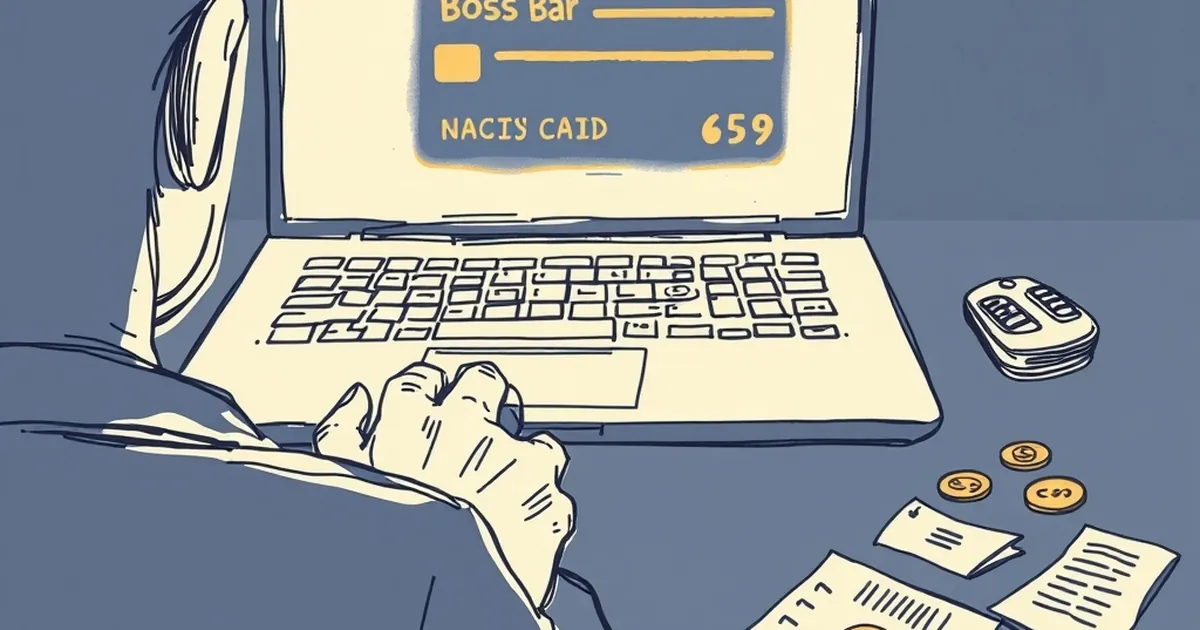
Have you ever stared at a subscription renewal email—say, for a streaming service you haven't touched in three months—and felt a weird spike of adrenaline before you hit "cancel"? It’s not just annoyance. It’s a physiological response that feels suspiciously like the moment a final boss’s health bar appears on screen. You know the fight is rigged, you know the rewards are dubious, but your brain suddenly shifts into a high-stakes tactical mode. Why does a $14.99 charge feel like a life-or-death encounter, and what does that say about how we make financial decisions under pressure?
The short answer is that your brain isn’t processing a recurring payment as a transaction. It’s processing it as a challenge. And that confusion between the mundane and the monumental is where behavioral psychology gets really interesting—especially when you realize that the payment industry, credit card networks, and app developers have all been quietly designing systems that tap into this exact neural wiring.
The Variable-Ratio Trap in Your Inbox
Let’s start with the most famous concept in behavioral psychology: variable-ratio reinforcement. B.F. Skinner’s pigeons pecked at levers endlessly when rewards came randomly. Slot machines run on this. But so does your email inbox. When you check your email, you never know if you’ll find a boring bank statement or a surprise cashback offer. That unpredictability releases dopamine. You’re not addicted to the email; you’re addicted to the possibility of a win.
Now, apply that to subscription renewals. Every month, a charge hits your card. Sometimes you use the service heavily. Sometimes you forget it exists. The renewal itself is a fixed interval—not variable. But the value you extract from it is wildly variable. Some months, you binge a show and feel great. Other months, you pay for nothing. Your brain, trained on variable rewards, treats each renewal as a spin of the wheel. Will this month be the month you finally watch that documentary? The uncertainty makes the decision to cancel feel like a gamble—even though it’s not.
Here’s the kicker: credit card networks and payment processors know this. They don't care if you keep the subscription; they care that the authorization goes through smoothly. But the friction of a renewal—the email, the statement line item, the "update payment method" prompt—is intentionally low-stakes. That’s the design. They've removed the drama from the payment side, so all the drama stays on your side, in your head, where you start negotiating with yourself.
Loss Aversion and the Sunk Cost Final Boss
Kahneman and Tversky’s loss aversion theory tells us that losing $15 hurts roughly twice as much as gaining $15 feels good. But here’s the twist: with a subscription, you’re not just losing $15. You’re losing the potential access. That’s a different beast.
Think of it like a boss battle in a role-playing game. You’ve already spent time leveling up that character—or in this case, you’ve already spent months paying for the service. If you cancel, you "lose" the progress you’ve made (your watch history, your saved playlists, your photo backup). The $15 is just the cost of entry to keep the save file. Your brain doesn’t see a subscription; it sees a sunk cost that you’re protecting. The renewal isn't a bill—it's the checkpoint you need to reach to avoid losing your progress.
This is why you’ll often find yourself "preparing" for a cancellation. You’ll download your data, export your playlists, screenshot your stats. That’s not rational behavior for a $15 fee. That’s the behavior of a player stocking up on potions before a boss fight. You’re not canceling a service; you’re defeating the renewal to claim your freedom. And your brain loves that narrative because it turns a passive financial drain into an active, winnable challenge.
The "Payment Momentum" Mechanic
Here’s a less-discussed but powerful overlap: payment momentum. This is a concept from behavioral economics that describes how the act of paying becomes easier over time. The first time you swipe a card for a new service, there’s hesitation. The tenth time? It’s muscle memory. You don’t even look at the amount.
But here’s the boss-battle twist: your brain applies difficulty scaling to this. When a subscription renews at a higher price (say, your annual plan jumps from $99 to $129), your brain doesn't just see a price increase. It sees an upgraded enemy. You suddenly pay attention. You read the email carefully. You check your bank app. This is the only moment where the payment system actually wants you to be alert—because it’s also the moment where you’re most likely to churn.
Visa and Mastercard have studied this. They know that "involuntary churn" (when a card expires or fails) is a massive revenue leak for merchants. So they built systems like account updater—a service that automatically forwards your new card number to merchants you’ve subscribed to. From a consumer perspective, it’s seamless. From a behavioral perspective, it’s a cheat code. It removes the boss battle entirely. You get hit with a renewal, but you don’t even see the attack animation. The payment just happens. That’s why you might feel a phantom guilt when you see a charge for something you don’t remember buying—you didn’t fight that battle, so your brain is confused why you took damage.
The Reward Loop of "Free Trials" and Auto-Renewal
Let’s talk about the most manipulative—and most effective—mechanic in the payment world: the free trial with auto-renewal. This is the gaming equivalent of a "tutorial level" that secretly starts the final boss fight without telling you.
Behaviorally, this exploits the endowment effect. Once you’ve had access for 30 days, you feel ownership. Canceling feels like giving up something you already own, not something you’re deciding not to buy. The auto-renewal is the game’s "continue?" prompt. And here’s the research-backed part: a study from the Journal of Marketing Research found that consumers are significantly less likely to cancel a subscription when the renewal is framed as a default action (auto-renew) versus an opt-in choice. You’re not making a decision; you’re failing to make a decision, and your brain interprets that as a win because you avoided the loss.
But here’s the forward-looking shift: we’re seeing a counter-movement. The new generation of "subscription managers" (like Rocket Money or Apple’s subscription tracking) are essentially boss-battle guides. They show you your health bar (monthly spend), your incoming attacks (renewal dates), and your escape routes (cancel buttons). They don’t remove the decision—they make you aware of the fight. And that awareness changes the dynamic. You’re no longer a passive player; you’re a strategist.
The Practical Close: Recalibrating Your Boss Battle Difficulty
So what do you do with this knowledge? You can’t stop your brain from treating a renewal like a boss fight, but you can change the difficulty settings.
First, schedule your battles. Pick one day a month—call it "Renewal Review Day"—and block out 15 minutes. On that day, you intentionally open every subscription email, every bank notification, and you choose to engage. This turns the variable-ratio chaos into a fixed-interval check. You’re no longer reacting to random attacks; you’re going on a hunt.
Second, reframe the sunk cost. Before you cancel anything, ask yourself: "If I were signing up for this today, fresh, with no history, would I pay this price?" If the answer is no, you’re not losing progress—you’re selling a save file you don’t play anymore. That’s not a loss; that’s a trade.
Third, use the payment systems against themselves. Set your card to require manual approval for recurring charges (some banks allow this via app toggles). This forces the "boss battle" to happen at the point of charge, not at the point of the email. You’ll be more alert, and you’ll make better decisions because you’re not in a reactive state.
The future of payments isn’t about making things easier—it’s about making them legible. The next wave of fintech isn’t built on frictionless checkouts; it’s built on intentional checkouts. Think of it as a difficulty setting slider that you control. You can play on "casual" and let auto-renewals and account updaters handle everything. Or you can play on "hard mode" and manually approve every charge. Most of us want the middle ground: enough friction to stay awake, but not so much that we’re exhausted.
Your brain will always treat a renewal like a boss battle. The trick isn’t to ignore that instinct—it’s to bring the right gear. And the gear, in this case, is just a calendar reminder and a willingness to press "cancel" without looking back. The boss doesn’t drop loot anyway. The real reward is the quiet month after, when your statement is smaller and your brain finally stops fighting.