Why Your Brain Treats a Payment Like a Puzzle to Solve
Discover why your brain processes payments like puzzles, blending loss aversion and reward anticipation in every transaction
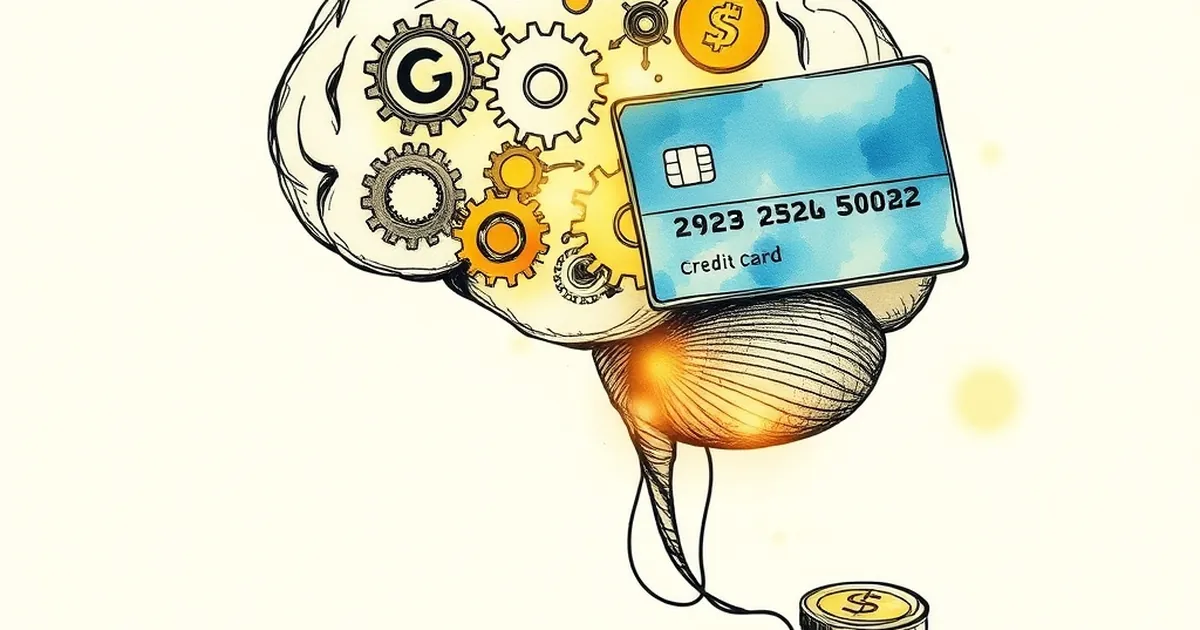
Every time you tap your phone, swipe a card, or click "Buy Now," something strange happens inside your head. You aren’t just spending money. You are solving a puzzle. The moment a payment request appears, your brain kicks into a mode that’s remarkably similar to the one it uses when facing a tricky math problem, a strategic game, or even a moral dilemma. Why does a simple transaction trigger such a complex cognitive response? The answer lies in the messy intersection of loss aversion, reward anticipation, and the fundamental way our minds handle uncertainty.
The Brain’s Budget: More Than Just Numbers
To understand why paying feels like problem-solving, we first need to look at how the brain processes value. Economists love the idea of a rational actor who weighs costs against benefits with cold precision. Your brain, however, is not a spreadsheet. It’s a prediction engine running on ancient hardware.
The Pain of Paying
Neuroscience research, particularly the work of behavioral economist Dan Ariely and neuro-imager Brian Knutson, has shown that the act of paying activates the insula — the same region associated with physical pain and disgust. This is the "pain of paying." It’s a real, biological response. When you see a price tag, your brain doesn’t just register a number; it registers a potential loss. This triggers a problem-solving cascade: How do I minimize this loss? Is this worth the discomfort?
The Variable-Ratio Reward of the "Yes"
Now, layer on top of that the psychology of reward loops. Payments are rarely isolated events. They are tied to the acquisition of something — a product, a service, a status symbol. This creates a classic variable-ratio reinforcement schedule, a concept B.F. Skinner famously demonstrated with pigeons. If every tap of your card guaranteed a fantastic reward, your brain would adapt and the thrill would fade. But because the outcome is slightly unpredictable — Will the coffee be perfect? Will the package arrive on time? — each payment is a tiny gamble on a future payoff. Your brain treats the transaction as a puzzle: Will this specific payment lead to a positive outcome? The uncertainty keeps you engaged.
The Cognitive Load of a Tap
Think about the last time you bought an expensive item. The process likely involved more than just handing over money. You probably asked yourself: Is this the best price? Can I afford it this month? What else could I buy with this? This internal debate is a form of cognitive load.
Why Venmo Feels Different from Cash
This is where payment method matters in a way that’s deeply psychological. Cash is a concrete, immediate loss. You see the bills leave your hand. The pain is high, the puzzle is simple: Do I have enough? A credit card, on the other hand, abstracts the loss. The payment is deferred. The puzzle becomes more complex: Will I have the money next month? What is the interest? Is the reward worth the future obligation?
A compelling study from the Journal of Consumer Research demonstrated this. Researchers found that people were willing to pay significantly more for the same item when using a credit card versus cash. Why? Because the credit card reduces the immediate "pain of paying," but it introduces a new, more abstract puzzle: the puzzle of future constraint. Your brain has to simulate a future version of yourself and ask if that person will be okay. That’s a heavy cognitive lift.
The "Sunk Cost" Trap as a Misguided Strategy
This puzzle-solving instinct can also lead us into classic behavioral traps. Consider the sunk cost fallacy. You buy a non-refundable ticket to a concert. The day arrives, you’re tired, and the weather is terrible. Logically, the money is gone regardless of what you do. But your brain doesn't see it that way. It sees the payment as a move in a game. The puzzle is: How do I get my money’s worth? So you go, enduring the rain, because your brain is trying to "solve" the problem of the lost payment by forcing a positive outcome. You’re not enjoying the concert; you’re trying to win back a loss that’s already happened.
The Competitive Play of "Beating the System"
Perhaps the most fascinating overlap is when payment itself becomes a form of competitive play. This is where the psychology of rewards and risk-taking really shines.
The Gamification of Rewards
Credit card points, cashback bonuses, and loyalty programs are explicitly designed to turn spending into a game. But the brain doesn’t treat them as a simple transaction. It treats them as a strategic challenge. You start thinking in terms of "optimizing" categories: Which card gives me 5x on groceries? How can I hit the sign-up bonus without overspending? This is pure competitive play. You are pitting your wits against the system designed by the bank. The payment isn't the end of the transaction; it's a move on a board. The puzzle is: Can I spend my way to a free flight without actually increasing my total spending?
This taps into the same neural pathways as a good strategy game. The uncertainty of the reward (variable-ratio reinforcement) keeps you engaged. The challenge of "beating the system" provides a sense of agency and mastery. For many, the act of paying becomes a performance — a test of financial and cognitive skill.
Risk Assessment in the Checkout Line
This competitive mindset also changes how we assess risk. A person who meticulously tracks points might take on the "risk" of using a new, unfamiliar payment app for a 10% bonus, even if it means a slightly slower checkout. Another person might take the "risk" of buying a luxury item on a store credit card with deferred interest, calculating they can pay it off in time. These are not simple purchases. They are calculated gambles on future behavior, future income, and future convenience. Your brain is running multiple scenarios, weighing probabilities, and making a decision under uncertainty — the very definition of problem-solving under pressure.
The Future: Payments as a Conscious Choice
So, where does this leave us? The next time you reach for your wallet or phone, recognize the cognitive drama unfolding. You aren't just a consumer. You are a decision-maker facing a puzzle with multiple variables: immediate pain, future reward, social status, strategic optimization, and personal risk tolerance.
The practical takeaway is not to stop solving the puzzle, but to become aware of the rules you are playing by. The most forward-looking thing you can do is design your own game.
Instead of letting the bank’s variable-ratio rewards program dictate your strategy, set your own simple heuristics. For example: I will use cash for all discretionary spending under $20. This removes the cognitive load of a complex decision for small purchases. Or: I will treat credit card points as a bonus, not a target. This prevents the competitive play from driving your spending.
The future of personal finance is not about more complex tools. It’s about simplifying the puzzle. It’s about recognizing that every payment is a test of your own values against the powerful behavioral forces of loss and reward. The most successful players aren’t the ones who solve the puzzle fastest. They are the ones who choose which puzzles are worth solving in the first place. And that is a game you can win.