Why Your Brain Treats a Payment Like a Daily Challenge
Discover why your brain treats payments like game challenges, blending psychology and design to trigger satisfaction and daily engagement
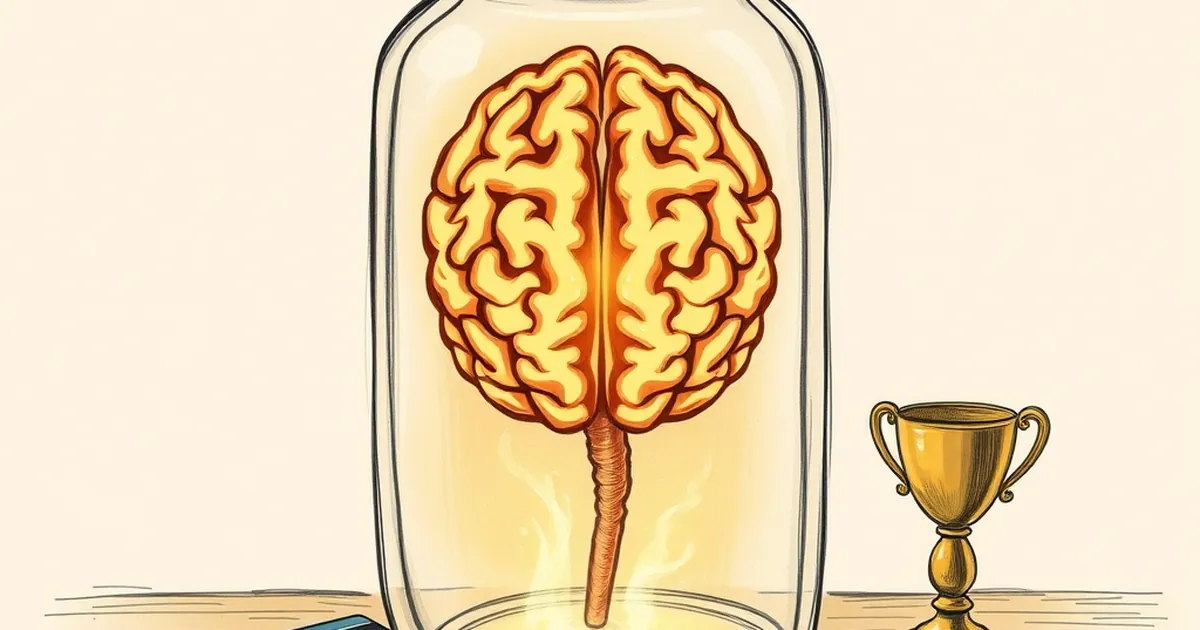
You open your banking app to check your balance. You see a pending transaction from this morning — a coffee, maybe a lunch. And without thinking, you feel a small flicker of something. Satisfaction? Regret? A strange urge to open the app again tomorrow, just to see if the numbers moved.
Why does a simple payment feel like progress in a game you never signed up for?
The answer lives at the intersection of behavioral psychology, payment design, and how your brain’s ancient reward system has been quietly hijacked by modern financial interfaces. Let’s pull back the curtain.
The Dopamine Loop You Didn't Know You Were In
Every time you make a payment — especially a card payment — your brain runs a tiny, unconscious script. It goes something like this: Action taken. Outcome pending. Outcome received.
That “outcome pending” moment is where the magic happens. In behavioral psychology, this is called variable-ratio reinforcement. It’s the same mechanism that keeps you checking your phone for notifications or refreshing a social feed. You don't know exactly when the result will come, but you know it will — and that uncertainty is what makes the loop sticky.
Payments, especially contactless or mobile ones, are fast. But the feedback loop isn’t instant. The delay between tapping your phone and seeing the updated balance creates a tiny window of anticipation. Your brain treats that gap like a mini-challenge: Did I overspend? Did it go through? Let me check.
And when you check — when you see the balance update, the transaction confirmed — you get a small hit of resolution. It’s not a win, exactly. But it’s closure. And closure, as any game designer will tell you, is inherently rewarding.
Loss Aversion and the "Level-Up" Illusion
Daniel Kahneman and Amos Tversky famously showed that losses hurt about twice as much as equivalent gains feel good. This is loss aversion, and it’s the invisible engine behind how we experience every payment.
But here’s the twist: your brain doesn’t treat a payment as a pure loss. It treats it as a cost of progress. Think about how you feel after paying a bill. There’s a sting, sure. But there’s also relief — a sense of completion. You’ve cleared a hurdle. You’ve advanced to the next round.
This is why gamification works so well in banking apps. When you see a progress bar toward a savings goal, or a “you’re on track” message after a transfer, your brain maps that onto an ancient framework: Effort → Reward → Status update. Spending money becomes a move in a larger game of resource management, not just a subtraction.
The daily challenge analogy isn’t a gimmick. It’s how your brain naturally frames repeated, low-stakes decisions with delayed feedback. Each transaction is a micro-quest: Did I spend wisely? Am I still on budget? Did I earn my rewards?
Variable Rewards: Why Cashback Feels Like a Loot Drop
Cashback programs and credit card rewards are the most obvious example of this overlap, but they’re also the most misunderstood. People assume we love cashback because we love money. That’s only half true.
What makes cashback so compelling is the unpredictability. Sure, you know you’ll get 2% back on groceries. But the when and the how — the statement credit that appears three weeks later, the bonus category that changes quarterly — that’s a variable-ratio schedule in action. You’re not getting paid for spending. You’re getting a delayed, intermittent reward for checking your statement.
A 2018 study in the Journal of Consumer Research found that consumers who received surprise rewards (even tiny ones) reported significantly higher satisfaction with their payment method than those who received predictable, upfront discounts. The surprise itself was the reward.
Your brain doesn’t care about the 50 cents. It cares about the moment of discovery. That’s the dopamine hit. That’s why you open the app.
The "Near-Miss" Effect in Everyday Spending
There’s a well-documented behavioral phenomenon called the near-miss effect, first studied in the context of skill-based games. When you almost achieve a goal — you almost hit the target, almost solved the puzzle — your brain releases more dopamine than when you succeed outright. The near-miss feels like progress, not failure.
Now look at your spending habits. You set a budget of $200 for dining out this month. You’re at $198. You order one more coffee — $4.50. You’ve overshot. But your brain doesn’t register that as a failure. It registers it as a near-miss. So close. Next time.
That near-miss feeling is what drives you to try again. It’s why people obsessively track their spending, why they set budgets they know they’ll break, why they open their banking app after every purchase. The gap between intention and outcome is exactly wide enough to feel like a challenge — not a defeat.
This is also why “round-up” savings features are so effective. When you spend $3.75 and the app rounds up to $4.00, tucking the extra $0.25 into savings, you’re not just saving. You’re experiencing a micro-victory. The transaction wasn’t just a loss — it was a move that generated a small gain. Your brain treats that like a combo multiplier in a fighting game.
What This Means for Your Financial Decisions
Here’s the practical takeaway, and it’s not about gamifying everything. It’s about understanding that your brain is already treating payments like a daily challenge. The question is whether you’re playing the game or the game is playing you.
The most dangerous version of this loop is when the reward structure — the variable feedback, the near-miss excitement, the dopamine of checking — overrides your actual financial goals. You might find yourself opening your banking app more often than necessary, not because you need to check anything, but because the act itself feels productive. That’s the behavioral trap.
The healthier version is to design your own feedback loops. Set spending targets that are just slightly harder than automatic — not impossible, but requiring a moment of attention. Use apps that give you delayed, summary feedback rather than real-time push notifications. Let the anticipation build, but on your terms.
You can also reframe the “challenge” itself. Instead of thinking, Can I stay under budget? try thinking, Can I make this transaction feel intentional? That shift — from avoidance to agency — changes the neural pathway. You’re no longer reacting to a game. You’re designing one.
The Forward Edge: Designing Payment Experiences That Respect Your Brain
The next generation of payment interfaces won’t just be faster or more secure. They’ll be designed around these behavioral realities. Expect to see more delayed feedback — apps that show you your weekly spending pattern instead of a running tally. More surprise rewards that come at unpredictable intervals, not just flat percentages. More features that turn the act of paying into a moment of reflection, not just a tap.
The best financial tools won’t try to eliminate the challenge. They’ll make the challenge worth playing.
So next time you feel that flicker after a payment, pause. Recognize it for what it is: your brain, doing what it evolved to do, finding meaning in uncertainty. The challenge isn’t to stop feeling it. The challenge is to decide which game you’re playing.