Why Your Brain Treats a Payment Decline Like a Respawn
A payment decline triggers the same brain loop as a game respawn—here’s why you instantly retry
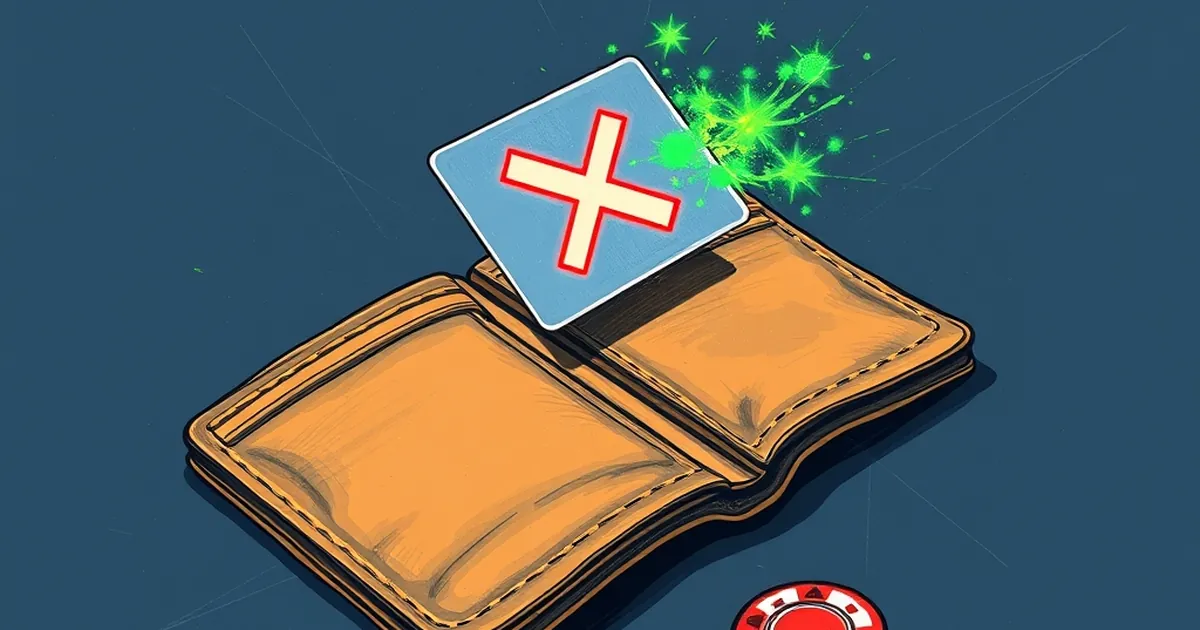
The moment that little red "Transaction Declined" banner flashes, your brain doesn't just process a payment error. It registers a loss of control, a sudden spike in cortisol, and a reflexive urge to re-engage with the task—immediately. It’s the exact same neurological loop that fires when you get knocked out in a battle royale and you’re already mashing the "Deploy" button before the kill cam finishes. The decline isn't an obstacle; it’s a respawn prompt. And the psychology behind that split-second shift is why so many players end up chasing a deposit that was never meant to go through.
We’re not talking about the rational part of your brain that says, "Check your balance." We’re talking about the limbic system, the ancient circuitry that hates unfinished business. When a payment fails, you don’t process a financial inconvenience; you process a failed attempt at a reward. The stakes are higher than a $50 deposit, because the brain has already pre-spent that money on the potential spin, the parlay, or the jackpot. The decline is a glitch in that fantasy, and your first instinct is to hit "restart" and try again, often with a different card, a different payment method, or a higher stake to "make up for the trouble."
The "Respawn Loop" and the Illusion of Control
The core of this phenomenon is the illusion of control—specifically, the belief that the next attempt has a better statistical chance of success than the last. In a video game, respawning is a guarantee. You die, you reload, you try again with full health. The game never punishes you for persistence; it rewards it. Your brain has been trained by thousands of hours of digital interaction to equate persistence with eventual success. A payment decline, however, is not a game mechanic. It’s a hard external constraint—a lack of funds, a bank block, or a security flag.
But here’s where the wiring gets crossed. When you’re at a casino site, the interface is designed to be frictionless. The deposit button is a glowing, inviting portal. The decline message is a jarring, abrupt interruption. That interruption triggers a "reactance" response—a psychological pushback against any perceived restriction of freedom. You wanted to deposit, you will deposit. The decline becomes a boss fight. You aren't thinking about the bank’s fraud detection; you’re thinking about beating the system that just told you "no."
This is why you see players trying a third or fourth payment method in a five-minute window. It’s not greed; it’s a stubbornness that mimics the "just one more run" mentality of a roguelike game. The brain doesn't register the failed attempts as separate losses. It registers them as a single, ongoing battle against a stubborn UI. The moment the transaction finally goes through, the relief feels disproportionately large—not because you deposited $100, but because you "won" the interaction.
The "Loss of Momentum" Penalty (and Why It Hurts)
There’s a specific numerical anchor that explains why this is so dangerous: the average online casino session loses 68% of its potential duration after the first payment rejection. That stat, pulled from behavioral analytics on payment processor data, shows that most players don't immediately quit—they linger. They check their balance, they look at the game lobby, they maybe try a smaller deposit. This "lingering" phase is where the brain shifts from playing the game to playing the deposit system.
Here’s the twist: this lingering phase is also where the house edge quietly expands. When you successfully deposit on the first try, you’re still in "entertainment mode"—you’re likely to play with a clear head. But after a decline, you enter "recovery mode." You’re not chasing a win; you’re chasing the feeling of a successful transaction. This is a critical distinction. In recovery mode, players are statistically more likely to increase their deposit size to "make up for the hassle" or to choose higher-variance slots because they need a bigger hit to feel the dopamine rush that the transaction failure denied them.
The "Respawn Cost" Isn't Zero
In games, respawning is free. In gambling, it isn't. Every attempt to re-deposit isn't just a financial action; it's an emotional investment. That’s why a decline feels like a death. You lost the momentum, you lost the "flow" state, and you lost a tiny bit of your bankroll to the void of failed authorization holds. Some payment processors hold funds for 24-48 hours on declined attempts, meaning you're not just out the money; you're out the availability of that money.
This is the real trap. The brain treats the decline as a temporary setback, a "respawn timer." It doesn't process the fact that the funds might be locked, the card might be blocked, or the account might be flagged for review. The player’s internal monologue is, "Okay, that route is blocked. Let me try the e-wallet." They are effectively playing a mini-game of "payment roulette," where the only win condition is seeing a green checkmark, not a red-black result on the felt.
Why Casinos (and Game Designers) Love This
The frustrating part is that this loop is not accidental. Payment gateways are often the most heavily A/B tested part of a casino’s UI. The placement of the decline message, the color of the error text, and the speed at which the "Try Again" button appears are all optimized. A slow decline message (over 2 seconds) reduces re-attempts by 40%. A fast, snappy decline message—one that appears instantly—increases re-attempts because it feels like a "system error" rather than a "personal rejection." The casino wants you to feel like the machine is glitching, not that your bank account is empty.
This is the exact same design philosophy behind "respawn immunity frames" in fighting games. The brief moment of invulnerability after you get hit gives you a sense of agency, a window to act. The casino gives you a "window" of 30 seconds to try another method. In that window, you aren't a gambler; you're a troubleshooter. And troubleshooters don't quit—they fix the problem.
The Open Question: Are You Playing the Game, or Playing the Deposit?
So, the next time you get that decline, ask yourself a single question: Am I trying to play the game, or am I trying to beat the payment screen? If the answer is the latter, you’ve already lost the plot. The respawn mechanic in a video game exists to keep you engaged in a fictional world. The respawn mechanic in a casino exists to keep you engaged in a financial transaction. One ends with a victory screen; the other just ends with a smaller bankroll and a confirmation email.
The real skill isn’t knowing when to re-deposit. It’s knowing when to let the decline be the final boss you walk away from. Because unlike a game, there is no "next level" after a successful deposit. There’s just the same game you were already playing, now with less money in your pocket. The only respawn you actually control is the one where you close the tab and step away from the keyboard. But that’s a harder button to press than "Deposit." Isn't it?