Why Your Brain Treats a Payment Decline Like a Respawn Timer
Why a payment decline triggers panic and shame, and how your brain’s ancient wiring turns it into a psychological respawn timer
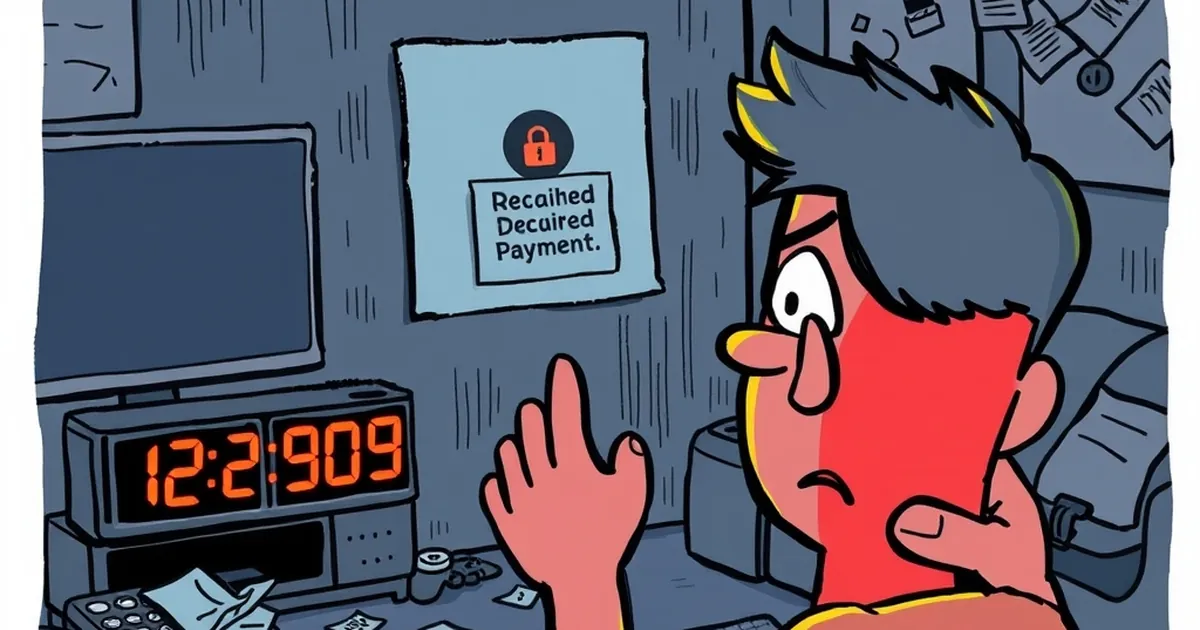
You swipe your card. The terminal pauses. Then, that dreaded red screen: "Declined."
Your stomach drops. A flush of heat rises to your neck. For a split second, you feel a jolt of panic, followed by a sharp spike of shame. Why does a simple payment failure feel so personal, so visceral, like you just failed a test you didn’t know you were taking?
The answer lies in your brain’s ancient wiring. A payment decline isn't just a financial glitch; it’s a psychological trap door. It triggers a pattern of anticipation, failure, and a desperate urge to try again — a cycle that feels eerily similar to the respawn timer in a video game. You die, you wait, and you immediately want to hit "retry."
The Neuroscience of the "No"
To understand why a decline stings so much, we have to look at what happens when a payment *succeeds.
The Dopamine Loop of a Successful Tap
Every time your card is approved, your brain releases a small hit of dopamine. It’s not about the money; it’s about the reward of a completed transaction. You made a plan, you executed it, and the universe said "yes." This reinforces a loop: desire → action → reward → satisfaction.
We get addicted to this loop. It’s smooth, predictable, and comforting.
The Cortisol Spike of Rejection
A decline breaks the loop. The "reward" signal is replaced by a stress signal. Your brain doesn’t know it’s a technical rejection from a bank server. It interprets the "no" as a social or personal rejection.
Your amygdala, the brain’s fear center, goes on high alert. Cortisol floods your system. You aren’t thinking about overdraft fees or fraud alerts. You are thinking, "Why did the universe just slap me in the face?" This is why a declined card in front of a cashier feels ten times worse than the same error on a website.
The Respawn Mechanic: The Urge to Try Again
This is where the video game analogy gets perfect.
The "Wait" is the Worst Part
In a game, when your character dies, you sit through a respawn timer. It’s a forced pause. You can’t move. You can’t act. You just stare at the screen, stewing in your failure.
A payment decline is the same. The terminal is frozen. The cashier is looking at you. Your brain is screaming for a solution, but you are locked in a waiting state. This is the "respawn timer" of the real world. The longer the terminal sits there, the higher your anxiety climbs.
The Illusion of the "Second Try"
So what do you do? You immediately try again. You tap the same card. You insert the chip again. You pray the machine will change its mind.
This is the desperate "mash the respawn button" behavior. Game developers know players will mash the button to skip the timer, even if it does nothing. Payment terminals exploit this same instinct. We believe that persistence will override the system’s logic. It rarely does. Your brain just wants to end the pain of waiting.
The Shame Factor: A Global, Yet Personal, Story
The feeling is universal, but the flavor changes depending on where you are.
The Public Stage vs. The Private Screen
A decline at a busy coffee shop in London feels like a public announcement of financial failure. You feel judged. A decline on a Netflix subscription at home? Mild annoyance. You shrug and check your email.
Yet, the core brain reaction is the same. It’s a violation of expectation. You assumed the money was there. The system told you it wasn't. That gap between expectation and reality is a psychological earthquake.
A Concrete Anecdote: The Gas Station Gamble
I remember a road trip in rural Texas. I was low on fuel, tired, and running on caffeine. I swiped my card at the pump. The machine asked for a zip code. I typed it. The screen flickered. "See cashier."
My heart sank. I wasn't broke. I knew I had funds. But my brain didn't care about logic. It felt like a personal failure. I sat in the car for a full minute, staring at the pump, feeling a weird mix of anger at the bank and shame at myself. I finally went inside, paid cash, and felt like I had lost a war. The transaction took 30 seconds. The emotional recovery took ten minutes.
Why This Matters for the Future of Payments
Understanding this psychological trap is crucial for banks and fintech companies. The user experience of a decline is currently terrible. It’s a dead end. It’s a punishment.
The Need for Better "Death Screens"
Video games have learned to make death less frustrating. They offer tips. They show a progress bar. They give you a reason for the failure ("You were shot by a sniper").
Payment declines offer none of this. They just say "Declined." No reason. No path forward. No "respawn" advice. This leaves the user in a state of confusion and anxiety.
The Future is Graceful Failure
The smartest payment systems are starting to change this. Imagine a terminal that says: "Insufficient funds. Would you like to try a different card?" Or "Fraud alert triggered. Please call your bank for a quick unlock."
That’s a better respawn timer. It tells you why you died and gives you a clear button to press to get back in the game.
A Practical Takeaway
Next time your card is declined, pause. Recognize the feeling for what it is: a biological glitch, not a character flaw. You are not a failure. Your bank’s risk algorithm just had a moment of panic.
The best thing you can do is walk away from the terminal. Do not "mash the respawn button." Take a breath. Wait thirty seconds. Then, pull out a different card or pay with cash. By breaking the immediate "try again" loop, you reclaim control from your amygdala and give your rational brain a chance to solve the problem.
The future of payments won't be about avoiding declines entirely. It will be about making the respawn timer feel less like a punishment and more like a helpful pause. Until then, remember: it’s not you. It’s just your ancient brain failing to understand a modern computer.