Why Your Brain Treats a Payment Decline Like a Missed Power-Up
Discover why a payment decline triggers the same brain response as missing a game power-up, blending psychology and reward loops
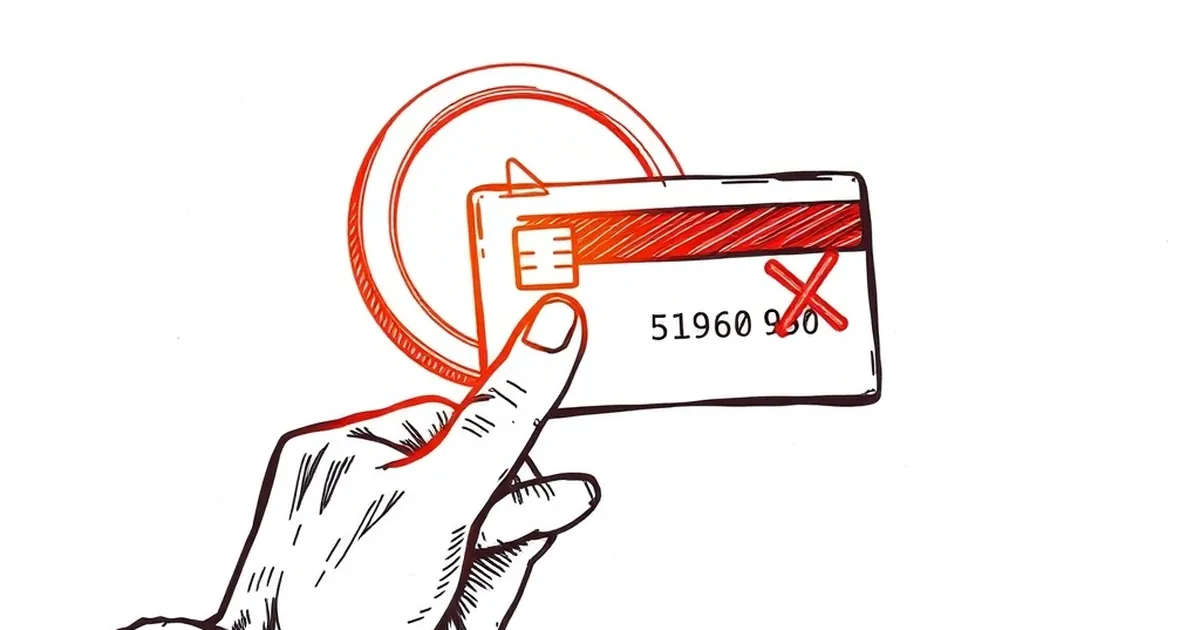
You’re tapping your phone against the terminal, waiting for that friendly beep that signals success. Instead, the screen flashes red: DECLINED. For a split second, your stomach drops. It’s not about the money—you know you have enough. It’s something deeper, a tiny jolt of unfairness, like the game you were just playing froze right as you were about to grab a power-up. Why does a payment decline feel so personal, so visceral? The answer lives at the messy intersection of behavioral psychology, reward loops, and the quiet architecture of the payments system.
The Dopamine Economy of a Transaction
To understand why a decline stings, we have to look at what a successful payment actually is in neural terms. Every time you tap, dip, or click “Pay Now,” you’re engaging a tiny behavioral loop: a cue (the terminal), a routine (authorizing the payment), and a reward (the green checkmark, the receipt, the thing you just bought). That reward is a small but reliable dose of dopamine—the neurotransmitter that drives motivation, anticipation, and satisfaction.
Think of it like the moment you finally clear a tricky level in a game. The victory isn’t just about the loot; it’s the brain saying, “Yes, that worked. You predicted correctly. You are in control.” A successful payment is a micro-validation of your agency. It signals that the world is orderly, your accounts are in good standing, and the system is working for you. It’s a tiny, silent win.
Now, flip that. A decline isn’t just a failure to transact. It’s a broken reward loop. The cue was the same, the routine was the same, but the reward was replaced with a jarring non-event. Your brain, which was primed for a small hit of satisfaction, suddenly gets nothing. Worse, it gets a red flag. This is where the comparison to a missed power-up in a game becomes more than a metaphor—it captures the feeling of a near-miss that wasn’t supposed to happen.
Loss Aversion and the Pain of the "Near Miss"
Daniel Kahneman and Amos Tversky’s work on loss aversion tells us that the psychological pain of losing something is roughly twice as powerful as the pleasure of gaining the same thing. A payment decline triggers this asymmetry in a subtle but potent way. You didn’t lose money in that moment—in fact, you kept it. But you lost the expected outcome. You lost the smooth continuation of your day.
Research on the “near miss” effect, often studied in the context of skill-based games, shows that almost winning can be more motivating than a clear loss. But it can also be more frustrating. When the system says “declined,” your brain interprets it as a near-miss of competence. I did everything right. Why didn’t it work? The frustration isn’t just about the money; it’s about the broken promise of predictability. You were in the flow, and the flow got interrupted.
Consider a concrete example from a 2023 study published in the Journal of Consumer Research. Researchers looked at how payment friction affects the perceived value of a purchase. They found that when a transaction was unexpectedly declined (due to a false positive fraud alert, not insufficient funds), participants rated the item they were buying as less desirable afterward. The decline didn’t just block the purchase—it actually devalued the thing they wanted. The brain, in its attempt to make sense of the rejection, retroactively decided, Maybe I didn’t want it that much anyway. That’s loss aversion working on an abstract level: the anticipated gain was snatched away, and your mind makes the painful adjustment by downgrading the prize.
Why It Feels Like a Missed Power-Up
In classic platform games, a power-up appears in a predictable place. You jump for it, and if you miss, you feel a flash of annoyance—not because you were hurt, but because you failed to capitalize on an opportunity that was right there. A payment decline feels structurally identical. You walked up to the terminal, you did the dance, and the system denied you the green checkmark. The opportunity to complete the transaction smoothly was visible, tangible, and then gone.
The emotional signature is the same: a quick spike of irritation followed by a sense of unfairness. You didn’t make a mistake, yet you’re being punished. This is why fraud detection systems, however necessary, can feel so adversarial. They are designed to protect you, but the user experience of a false decline mimics the experience of a game punishing you for a rule you didn’t know existed.
Variable-Ratio Reinforcement and the Addictive Nature of "It Worked"
Now, let’s zoom out. The reason you keep tapping your phone at terminals, even after the occasional decline, is rooted in a powerful behavioral principle: variable-ratio reinforcement. This is the same mechanism that makes checking your phone for notifications so compelling. You don’t know exactly when the reward will come, but you know it usually comes. The uncertainty makes the reward more potent when it arrives.
Payments operate on a high but imperfect reliability schedule. 99 times out of 100, it works. That 1% failure rate is the “variable” part. It keeps you engaged, because each time you tap, there’s a tiny unresolved tension: Will this one go through? Most of the time, yes. That successful beep is a small but genuine reinforcement. The system has trained you to expect success, which is why the rare failure feels so disproportionate. It’s a violation of a deeply learned pattern.
This is also why the design of payment interfaces matters so much. A decline that simply says “Transaction failed” is like a game that kicks you back to the title screen with no context. A decline that says “We couldn’t verify your card. Try again or use a different method” is like a game that gives you a hint: You were close. The power-up is still there. Try a different angle. The framing changes the emotional response from frustration to problem-solving.
What This Means for How We Design (and Use) Payments
So where does this leave us? If your brain treats a decline like a missed power-up, then the future of payments isn’t just about speed or security—it’s about emotional fluency. It’s about designing systems that respect the reward loop.
Think about the practical implications. A forward-looking payment system wouldn’t just decline you silently. It would communicate why in a way that preserves your sense of agency. “This card isn’t active for international purchases. Want to authorize it in one tap?” That’s not just customer service; it’s behavioral design that turns a broken loop into a new challenge. You’re no longer a victim of the system; you’re a player with a clear next move.
For you, the user, the takeaway is a bit of self-awareness. Next time a payment gets declined and you feel that flash of irritation, recognize it for what it is: a predictable neural hiccup. You didn’t lose anything real. You just hit a speed bump in a system that usually runs on autopilot. The power-up isn’t gone—you just need to take a different path to get it. The game isn’t over. It’s just asking you to adapt.