Why Your Brain Treats a Payment Decline Like a Missed Level-Up
Discover why a payment decline triggers the same brain response as missing a level-up in a game
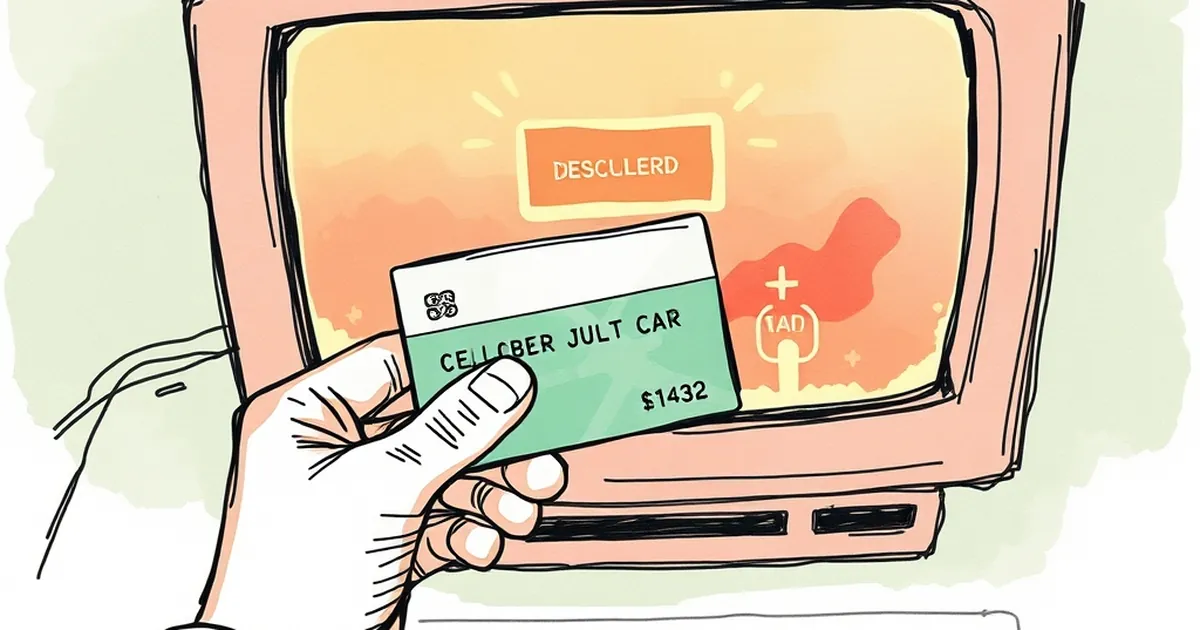
You’re standing at the checkout, phone in hand, thumb hovering over the final “Pay” button. You’ve already convinced yourself the purchase is justified. Then it happens: a red screen, a tiny vibration, a quiet buzz of rejection. Your card was declined. For a split second, your heart rate spikes. You feel a flash of something that isn’t quite embarrassment, isn’t quite frustration. It feels personal.
Why does a payment decline sting so much more than a simple “no”? After all, nothing was taken from you. The money is still in your account. And yet, your brain just registered the event as a tiny, visceral failure—a missed opportunity, not a denied transaction. The reason runs deeper than insufficient funds. It has to do with how our minds have learned to process reward, risk, and the specific psychological rhythm of a “missed level-up.”
The Psychology of the Near-Miss
To understand why a decline hurts, we have to look at a concept that behavioral scientists have studied for decades: the near-miss. In the 1980s, researchers like Luke Clark at the University of Cambridge showed that the brain processes a near-miss—a result that comes close to a win—almost identically to an actual win. Functional MRI scans revealed that the same dopamine-rich reward pathways (the ventral striatum, the midbrain) light up when you almost succeed as when you fully succeed.
A payment decline is a specific flavor of near-miss. You didn’t fail because the store was closed, or because the item was out of stock. You failed at the final gate. Your brain interprets the sequence as: You were in the game. You were about to level up. And then the server kicked you out. The proximity to success is what makes the sting so sharp. If the transaction had failed earlier—say, the website crashed during browsing—you’d likely shrug it off. But a decline at the terminal? That’s a near-miss with your own money.
Variable-Ratio Reinforcement and the App Swipe
Now consider how modern payment systems have rewired your expectations. Every time you tap a card, scan a phone, or click a button, you are engaging in a classic behavioral psychology phenomenon: variable-ratio reinforcement. This is the same schedule of reward that makes checking your phone so compulsive. You don’t know exactly when the reward will come, but you know it will come eventually.
Most of the time, it works. The payment goes through. A green checkmark appears. A satisfying ding sounds. Each successful transaction reinforces the habit: I tap, I get what I want. The ratio is high—maybe 95 out of 100 taps succeed. But the unpredictable nature of the 5 failures is what keeps the system potent. If every payment failed, you’d stop trying. If every payment succeeded, you’d feel nothing. The occasional decline is the jitter in the machine that keeps your brain engaged, scanning for patterns, trying to figure out why this time was different.
This is why a decline feels like a missed level-up in a video game. In games, you grind through repetitive tasks, never knowing exactly when the rare item will drop or when the experience bar will fill. The uncertainty is what makes the eventual reward feel earned. The payment system runs on the same logic: you tap, you hope, you get your reward. When the reward doesn’t come, your brain does a quick inventory: Did I do something wrong? Is the system broken? Am I being punished?
Loss Aversion and the Endowment Effect
Daniel Kahneman and Amos Tversky gave us a powerful framework for this: loss aversion. They famously demonstrated that losses hurt roughly twice as much as equivalent gains feel good. But what’s the “loss” in a declined payment? You haven’t lost money. You’ve lost access.
Here, the endowment effect kicks in. Once you have mentally committed to a purchase—once you’ve imagined owning the product, wearing the shoes, or subscribing to the service—you psychologically “own” it. The item becomes part of your endowment. A decline isn’t a denial of a future good; it’s a revocation of something you already felt was yours. You were about to complete the transaction, to cross the finish line, and the gate slammed shut. The loss isn’t the money you didn’t spend. The loss is the level-up you were already standing on.
This is why people often try the same card three times in a row, as if persistence will bend reality. It’s not rational. The system didn’t stutter. But the brain, trapped in a near-miss loop, keeps trying to close the gap between “almost” and “yes.” It’s the same impulse that makes a gamer retry a boss fight immediately after dying, or a person refresh an auction page the second after losing a bid.
The Social and Temporal Context of Decline
There’s also a social layer. A payment decline happens in public, at a register, with a cashier watching. Or it happens in a digital checkout flow, with a loading spinner that feels like an indictment of your financial worthiness. In both cases, the decline carries a subtext: You are not good enough right now. This is a sting to the ego, not just the wallet.
But the timing matters, too. A decline that happens during a routine grocery run is annoying. A decline that happens when you’re buying a gift for someone, or during a travel emergency, feels catastrophic. The brain doesn’t just process the transaction failure; it processes the failure in context. You were about to level up in a specific social or emotional quest, and the system said no. The emotional weight of the missed level-up is proportional to the perceived importance of the purchase.
Practical, Forward-Looking Close
So what do we do with this knowledge? It’s not about trying to make declines feel good—that’s impossible and probably unhealthy. But understanding the psychology gives us a lever. First, as consumers, we can recognize that the sting of a decline is often a phantom pain. It’s a near-miss, not a real loss. Taking a breath, checking your balance, and remembering that the system is probabilistic—not personal—can short-circuit the loop.
Second, for the people building these systems (banks, payment processors, fintech apps), there’s a real opportunity. The current decline experience is brutal: a red screen, a generic error, a cold silence. What if the feedback was framed differently? What if a decline came with a clear, single-sentence explanation and a suggested next step, instead of just a red “X”? What if the system acknowledged the near-miss and offered a path forward—like a temporary hold or a notification that funds will be available tomorrow? The goal isn’t to gamify failure. It’s to give the brain a new pattern to latch onto: You didn’t miss the level-up. The level-up was deferred, and here’s how to get back to it.
Finally, as a society, we can start treating payment systems less like utilities and more like the psychological environments they are. Every tap is a tiny bet on your own financial reality. Every decline is a wake-up call, not a punishment. The next time your card gets denied, pause. You didn’t lose. You just didn’t win—yet. And that’s a very different story to tell yourself.