Why Your Brain Treats a Payment Decline Like a Missed Combo
Why your brain treats a payment decline like a missed combo—and what that reveals about human psychology
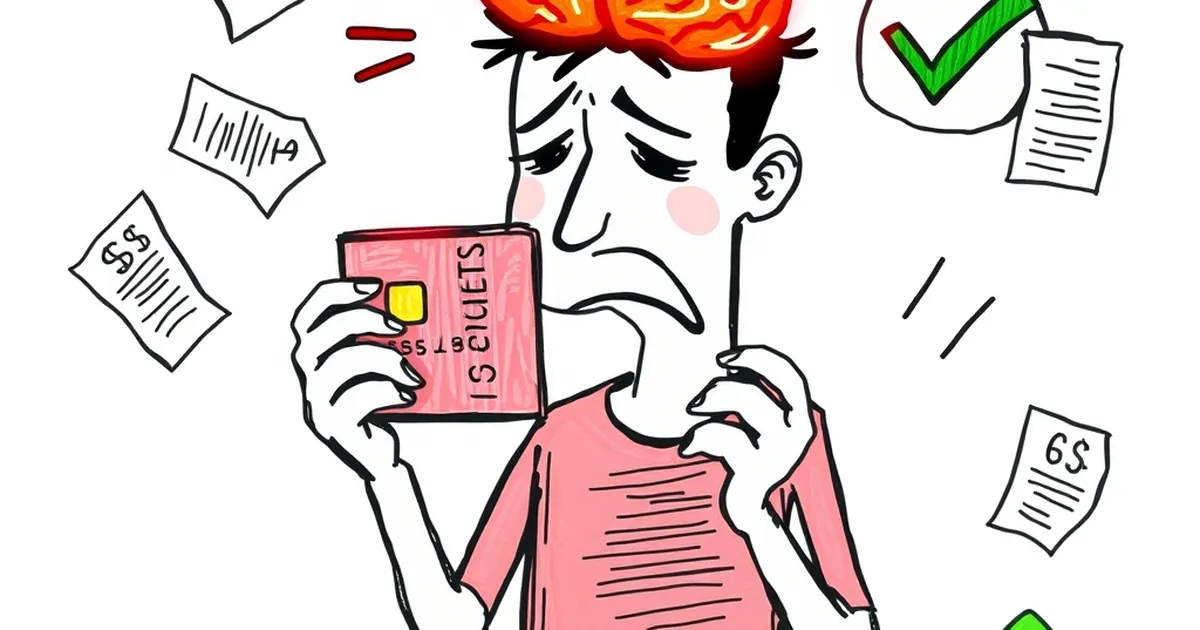
You’re tapping your phone to pay for coffee. The terminal blinks red. Transaction declined. Your jaw tightens. Your pulse jumps. For a split second, you feel a flash of something that feels almost personal—like the machine just snubbed you.
That reaction is disproportionate to a simple funding issue. It’s not rational. But it is deeply human. And it has almost nothing to do with money.
What your brain just experienced is the same neural signature as dropping a twenty-hit combo in a fighting game on the last frame—except in reverse. The payment decline is a missed combo. And the systems that process your transactions are designed, whether they mean to or not, to make you feel that sting with remarkable precision.
The Dopamine Loop We Didn't Know We Signed Up For
Let’s start with the good stuff. Every successful payment—tap, swipe, click—is a tiny reward. It’s a completed loop. Your brain, a pattern-recognition engine, learns to associate the sound of a terminal beep or the chime of an app notification with a positive outcome: you got what you wanted.
This isn't poetry. It’s the same mechanism that keeps you pressing buttons in a video game. The psychologist B.F. Skinner first mapped this out with pigeons and food pellets, but the principle holds for humans and payment confirmations. A predictable, consistent reward—ping, success—feels satisfying. It builds a habit loop: cue (desire to buy), routine (pay), reward (confirmation).
But here’s where it gets interesting for our industry. Payment systems are moving away from that predictable, boring loop. They are becoming variable-ratio reinforcement schedules.
Think about a game like FIFA or Street Fighter. You don’t land every combo. Sometimes the opponent blocks. Sometimes your input lag fails. Sometimes you mistime the button press. The uncertainty is what makes the success thrilling. The same logic applies to modern payments. Frictionless success is pleasant. But a system where success is almost certain but not guaranteed—where a decline can happen for a hundred opaque reasons—hijacks your attention far more effectively.
The payment terminal has become a slot for a dopamine slot machine. You tap. You wait. You hope for the green check. That moment of uncertainty is the psychological crack that makes the eventual success feel just a little bit sweeter—and the failure feel like a personal slap.
The Pain of "Almost" — Why Declines Hit Harder Than They Should
This is where the missed combo analogy becomes precise.
In competitive play, the most frustrating moment isn’t getting beaten badly. It’s dropping a combo you’ve already started. You hit the first two buttons perfectly. The third one whiffs. The opponent recovers. You had the win in your grasp, and your own execution—or the game’s latency—stole it.
A payment decline operates on the same psychological architecture. You have already committed. You have selected the item. You have entered or tapped the card. In your brain, the transaction is 90% complete. The reward prediction error is enormous.
Daniel Kahneman’s work on loss aversion helps explain the math. Losses hurt roughly twice as much as equivalent gains feel good. But a near-miss—an almost-complete transaction that fails—activates the brain’s reward circuitry more than a total miss, while also delivering the pain of a loss. It’s a double hit.
Consider a study from 2009 by researchers like Luke Clark at the University of Cambridge. They showed that near-misses in a simple game activated the same brain regions (the ventral striatum) as actual wins. The brain treats a near-miss as a win that needs to be chased. A payment decline at the terminal is a near-miss. You had the card. You had the PIN. You had the goods. The system said no. Your brain now wants to try again immediately, to close that loop.
This is why people tap the card again, harder, or move to a different terminal, or try a different card without checking their balance. They aren’t being logical. They are chasing the completion of a neural pattern.
The Hidden Architecture of Friction (And Why It’s Changing)
For decades, payment networks operated on a principle of invisible reliability. Visa and Mastercard built their reputations on uptime and speed. The goal was to make the payment experience as boring as breathing—automatic, silent, and frictionless.
That era is ending, and not just because of technology.
The new frontier is intentional friction. Systems are now being designed to introduce small, deliberate delays or failures to reduce fraud, or to test the user’s intent. Think about 3D Secure authentication—that pop-up that asks you to enter a code from your bank. It breaks the flow. It introduces a mini-game. It turns a smooth transaction into a combo that requires an extra input.
From a behavioral standpoint, this is brilliant and dangerous. A small friction point can filter out bots or low-effort fraud. But it also trains your brain to expect failure. You start to brace for the decline. Your stress hormones rise before you even tap.
The industry is now experimenting with "positive friction"—small delays that actually make the user feel more secure (like showing a merchant logo before the final confirmation). But there’s a thin line between positive friction and a dropped combo. Get it wrong, and you train users to hate your system.
What This Means for the Future of Payments (And How You Can Use It)
This isn’t just academic. If you work in payments, or just live in a world where you pay for things, understanding this loop changes how you interact with the system.
For product designers and bankers: Stop treating payment success as the only metric. Track recovery behavior. How many users retry after a decline? How many switch to a different method? How many abandon the entire purchase? The near-miss effect means a decline is often a better retention opportunity than a smooth success—if you handle it right. A message like "That was close. Try a different card?" leverages the user’s desire to close the loop. A cold "Declined" message is a combo breaker that sends them to a competitor.
For consumers (that’s you): Next time your payment fails and you feel that spike of frustration, pause. Recognize it for what it is: a neural error, not a judgment. The system didn’t snub you. Your brain is just treating a failed transaction like a dropped input in a game. Take a breath. Check your balance. Try again with full attention. You are not a character in a Skinner box.
For the industry as a whole: The next evolution isn’t faster transactions. It’s smarter failure. Imagine a payment system that learns your combo patterns—the time of day you buy coffee, the merchant you visit, the card you prefer—and uses that context to pre-approve or pre-flag declines before the tap. That’s not science fiction. It’s the logical endpoint of applying behavioral psychology to the payment rail.
The terminal will still blink red sometimes. But when it does, you’ll know why your brain recoils. It’s not about the money. It’s about the missed combo. And the only way to win is to understand the game.