Why Your Brain Treats a Payment Decline Like a Glitch
Discover why payment declines feel like tech glitches, not money issues, and how your brain's wiring shapes that instinctive reaction
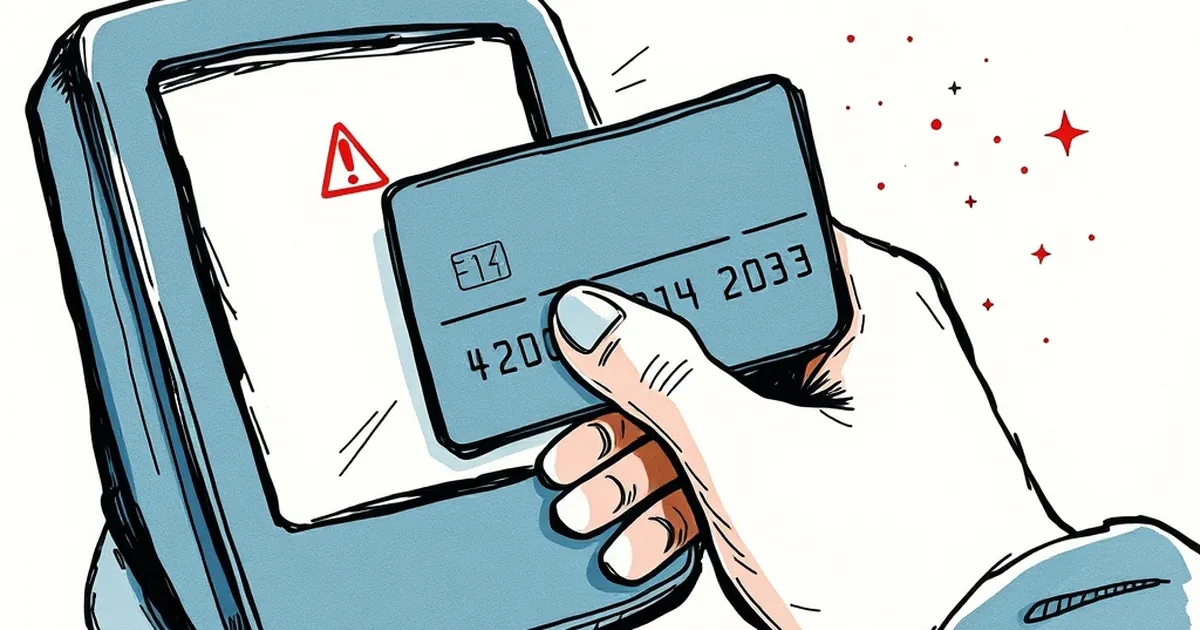
You’re standing at the checkout counter, phone in hand, ready to pay for your coffee. You tap, you glance at the screen, and instead of a cheerful checkmark, you get that dreaded red flash: Declined.
Your first thought isn't "I don't have the money." Your first thought is usually, "This machine is broken." Or, "The app is glitching." It’s a visceral reaction, a spike of irritation aimed at the technology, not at your bank account.
Why is that? Why do we instinctively blame the hardware rather than the funds? The answer lies deep in the wiring of your brain, and it has everything to do with how we perceive the flow of digital transactions. Let’s pull back the curtain on the psychology of the payment decline.
The Brain’s Expectation of "Flow"
To understand the frustration, you have to look at how your brain processes routine actions. When you tap a card or hit "pay" on your phone, your brain isn't running a complex financial audit. It’s running a script.
The Autopilot of Spending
Think about the last ten times you paid for something. Did you consciously think about the math? Did you calculate your balance before every single tap? Probably not. You are on autopilot. Your brain recognizes the pattern: Action (tap) → Result (approval).
This is a neurological pathway. It’s the same pathway that lets you tie your shoes without thinking or navigate your kitchen in the dark. The payment is a single, smooth unit of action. It’s frictionless.
The "Glitch" Perception
When that smooth unit is interrupted by a decline, your brain receives a prediction error. It expected a specific outcome (the beep, the green light) and got a completely different one (the red screen, the buzz).
Neurologically, a prediction error is processed in the same regions as physical pain or surprise. Your brain scrambles to explain the anomaly. Since the action felt identical to the last successful one, the brain concludes the fault lies outside the action. It must be a system error. It’s much easier for your brain to categorize this as a "glitch" than to accept that your internal financial reality has shifted.
The Social Embarrassment Factor
Here is where the decline gets even more tangled. The decline isn't just a personal annoyance; it’s a public performance failure.
The Audience Effect
Unless you are shopping alone on a deserted island, there is likely a queue behind you. There is a cashier staring at you. In that split second, the payment terminal becomes a stage.
Studies on social pain show that being declined in public triggers the same neural activity as being socially excluded. Your brain doesn't process it as "insufficient funds"; it processes it as "rejection." To protect your ego, your brain quickly deflects. "This reader is slow," you say, or "The chip is dirty." You blame the physical object because admitting the bank said "no" feels like admitting a personal shortcoming.
The "Broken Terminal" Anecdote
I once watched a man in a busy London tube station try to buy a ticket. He tapped his contactless card, and the machine flashed an error. He immediately huffed, muttered about "useless technology," and swiped his card aggressively through the chip reader. It failed again. He then pulled out a second card—this time a shiny metal one—and it worked.
He didn't have a technical problem. He had a budgeting problem. But his brain had to run the "glitch" narrative first to save face, even though nobody was judging him. The only thing that actually changed was the color of the plastic. The machine wasn't broken; his first card was simply out of credit.
The Invisibility of the Money
Let’s be honest: the reason this feels like a glitch rather than a financial event is because the money isn't real to your senses.
The Abstraction of Currency
When you pay with cash, the decline is impossible. You either have the notes or you don't. There is no mystery. The visual of the empty wallet is a concrete, undeniable truth.
Digital payments removed that physical truth. Your balance is just a number on a screen—a number you rarely look at. When you tap your phone, you aren't handing over physical value; you are sending a data packet. Your brain treats data packets as infinite and invisible. So, when the data packet is rejected, it feels like a network issue, not a resource issue.
The Disconnect from Balance
Most people check their banking app only when they are worried. The rest of the time, they are blissfully unaware of their exact balance. This creates a massive disconnect.
You are essentially saying, "I have no idea how much I have, but I expect you to accept my request." When the request fails, you are baffled because you had no baseline for failure. The "glitch" feeling is actually just the sound of your ignorance about your own account colliding with reality.
Why "Decline" Hurts More Than "Insufficient Funds"
Interestingly, the wording on the screen matters less than you think. Whether it says "Declined," "Try Again," or "Contact Your Bank," the reaction is the same. This is because the delay is the problem, not the message.
The Fear of the Unknown
When a transaction is approved, it takes milliseconds. When it is declined, there is often a pause. The terminal sits there, thinking. That pause is where the psychological damage happens.
Your brain goes into threat-detection mode. It doesn't know if it's a Wi-Fi issue, a bank outage, or a fraud alert. This ambiguity is stressful. The brain hates uncertainty. It would rather have a definitive "You are broke" than a confusing "Please wait." The "glitch" narrative is your brain's way of imposing a simple explanation on an uncertain event to stop the panic.
The Practical Takeaway: Rewiring the Response
So, what do you do with this knowledge? It’s not just about understanding why you feel embarrassed; it’s about changing how you interact with your finances.
The next time you see that red screen, I want you to do one thing: Pause before you re-tap.
Don't immediately slam the card down again. That is pure autopilot behavior. Instead, take a breath and look at your phone. Check your balance. Treat the decline as a signal, not a glitch. It is the one moment in your month where the system forces you to be present.
Think of it as a free financial health check. The payment network isn't broken; it’s actually working perfectly. It’s the only time your bank is shouting at you to pay attention.
By reframing the decline from "technical error" to "data point," you take away the embarrassment and the anxiety. You stop blaming the machine and start acknowledging your reality. And in the long run, that single mental shift is more valuable than any loyalty points program.
The terminal isn't glitching. It’s talking. You just have to be willing to listen.