Why Your Brain Treats a Payment Decline Like a Dungeon Trap
A payment decline triggers a primal threat response, not just inconvenience—here’s the neuroscience behind that panic
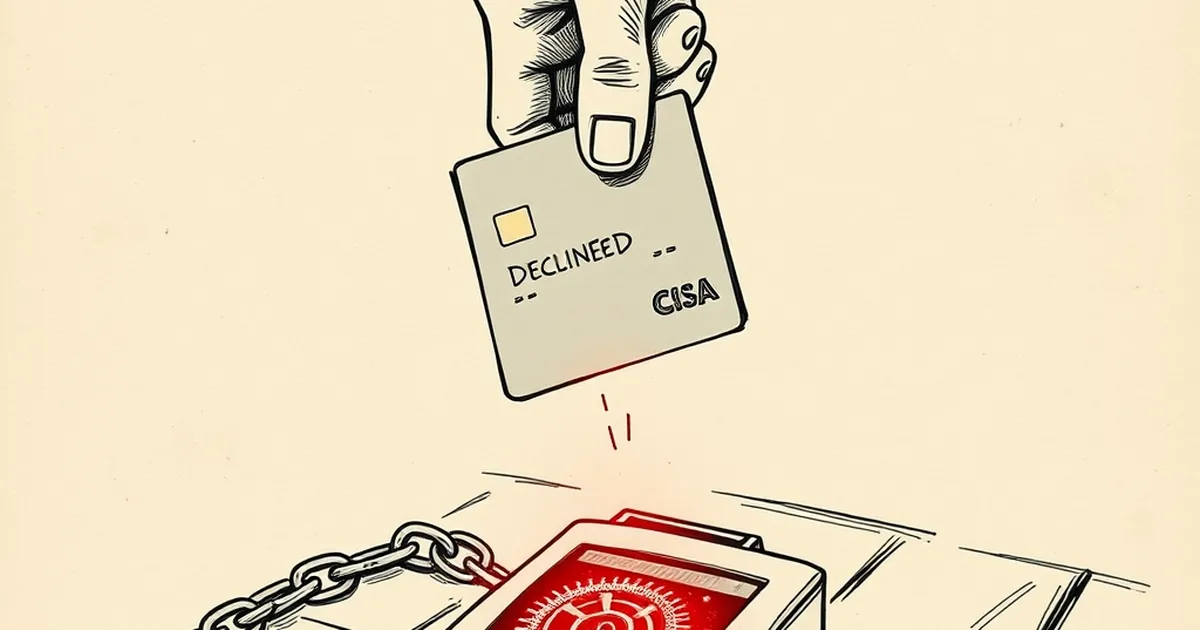
There’s a specific jolt of panic that hits when you swipe a card at a terminal and the screen flashes that dreaded red light. It’s not just the inconvenience of a failed transaction; it’s a visceral, psychological gut-punch that feels disproportionately severe for something so mundane.
We like to think of a payment decline as a simple data error, but neurologically, it’s much closer to stepping on a pressure plate in a dungeon and hearing the stone mechanism click behind you. It’s a signal of environmental hostility, and your brain reacts accordingly. Let’s look at why a little red message triggers the same circuitry as a rolling boulder.
The Psychology of the "Invisible Door"
In video games, a dungeon trap works because it violates the expectation of safety. You’re in a controlled environment, looting a chest, and suddenly the floor gives way. A payment decline operates on the same principle. You’re in a routine, habitual state—buying coffee, paying for groceries—and suddenly the "door" slams shut.
This is where Kahneman’s System 1 and System 2 thinking comes into play. System 1 is your autopilot: fast, intuitive, and emotional. System 2 is your logical, deliberate brain. When you pay, you are firmly in System 1. The card is an extension of your will; the terminal is just a conduit.
When the decline hits, your brain is forced to switch to System 2 instantly. But here’s the catch: the initial reaction isn't logical analysis. It's the amygdala firing a threat response. The brain doesn't yet know why the transaction failed—it only knows that a routine action that should have produced a reward was abruptly blocked. This is the "trap" moment. The environment has turned from benign to adversarial without warning.
Loss Aversion and the "Sting" of Rejection
The intensity of the sting isn't just about the money. It’s about loss aversion. Daniel Kahneman and Amos Tversky’s famous prospect theory showed that losses hurt roughly twice as much as equivalent gains feel good. But a declined card isn't a loss of funds; it's a loss of agency.
Consider the social context. Whether you're at a high-end restaurant or a street market, the decline is a public event. The terminal is often facing you, but the cashier is watching. In that split second, you experience a social status threat—a fear of being perceived as a fraud, a deadbeat, or simply someone who can't manage their finances. This is a primal fear of exclusion from the tribe.
Interestingly, the brain treats this financial rejection similarly to physical pain. Research by Eisenberger and Lieberman at UCLA demonstrated that social rejection activates the dorsal anterior cingulate cortex—the same region that processes the "sensory" component of physical pain. A decline triggers this neural overlap. Your brain isn't just processing a data error; it's processing a micro-social rejection, and it stings.
The Variable-Ratio Reward Loop (and Its Dark Side)
Here’s where the overlap with behavioral psychology gets truly fascinating. Our payment habits are built on a variable-ratio reinforcement schedule. This is the same principle that makes slot machines (and social media feeds) so compelling. You don't know when the reward will come, or how big it will be, but you know it usually comes.
With payments, the "reward" is the approval beep and the possession of the goods. Most of the time, the ratio is 100%—you pay, you get stuff. But when a decline happens, it breaks the loop. The brain is wired to seek closure, to resolve the dissonance.
This is why you immediately re-swiping the card or checking your balance is almost a compulsion. You’re not just trying to pay; you're trying to restore the reinforcement schedule. The frustration you feel isn't about the item price; it's about the unpredictability injected into a system you thought was deterministic. The "trap" in the dungeon is frustrating because it breaks the flow of exploration. The decline is frustrating because it breaks the flow of consumption.
Why We Blame the Card, Not the System
A crucial nuance is the direction of blame. In a dungeon, you blame the game designer. In a payment, you usually blame yourself or the card. This is due to a cognitive bias known as the fundamental attribution error.
If the decline happens, you immediately think: Did I overspend? Is there a hold on my account? Did I forget to pay my bill? You internalize the failure. The terminal is just a passive messenger, right? Wrong.
But here's the behavioral quirk: Issuers know this. When a bank sends a "decline" notification, they are often using a risk-management system that flags unusual activity. They are playing a game of probabilistic risk. The bank is the dungeon master, rolling dice to decide if your purchase looks like "you." If it looks like a thief, they trigger the trap—even if it’s actually you on a shopping spree.
This asymmetry is fascinating. The bank’s decision is based on statistical modeling, but your reaction is deeply personal. You feel judged by an algorithm. This creates a unique anxiety loop that doesn't exist in other consumer interactions.
The Future: Designing for "Trap" Reduction
The good news is that we are entering an era where the psychology of the decline is being redesigned. The current binary "Approve/Decline" is a relic of a dumb terminal era. It’s a harsh, binary outcome that maximizes the shock.
Forward-thinking payment providers are moving toward "soft declines" and "smart retries." Instead of a hard "No," they are implementing systems that silently attempt alternative funding sources (like a linked savings account or a different card) before showing the user an error. This is essentially removing the trap from the dungeon. The floor still has a hole, but the game auto-jumps you over it.
Furthermore, the rise of open banking and real-time account updates means that the decline is becoming less of a mystery. Soon, your card app won't just say "Declined." It will say, "Declined—$2.50 over limit. Tap here to transfer from savings." This transforms the experience from a scary dungeon trap into a minor, solvable puzzle, reducing that spike of cortisol.
The future of payments isn't about making approval faster—it's about making the failure softer. It’s about recognizing that every time we swipe, we are subconsciously handing over our sense of security to a machine. The best financial tools won't just manage our money; they'll manage our expectations.
So the next time you get that red flash, take a breath. Your heart is racing because your brain genuinely thought a rock was about to fall on you. It’s not just a payment; it's a primal test of your place in the system. And as the infrastructure gets smarter, we can hope the traps get rarer, and the treasure hunting—the buying of the coffee—gets a little more peaceful.