Why Your Brain Treats a Declined Payment Like a Surrendered Flag
Why your brain treats a declined card as personal defeat—and what that reveals about payment psychology
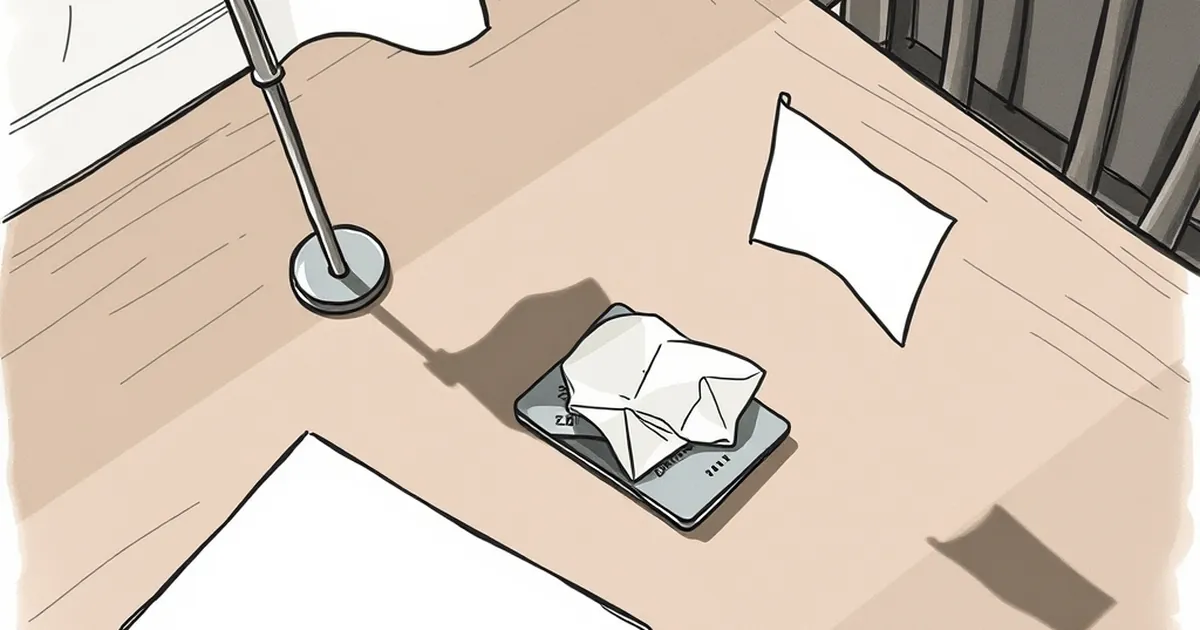
Your card gets declined at the worst possible moment—maybe a coffee shop, maybe a checkout line abroad. Your face flushes. You mumble an apology. You fumble for another card. It feels like a personal failure, a small public surrender.
But here’s the strange part: the payment network didn’t judge you. The machine isn’t angry. The decline is just a data point—a binary "no" sent back in milliseconds. So why does your brain process it like a flag being lowered over a conquered fort? The answer lives at the messy intersection of payment infrastructure and behavioral psychology, and it reveals more about how we make decisions than any spreadsheet ever could.
The Pain of Paying Is Older Than Money
Before we get to the decline itself, we have to understand why we feel anything at all when we tap a card. Behavioral economist Dan Ariely popularized the concept of the "pain of paying"—the visceral discomfort we experience when we part with resources. It’s why cash feels "real" and credit cards feel like play money. But here’s the twist: the pain isn’t about the number. It’s about loss aversion, the cognitive bias identified by Kahneman and Tversky that shows losses hurt roughly twice as much as equivalent gains feel good.
A declined payment is not a loss of money—it’s a loss of agency. You’ve already mentally spent the funds. You’ve queued up the reward (the latte, the hotel room, the new shoes). The decline yanks that reward away in a microsecond. Your brain doesn’t see a technical error; it sees a blocked path to a desired outcome. That’s why a decline feels heavier than a "no" from a friend. It’s a loss of control over your own intentions.
The Variable-Ratio Trap in Your Wallet
Now, let’s talk about why you keep swiping even after being burned. Payment systems, especially rewards cards, are built on a behavioral principle straight out of B.F. Skinner’s lab: variable-ratio reinforcement. That’s the schedule where rewards come at unpredictable intervals—the same mechanism that keeps pigeons pecking and humans checking their phones. You don’t know if this purchase will give you 1% back or 5% back, a free flight or a pointless toaster. The uncertainty is the hook.
But here’s the under-appreciated part: a decline is also part of that variable schedule. When your card is rejected, you feel a spike of frustration, but you also feel a surge of determination. You try again. You switch cards. You check your balance. The brain interprets the decline not as a wall, but as a puzzle. And puzzles are engaging. A 2019 study in the Journal of Consumer Research found that when payment friction is introduced—like a declined card—consumers actually become more attached to the purchase they’re attempting, not less. The struggle creates a sense of investment. You’re not just buying coffee; you’re winning a transaction.
The Surrender Signal: Status and Social Risk
Here’s where the flag metaphor gets sharp. A decline isn’t just a technical hiccup—it’s a social signal. In public, a declined card triggers what psychologists call a status threat. You’re momentarily branded as someone who can’t pay, even if your bank balance is fine. It’s a tiny ritual of shame, and your brain treats it like a public defeat because, evolutionarily speaking, being seen as a bad debtor was a real survival risk.
This is why the manner of the decline matters so much. A quiet "please try again" on a terminal feels different from an aggressive red screen. Payment companies have learned this. Some issuers now send a push notification before the decline—"Heads up, you’re low on funds"—to soften the blow. That’s loss aversion management in real time. They’re giving you a chance to retreat with dignity, to lower the flag yourself rather than have it torn down.
But there’s a darker side. When a decline happens repeatedly—say, on a travel card with foreign transaction flags—your brain enters a state of learned helplessness. You stop trying. You stop trusting the system. This is why cross-border payment friction is such a pain point for global travelers. It’s not about the fees; it’s about the uncertainty. You can’t predict when the machine will say yes or no, and unpredictable negative outcomes are the fastest way to kill engagement.
The Competitive Loop: How We Turn Declines into Wins
Here’s the part that fascinates me most: some people have learned to game their own psychology. They treat a declined card as a challenge, not a surrender. Think of the traveler who carries three cards from different banks, or the savvy shopper who knows that a decline at 9 AM might be a fraud algorithm glitch that clears by 10 AM. These people aren’t just managing money—they’re managing probability. They’ve internalized the variable-ratio schedule and learned to play it.
This is where behavioral economics meets competitive strategy. A decline is not a "no"—it’s a data point. The brain that reframes it as such is the brain that wins. For example, consider the "swipe again after 30 seconds" trick. It’s not magic; it’s understanding that many decline codes are temporary holds, not absolute rejections. The person who knows this has a higher "win rate" on their own transactions. They’ve turned a passive payment event into an active decision-making exercise.
This is also why some people enjoy using cards with "challenge" features—like a card that requires a PIN for every transaction, or one that forces you to pre-authorize amounts. They’re voluntarily adding friction. Why? Because friction engages the prefrontal cortex. It makes the decision deliberate. A 2021 study on "active choice" in fintech apps showed that users who had to confirm each payment felt more control and less anxiety, even though the process was slower. The decline, in this view, is not a surrender flag—it’s a checkpoint.
A Practical Reframe: From Defeat to Data
So how do you actually use this? Stop treating a decline as a verdict on your worth or your financial health. Start treating it as a signal—one piece of information in a broader system.
First, build a "decline response protocol." When a card fails, don’t immediately re-swipe. Wait ten seconds. Check the notification on your phone. Ask yourself: Is this a limit issue? A fraud hold? A network hiccup? This simple pause moves you from emotional reaction to analytical response. It breaks the loss-aversion loop.
Second, embrace the multi-card strategy. Carry one primary card, one backup with a different network (Visa vs. Mastercard, for example, have different fraud algorithms and downtime patterns), and one that’s purely for travel. This isn’t just practical—it’s psychologically freeing. You know you have a "plan B," which reduces the status threat before it even happens.
Third, and this is the forward-looking part: watch how payment systems are evolving to design around your brain. The next generation of "smart decline" messages will tell you why the payment failed—"insufficient funds" vs. "possible fraud" vs. "merchant error." That’s behavioral design at its best. It converts a binary no into a rich, actionable signal. When that happens, a decline stops being a surrender and becomes a suggestion. You’re not losing a battle; you’re getting a map.
The flag isn’t falling. You’re just learning to read the wind.