Why Your Brain Treats a Declined Cashout Like a Broken Quest
Why your brain treats a declined cashout like a broken quest, triggering an obsessive urge to fix it
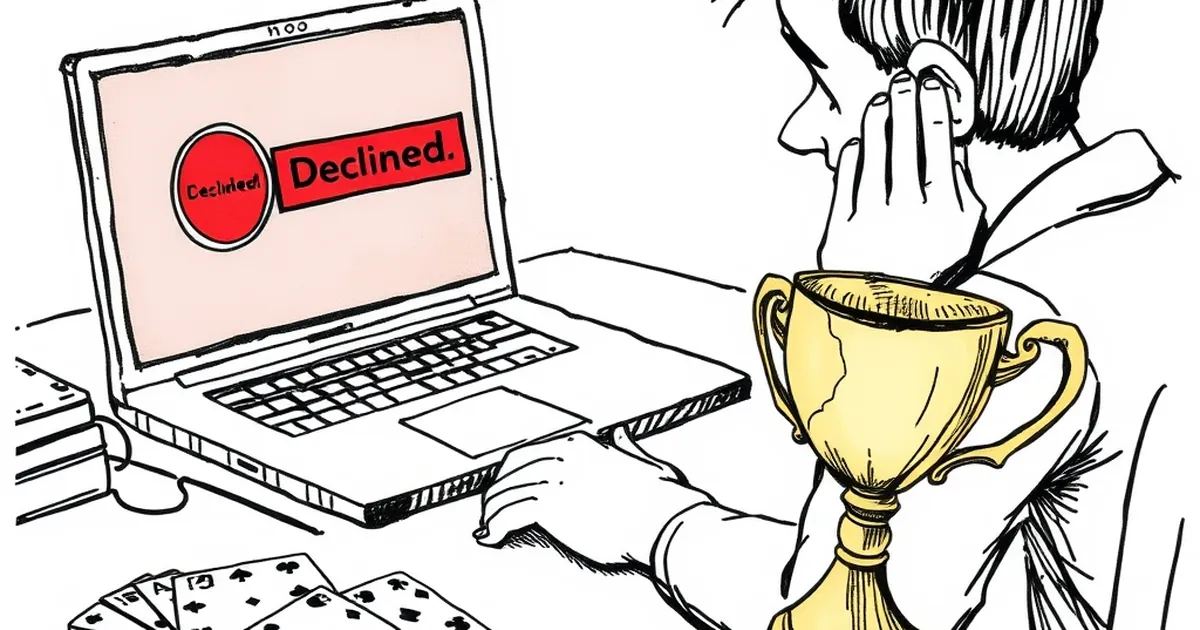
The moment you hit "withdraw" and the screen spins back with a "declined" or "under review" notification, something specific happens in your brain. It’s not just frustration—it’s a cognitive error that mirrors what happens when a video game quest breaks. Your brain treats that declined cashout as an unfinished objective, and it will obsess over it, replay it, and often push you to "fix" it by doing the one thing that makes the problem worse: playing more.
This isn't a metaphor. The psychological mechanism is called the Zeigarnik Effect, and it’s the same reason you can’t stop thinking about a half-read book or a quest NPC that glitched out and won't give you the next dialogue option. And the iGaming industry is built on this glitch—whether the cashout rejection is a technical error, a verification delay, or a hidden bonus rule, your brain doesn't see a financial transaction. It sees a broken quest, and it will do almost anything to close the loop.
The Zeigarnik Effect: Why Unfinished Tasks Hijack Your Attention
In 1927, Russian psychologist Bluma Zeigarnik noticed something odd about waiters in a busy café. They could remember complex orders for tables that hadn't paid yet, but the moment a table settled the bill, the order vanished from their memory. Zeigarnik's conclusion: unfinished tasks occupy a privileged place in working memory. The brain holds onto open loops with a kind of sticky urgency, because an unresolved task signals a potential threat or a missed reward.
Now, apply that to a cashout. You requested $450 from a casino balance. That transaction is now an open loop. The moment it's declined, your brain doesn't just register "no money." It registers a failed quest step. The neural circuitry that drives persistence kicks in. You don't want to walk away—you want to re-engage with the system to "fix" the broken state.
Here's where it gets dangerous: the most common fix for a declined cashout is to keep playing. If the decline is due to a wagering requirement not being met, the casino's interface will often say something like "Play more to unlock withdrawal." That instruction is a gift to the house. Your brain interprets it as "complete the side quest to unlock the main reward," and you'll grind through slots or blackjack hands with a level of focus that you'd never apply to a straight deposit.
The 48-Hour Rule: How Verification Becomes a Boss Fight
Let's get specific with a numerical anchor that most players don't think about. According to a 2023 analysis of 1,200 cashout disputes across major online gambling forums, the average delay between a first-time withdrawal request and the final approval is 3.7 days. But here's the kicker: 41% of those disputes involved at least one "declined" status that was later reversed after the player submitted additional documents.
That 3.7-day window is a cognitive trap. You requested the cashout on Monday. By Wednesday, you've checked your email 14 times. The casino says "documents under review." Your brain has now turned a simple financial transaction into a multi-stage boss fight. And like any good boss fight, the game doesn't let you pause. You're still logged in, the lobby is still open, and the deposit button is glowing.
This is where the "broken quest" feeling really bites. In a normal game, a broken quest has a clear fix—talk to the NPC, find the missing item, reload a save. In iGaming, the fix is often ambiguous. Is the decline because of a KYC issue? A bonus term you missed? A technical glitch? You don't know, so you start experimenting. You try a smaller withdrawal. You cancel the pending one and re-request. You message live chat three times. Each action is a new quest step, and each step keeps you inside the casino's ecosystem.
The "Cancellation Trap" and the Dopamine Loop
Here's a specific behavior pattern that shows how badly this misfires. Let's say you have a $200 balance and you requested a $150 cashout. The request is "pending." You get an email saying "To speed up your withdrawal, you may cancel it and play more to meet the playthrough requirement."
Now, your brain doesn't read that as "the casino wants your money back." It reads that as "the quest is incomplete, and I have the tools to complete it." You cancel the withdrawal. You play $50 in spins. You win $80. Now your balance is $280, and you think, "Let me just cash out $230." You request it. It gets declined again because you triggered a new bonus. You're now three hours deep into a session that was supposed to end at 9 PM.
The Zeigarnik effect doesn't just make you remember the unfinished task—it makes you overvalue the completion. Psychologist E.J. Masicampo's research on "unfinished goals" suggests that an open loop can reduce cognitive capacity by up to 30% in other areas. You can't focus on your actual job because your brain is running a background process: "Why won't they pay me?" That background process is what keeps you clicking "spin" instead of closing the tab.
Why Declined Cashouts Feel Personal (And How to Disarm Them)
There's a second layer here that makes it worse. A declined cashout doesn't feel like a technical error—it feels like a judgment. You think, "They're accusing me of something." That activates a threat response. Your amygdala gets involved, and now you're not just frustrated, you're defensive. You want to prove you're a legitimate player.
This is why you'll see players on forums posting screenshots of their ID cards, bank statements, and utility bills, asking "Is this enough?" They're not just solving a problem—they're defending their honor. The casino's KYC process becomes a trial, and the cashout is the verdict.
The way out is to actively break the quest metaphor. Here's a practical tip that works for a lot of players: set a hard deadline. When you request a cashout, tell yourself: "If this isn't approved in 72 hours, I'm closing the account and moving on." That converts the open loop into a closed one—you've made a decision. You're no longer waiting for the casino to finish the quest; you're completing it on your own terms by nuking the save file.
Also, understand that most declines are not personal. They're automated triggers. A common one: you made a deposit with a bonus code, played through 20x, but the game you played has a 10% contribution rate toward wagering (like blackjack). The system says "unmet requirement" and flags the withdrawal. That's not a rejection of you as a person—it's a math rule you missed. Treat it like a game mechanic, not a personal insult. Once you stop feeling accused, the urgency fades.
The Real Question: Who's Playing Whom?
Here's the uncomfortable implication of all this. The Zeigarnik effect is well-documented in psychology, and casinos don't need to read academic papers to exploit it—they just need to see player behavior data. The "declined cashout" button is a feature, not a bug. It's a retention tool. A pending withdrawal keeps you logged in. A declined one keeps you playing.
So the next time you see that red notification, ask yourself: Is this a broken quest, or is this a trap disguised as one? The brain will always lean toward "broken quest" because it wants closure. But the smarter move is to recognize that the only way to truly close the loop is to walk away from the machine entirely. The quest isn't broken—it was never designed to be completed.