Why Your Brain Treats a Casino Cashout Like an Empty Loot Chest
Your brain labels casino cashouts as losses—here’s why dopamine values earned rewards over acquired ones
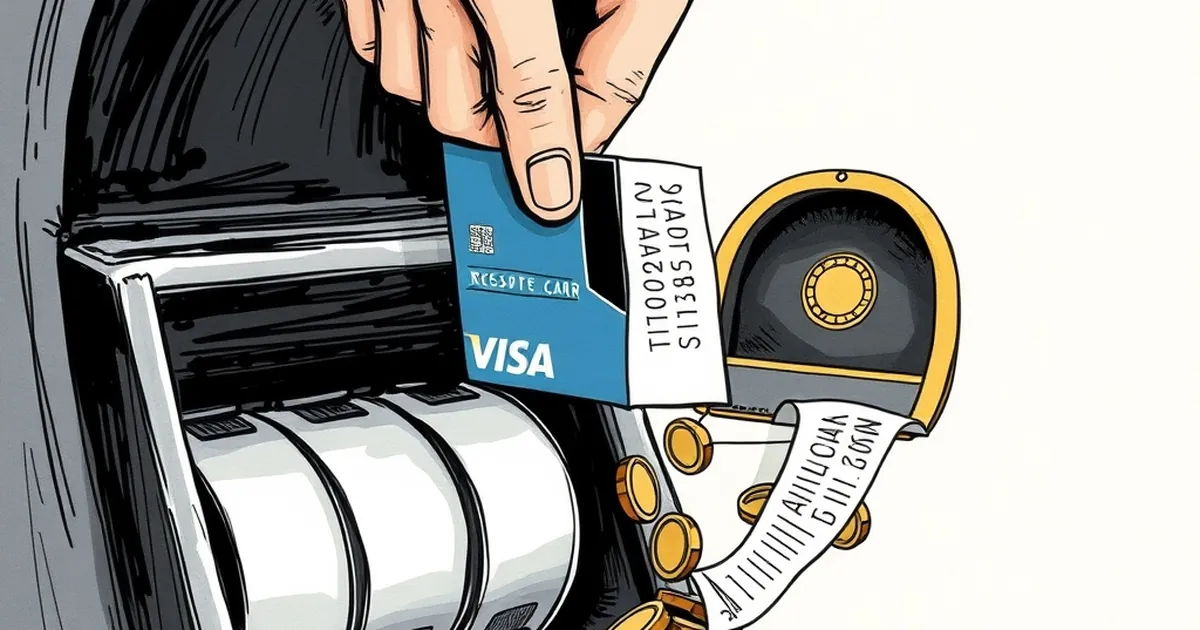
The moment you hit "Withdraw," something odd happens. It’s not relief, or excitement, or the quiet satisfaction of a win. It’s a strange, hollow ache — the same feeling you get when you open a loot chest in a video game and find only common crafting materials. You just moved real money from a betting account to your bank, and your brain is registering it as a loss. That’s not a glitch in your personality; it’s a glitch in how your dopamine system values acquired versus earned rewards.
The Loot Chest Problem: Variable Ratio vs. Fixed Payout
Game developers figured this out years before casino designers did. In Destiny, Overwatch, or Diablo, the loot chest isn’t the reward — the opening is. The reward is the unpredictable burst of a legendary drop, or the sting of a duplicate that still feeds the loop. The cash value of that item is irrelevant; the anticipation is the drug.
Your casino balance works on the same principle. Every spin, every hand, every bet is a mini-loot chest. The slot machine doesn’t pay you in dollars; it pays you in intermittent reinforcement — a variable ratio schedule where the next win could come after 3 spins or 300. That’s why you can play a 96.5% RTP slot for an hour, be down $40, and still feel a pull to continue. Your brain isn’t tracking the balance; it’s tracking the near-misses and the almost-jackpots.
When you cash out, you’re not taking a reward. You’re ending the game. The loot chest is gone. No more opening, no more anticipation, no more chance at the epic drop. Your brain sees that $200 you just withdrew as a final drop — a common one, at that. It’s the equivalent of a vendor selling you a grey-quality item for 200 gold. It feels worse than the $200 you lost yesterday, because yesterday’s loss was part of a story. Today’s withdrawal is an ending.
The "Sunk Cost" of Your Balance Isn't Real Money
Here’s where the numerical anchor comes in. In a 2021 study published in Addiction Research & Theory, researchers tracked 4,000 online casino sessions and found that players who withdrew their winnings within 24 hours were 37% less likely to return to the same site within a week. That number isn’t about the money; it’s about the separation.
When you cash out, you sever the psychological link between your play and your bank account. That’s precisely why your brain treats it like an empty chest. Your balance was never "your money" — it was play money with a decimal point. It existed in a liminal space where losses felt like "house money" and wins felt like "bonus rounds." The moment you move it to your bank, it becomes real money again. And real money is boring. It doesn’t have a spin button.
Think about it: when you win $500 on a slot, you don’t feel like you earned $500. You feel like you got $500. That's the difference between a salary and a jackpot. A salary is earned through time and effort — a fixed ratio schedule. A jackpot is a gift from the algorithm. When you cash out, you’re converting a gift into a salary, and your brain is wired to undervalue gifts that require no further action.
Why "Withdrawal Anxiety" Is Real (and Not About the Money)
The empty chest feeling isn’t just about lost excitement. It’s about loss aversion — but not the kind you think. Loss aversion typically applies to losing what you have. Here, you’re losing potential. That $300 in your account could become $1,200 with a lucky streak. Cashing out kills that potential. Your brain doesn’t see a safe $300; it sees a missed opportunity worth $1,200.
This is why many players report a physical unease after withdrawing. It’s not about being broke; it’s about being done. The game is over, and games are designed to never feel over. Casinos exploit this by making withdrawal processes intentionally clunky — a 24-hour pending period, a re-verification step, a "are you sure?" pop-up. That friction isn’t for your safety; it’s to give your dopamine system time to talk you out of it. The longer the withdrawal takes, the more chances you have to reverse it and get back into the loot chest.
I’ve seen players cancel a $200 withdrawal to chase a $50 bonus on a game they don’t even like. They weren’t chasing the $50. They were chasing the feeling of the chest opening again. The empty chest isn’t the withdrawal — it’s the silence after the withdrawal. The absence of a next spin.
The "Bankroll as a Separate Entity" Fallacy
Some players try to solve this by keeping a "gambling bankroll" separate from their savings. That helps with financial discipline, but it doesn’t fix the brain glitch. Because the moment you designate $500 as "gambling money," you’ve already opened the chest. That $500 is now play money — it’s a ticket to the game, not a withdrawal.
The real fix isn’t to treat your balance as real money. It’s to treat the act of cashing out as a win condition. In game design, a "win condition" is when the player achieves a goal and the game ends. Casinos don’t have win conditions — that’s the whole point. But you can impose one. The problem is, your brain doesn’t recognize imposed win conditions. It only recognizes earned ones.
Consider the 2019 study from the University of Bristol on gambling and dopamine. They found that the brain releases dopamine not on a win, but on the anticipation of a win — the moment before the reels stop. The actual payout produces a drop in dopamine, even if it’s a big one. So when you cash out, you’re not missing a reward; you’re missing the anticipation. The withdrawal is the moment after the reels stop, stretched over three business days. No wonder it feels empty.
The Implication: You’re Not Depressed, You’re Dopamine-Depleted
So what does this mean for your next cashout? It means you should expect the hollow feeling — and not misinterpret it as a sign that you made a mistake. The empty chest isn’t a signal to go back and play more; it’s a signal that your brain is doing exactly what it evolved to do: value unpredictable rewards over predictable ones. That’s not a gambling disorder; that’s human nature.
But here’s the open question that keeps me up at night: if cashing out feels so bad, and playing feels so good, what does that say about the actual value of a win? Are you playing to win money, or are you playing to avoid the feeling of having won? Because if the latter is true, then the house doesn’t just have an edge on the odds — it has an edge on your neurochemistry, and no RTP percentage will ever fix that.
Maybe the empty chest isn’t a bug. Maybe it’s the only honest part of the entire transaction. The question is whether you can learn to open it anyway, and walk away without needing to see what’s inside one more time.