Why Your Brain Treats a Card Decline Like a Respawn
A card decline triggers the same brain response as a game over, and here’s why that matters for your money habits
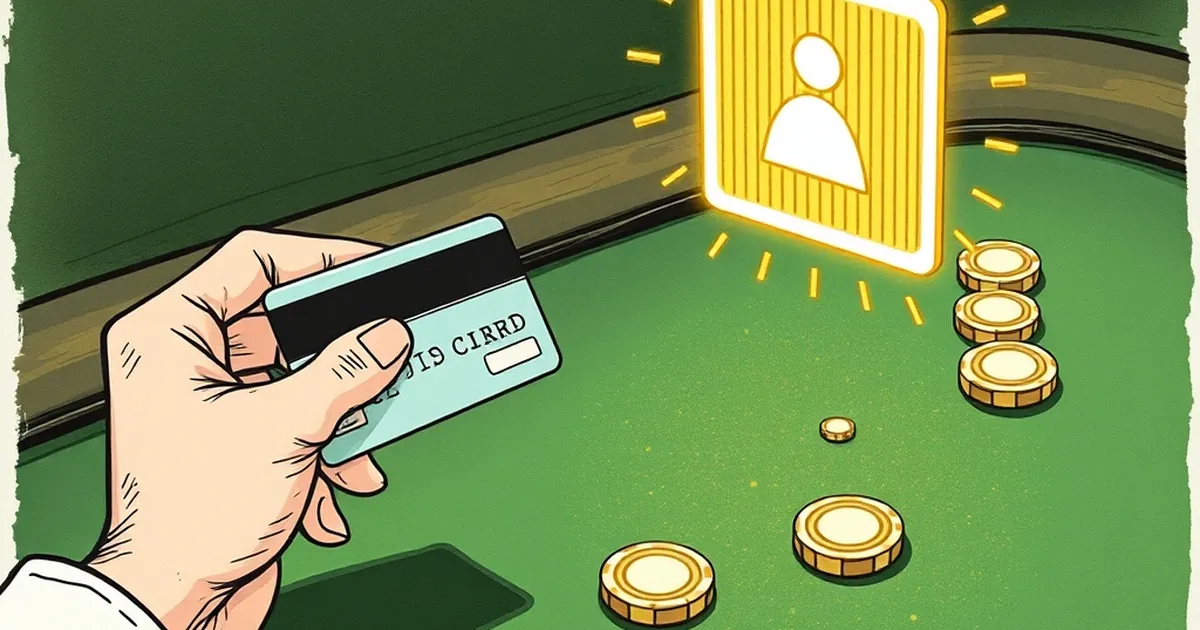
Your bank’s fraud detection just killed your deposit. You’re staring at a red error message, or worse, a generic “transaction declined” popup. For a split second, your brain doesn’t process the financial reality—it processes a game over screen. You feel the same spike of adrenaline, the same urge to immediately retry, and the same irrational anger at an invisible system that just denied you agency. The physiological response is nearly identical to dying in a boss fight and waiting for the respawn timer: a brief, hollow pause followed by a compulsive need to re-engage.
The key difference is that in a game, the respawn is guaranteed. In iGaming, that card decline is a coin flip—and your brain knows it. That uncertainty is precisely why the decline hits harder than a loss.
The Dopamine Loop of the "Retry Button"
We tend to think of gambling losses as the emotional trigger, but a decline is a different beast. A loss is a clear outcome; it ends the round. A decline is a disruption—it interrupts the loop before the outcome is even determined. This is where your neurochemistry goes haywire.
When you press "deposit," your brain anticipates a reward cascade: dopamine spikes in anticipation of the spin, the bet, the potential win. A decline yanks that reward away at the anticipation stage, not the resolution stage. In behavioral psychology, this is called a "frustration event," and it fires the same pathways as a boss fight death. The game hasn't ended; it has just paused.
Here’s the kicker: the retry button is the perfect Skinner box mechanism. You click "retry," the system processes for two seconds, and if it goes through, you get a double dopamine hit—one for the deposit succeeding, and one for the relief of the frustration ending. Your brain learns that persistence is rewarded, even when the initial action failed. That’s why you don’t stop after the first decline. You try a different card, a different amount, or you switch to a crypto option. You’re not being logical; you’re chasing the "respawn" mechanic.
The "Tilt" of the Payment Gateway
We call it "tilt" when a player chases losses. But a card decline induces a specific micro-tilt that is far more dangerous because it’s not about the game. It’s about the obstacle.
Consider the sequence: You’re 20 minutes into a session, up 15%, feeling good. You want to top up your balance to keep the streak alive. The card gets declined. Your immediate thought isn't "maybe I should stop"—it’s "why is this system blocking me?" The anger is directed at the bank, the payment processor, or the casino’s clunky UI, not at your own strategy.
This redirects your focus. You’re no longer playing the game; you’re playing the deposit game. The goal shifts from winning money to simply getting the money in. This is a classic "barrier frustration" scenario, and it’s well-documented in sports betting data. A 2023 study on online betting behavior found that players who experienced a payment failure were 42% more likely to increase their next successful deposit amount compared to players who deposited without issue on the same day. The decline didn’t cool them down; it amped them up. They felt they had to "make up for lost time" or "prove the system wrong."
The False Respawn: Why You Re-Enter the Arena
In a video game, when you respawn, you keep your gear and your progress. In iGaming, a successful retry after a decline often comes with a hidden cost: a lower available balance, a higher fee, or a temporary block on your preferred method.
But your brain doesn't care about that. It cares about the successful respawn. The moment the second deposit goes through, you experience a sense of relief that feels like victory. The problem is, you’ve already spent mental energy on the frustration. That energy has to go somewhere, and it usually goes straight into higher-stakes bets.
You’re not betting to win anymore; you’re betting to justify the hassle. You just fought with your bank for five minutes—you’re not going to bet $5. You’re going to bet $50 to make the struggle worth it. This is the respawn trap. The game gives you a second chance, but it charges you in emotional investment rather than in-game currency.
The Bank’s Algorithm as a Raid Boss
Let’s get technical for a second. The bank’s fraud detection isn't smart—it’s paranoid. It flags transactions based on velocity (how fast you're spending), location mismatches, and merchant category codes. iGaming merchants are high-risk, so their thresholds are tighter.
If you’re a regular player, you’ve likely hit a "velocity cap"—say, three deposits in under ten minutes. The bank declines the fourth. This isn't a judgment on your gambling; it's a script. But your brain interprets it as a personal attack. This is where the "respawn" metaphor breaks down, because in a game, the boss has a pattern you can learn. The bank’s pattern is opaque and changes based on time of day, your spending history, and even your phone’s battery level.
That opacity is the real danger. You can’t "git gud" at a card decline. You can’t learn a counter-mechanic. All you can do is brute-force it—and brute-forcing a payment system is the quickest way to trigger a manual review or a temporary account freeze. That freeze is the true "game over," and it often lasts 24 to 72 hours. That forced cooldown is the worst punishment a player can face, because it breaks the loop entirely.
The Open Question: Do You Respawn or Quit?
The next time you see that decline, I want you to notice the feeling. That tightness in your chest. That urge to immediately try again. That is the same neural signal that keeps you playing a difficult game long after the fun has stopped.
The implication here is uncomfortable: the payment gateway is part of the game design, even if the casino didn't plan it that way. The friction is a feature, not a bug—it creates a mini-boss battle that you want to win. But here’s the question you have to ask yourself: if the bank is the boss, and the decline is the respawn, what happens when you finally beat that boss? You don’t get a treasure chest. You get a slightly higher balance and a fresh set of spins.
Is that worth the fight? Or is the decline—the invisible hand of the bank—actually the only responsible gambling tool that works, precisely because it makes you feel something other than the calm, steady rhythm of the slot reels? Maybe the decline isn't a bug in the system. Maybe it's the only honest mechanic in the entire house.