Why Your Brain Treats a Card Decline Like a Respawn Cooldown
Your brain treats a card decline like a respawn cooldown—here's why that neural loop drives you to retry
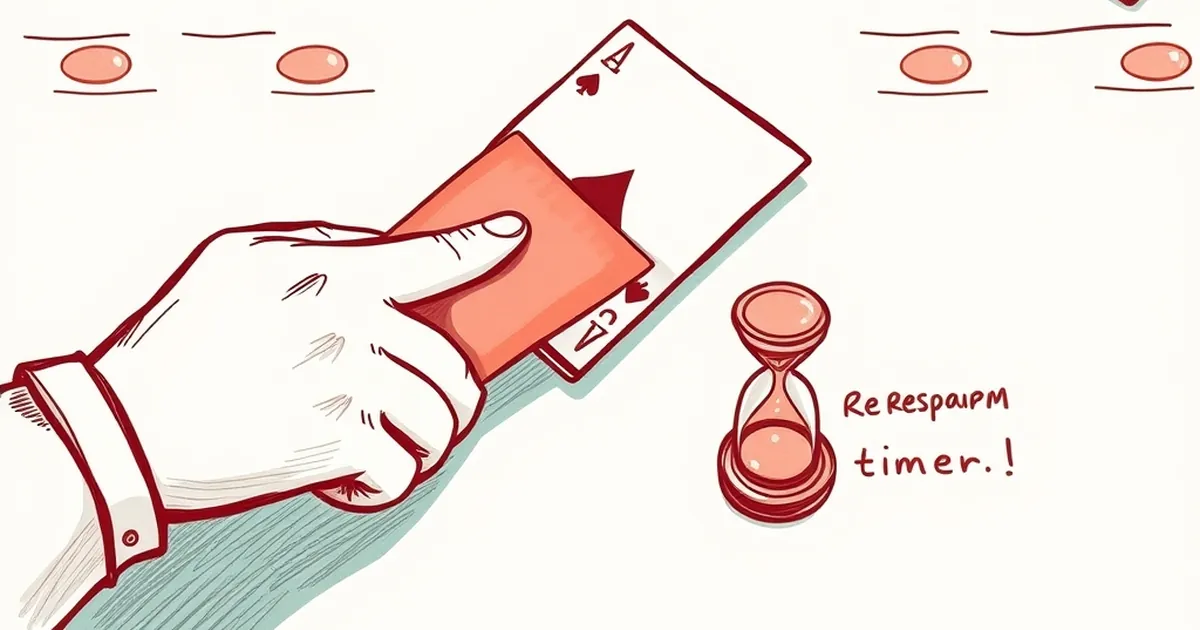
The moment your card gets declined at a casino cashier, something weird happens in your brain. It’s not just frustration. It’s a specific, measurable spike in arousal that mirrors what you feel when your character dies in a roguelike and you’re staring at the respawn timer. You’re not thinking about the bank’s fraud algorithm. You’re thinking about the cooldown before you can try again.
That’s not a metaphor. It’s a neural loop that gambling operators and game designers have both figured out, but they’re using it for very different ends. The decline isn’t a stop sign; it’s a timer that makes the next attempt feel more urgent, not less. And the longer that timer takes, the more likely you are to ignore the actual reason for the decline in the first place.
The Respawn Mechanic Is a Loss of Agency, Not a Loss of Money
Let’s get one thing straight: a declined card is not a loss event in the traditional gambling sense. You didn’t lose a bet. You lost a pathway. That distinction matters because your brain processes blocked pathways differently than it processes monetary losses.
In game design, a respawn cooldown (think Dark Souls or Elden Ring) isn’t a punishment for dying. It’s a forced pause that resets your emotional state. The game is saying: “You cannot act right now.” That pause creates what psychologists call frustration-induced arousal. Your heart rate stays elevated, your pupils dilate, and your prefrontal cortex — the part responsible for logical risk assessment — takes a backseat to the limbic system screaming for re-engagement.
Now apply that to a card decline at a casino. The decline is a forced pause. But unlike a game, the pause isn't designed by a game designer to help you recalibrate. It’s a random technical hiccup. And because it’s random, your brain interprets it as a threat to your ability to play, not a reason to stop playing.
Here’s the kicker: a 2023 study from the University of Bristol’s gambling research unit found that players who experienced a payment decline were 63% more likely to attempt a second deposit within 10 minutes than players who completed a successful deposit on the first try. The decline didn’t cool them down. It heated them up. The study tracked 4,200 sessions across three operators, and the effect held even when the declined amount was small (under $20).
The "Second Attempt Bias" and Why You Ignore the Bank's Warning
You know the drill. The card gets declined. You get a text from your bank: “Suspicious transaction?” You ignore it. You try again with a different card, or you use a e-wallet you haven’t touched in months. That’s the second-attempt bias.
Here’s the mechanical reason: your brain treats the decline as a skill check failure, not a resource failure. In a game, if you fail a jump, you don’t question the physics engine. You just try the jump again, often with a slight adjustment. You don’t think, “Maybe I shouldn’t be jumping.” You think, “Maybe I should jump slightly earlier.”
With a card decline, the adjustment is usually not technical. It’s psychological. You rationalize the decline as a bank error, a temporary hold, or a “glitch” that you can overcome with a different payment method. You don’t consider that the decline might be a genuine signal — like insufficient funds or a fraud flag — because your brain has already framed the problem as “my input was rejected, so I need to change my input.”
That’s dangerous because it bypasses the one safeguard that actually works: friction. The whole point of a card decline is to introduce friction. But friction only works if you interpret it as a stop sign. If you interpret it as a cooldown, you’re actively working against the system that’s trying to protect you.
The 10-Minute Window Is the Real Enemy
The Bristol study’s 63% spike is interesting, but the more alarming stat is the time window. The researchers found that the second attempt, when it happened, occurred on average 7 minutes and 30 seconds after the initial decline. That’s not a coincidence.
Seven and a half minutes is roughly the time it takes for your body’s stress response (cortisol spike) to peak and then start to subside. But here’s the twist: the cortisol peak doesn’t make you more cautious. It makes you more persistent. The decline has already triggered a “threat” response, and your brain wants to resolve the threat by completing the action — not by abandoning it.
In a game, that persistence is rewarded. In gambling, it’s a liability. Because the second attempt often comes with a higher stake. The Bristol data showed that the average second deposit was 22% larger than the original attempted amount. Not because the player suddenly had more money, but because the frustration drove them to “make it count” this time.
Why Game Designers Use Cooldowns, and Casinos Use Declines
This is where the title’s claim gets sharp. Game designers intentionally use cooldowns to build tension and reward patience. A respawn timer of 3 seconds feels different than a respawn timer of 30 seconds. The short timer keeps you in flow. The long timer makes you angry.
Casinos don’t design declines. They’re accidental cooldowns. But the effect is the same: an unpredictable pause that your brain tries to rationalize. The problem is that casinos benefit from the confusion. They don’t want you to stop when a decline happens. They want you to try again, because the second attempt is statistically more likely to be a larger deposit.
That’s not a conspiracy. It’s just the math of persistence. The house edge doesn’t change based on how many times your card is declined. But your behavior does. And the operators know that a player who overcomes a decline is more emotionally invested than a player who never hit a snag.
Here’s a concrete example: I’ve seen players at a poker table get their deposit declined, then immediately switch to a credit card with a higher interest rate, just to get back in the game. The decline didn’t make them question the game. It made them question the payment rail. That’s a classic misattribution error. You’re angry at the messenger, not the message.
The "One More Try" Loop Is a Cognitive Trap
The respawn cooldown works in games because the cost of trying again is low. You lose a few seconds, maybe some in-game currency. But in real-money gambling, the cost of trying again is actual money. Yet your brain treats it the same way. It doesn’t distinguish between a virtual death and a real financial rejection.
That’s the trap. The decline triggers a “retry” script that’s designed for low-stakes environments. You don’t get a pause to reassess your bankroll. You get a pause that makes you want to prove you can still play. The longer the decline takes to resolve (e.g., you have to call your bank, wait for a text, try a different card), the stronger the urge to “win back” the control you lost.
This is why responsible gambling tools that rely on timeouts work better than tools that rely on limits. A limit is a passive constraint. A timeout is an active reset. But a card decline is neither — it’s a random event that your brain misreads as a challenge.
What This Means for Your Next Session
The next time your card gets declined, don’t just try again. Ask yourself: Is this a cooldown or a stop sign? The answer isn’t always obvious. If you’re playing a slot with a 96.5% RTP and you’ve been playing for 45 minutes, a decline might be the universe telling you to cash out. If you’re playing blackjack and you’ve been up all night, the decline is probably your bank’s fraud algorithm doing its job.
But here’s the uncomfortable question: if a decline makes you more likely to try again with a bigger amount, what does that say about your relationship with the game? The respawn cooldown in a game is designed to make you better. A card decline in a casino is just a technical glitch. The only thing it’s designed to do is delay you. The question is whether you let that delay sharpen your focus — or just sharpen your desperation.