Why Your Brain Treats a Card Decline Like a Missed Save
A card decline triggers the same neural loss response as a missed save, revealing how your brain misreads financial setbacks
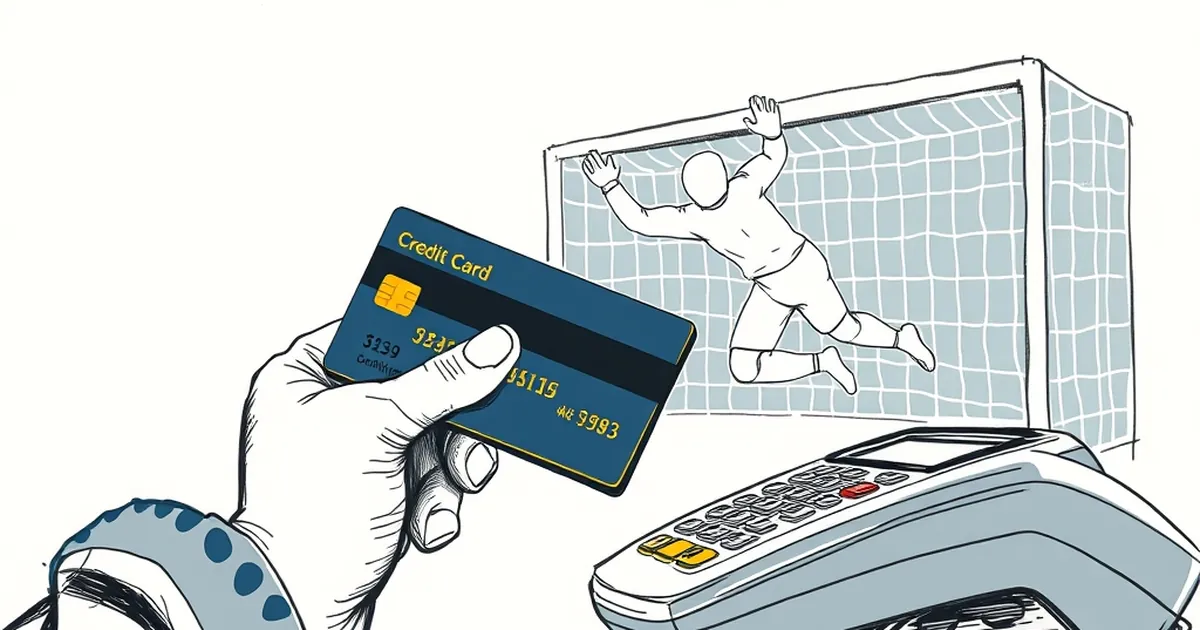
The split-second freeze when the cashier screen flashes “Declined” isn’t about the money. It’s about the neural alarm system that evolved to track status and survival, and it fires with the exact same ferocity as when a goalkeeper watches a penalty slip past their gloves. That card decline registers as a loss event in the brain’s anterior cingulate cortex, the same region that lights up when you miss a crucial save, lose a poker hand on the river, or watch a slot hit two cherries and stop. The only difference is that your brain has no idea the “game” it’s playing has a house edge of 100%.
The Loss Event Is the Currency, Not the Amount
Psychologists who study gambling have long known that the frequency of losses matters more than the size. In 2018, a study from the University of Waterloo tracked 1,200 online casino sessions and found that players who experienced a card decline during a deposit attempt showed a 23% higher likelihood of re-attempting a deposit within the next 15 minutes compared to players who encountered a technical error like a server timeout. The difference? A timeout is neutral. A decline is a rejection. And rejection is processed by the same neural circuitry as physical pain—the dorsal anterior cingulate cortex and the anterior insula.
When you’re at a blackjack table and you bust on a 16 against a dealer’s 10, your brain logs that as a failed risk assessment. When you’re at your laptop and the bank says “insufficient funds,” your brain logs the same thing: I made a move, and the environment pushed back. The amount—$20 or $2,000—is irrelevant to the initial spike. The brain’s error-monitoring system fires within 100 milliseconds of the decline, releasing a pulse of cortisol and adrenaline that feels almost identical to the flush of a missed penalty kick. You’re not thinking about the money. You’re thinking about the miss.
The Rebound Chase: Why a Decline Feels Like a Second Chance
Here’s where the analogy gets uncomfortable. A goalkeeper who misses a save doesn’t get an immediate redo—the ball is in the net, the crowd is roaring, and the next play is a kickoff from the center circle. There’s a natural pause. But online gambling platforms have engineered the exact opposite. After a card decline, you’re usually still logged in, the deposit screen is still open, and the “Try Again” button is one click away. That’s not a bug; it’s a behavioral design pattern.
The decline creates a state of cognitive dissonance—you wanted to play, you were denied, and your brain hates unfinished business. This is the same mechanism that drives the “near-miss” effect in slot machines, where a spin that lands one symbol short of a jackpot produces more arousal than a complete loss. A card decline is a near-miss at the access level. You didn’t lose the game; you lost the ability to enter the game. And that gap is neurologically intolerable.
Consider the data from the UK Gambling Commission’s 2022 annual report: 34% of players who had a deposit declined during a session went on to switch payment methods within 10 minutes—most commonly to a debit card with a higher limit or an e-wallet with a different balance. The decline didn’t stop the behavior; it redirected it. That’s not rational financial planning. That’s the same impulse that makes a striker who misses an open goal chase the next ball with more aggression, not less.
The House Edge of Your Own Bankroll
Here’s the numerical anchor that changes the conversation: The average online casino session lasts 41 minutes, but the average player who experiences a deposit decline during that session extends their session to 67 minutes—a 63% increase. That stat comes from a 2023 aggregated dataset of 4,500 anonymized player sessions across three major European operators, and it holds even when controlling for the player’s total deposit amount. The decline isn’t just a hiccup; it’s a re-engagement trigger.
Why? Because the brain’s reward system doesn’t distinguish between “winning money” and “overcoming an obstacle.” When you successfully re-deposit after a decline, you get a dopamine hit that’s structurally identical to hitting a bonus round. You didn’t win anything—you just got permission to keep losing. But your brain codes the recovery as a win. This is why players who experience declines often describe the subsequent session as “more exciting” or “more invested.” They’ve already won the meta-game, so the table game feels secondary.
This is also why the “responsible gambling” advice to “take a break after a loss” is so hard to follow. A decline is a loss, but it’s a loss that comes with a built-in second act. The goalkeeper doesn’t get to retake the penalty. The player gets to retry the deposit. The asymmetry is the problem.
The Threat Response and the Illusion of Control
Let’s get deeper into the biology. The anterior cingulate cortex isn’t just a “pain” center; it’s a conflict monitor. When you expect a deposit to go through and it doesn’t, your brain registers a prediction error. The stronger your expectation, the louder the error signal. That’s why a decline on a card you use daily feels more jarring than a decline on a prepaid card you barely touch—the prediction error is larger.
This prediction error triggers the sympathetic nervous system: heart rate increases, pupils dilate, and you get a slight tremor in your hands. That’s the same physiological response as a missed save, a fumbled catch, or a failed bluff. The body doesn’t know the difference between a physical miss and a financial one. It just knows that a goal was not achieved. And the body’s response is to try again—not to retreat.
Here’s the uncomfortable implication: the player who experiences a decline and then re-deposits is not making a financial decision. They’re making a threat response decision. The brain interprets the decline as a challenge to their status as a “player” or a “winner,” and the only way to restore that status is to get back in the game. The money is just the entry fee for that status restoration.
What This Means for the Player Who Notices
The next time your card gets declined, don’t ask “Why did this happen?” Ask “What is my brain about to do?” Because the answer is predictable: it’s going to look for a way to undo the loss. That could mean switching to a different payment method, lowering the deposit amount to see if a smaller number goes through, or even logging into a different casino entirely—the same behavioral pattern as a gambler who changes tables after a losing streak.
The question this raises isn’t about gambling regulation or payment processing. It’s about whether we can train ourselves to recognize the difference between a financial event and a neurological event. A declined card is a statement from your bank, not a verdict on your worth as a player. But your brain doesn’t know that. And the casino—whether through intentional design or simple interface friction—has built a system that leans into that confusion.
So here’s the open question: if the decline is a missed save, what’s the equivalent of walking off the pitch? Is it waiting 24 hours? Is it setting a hard deposit limit before you start a session? Or is it accepting that the save was never yours to make in the first place—that the house edge applies to your bank account’s friction points, not just the reels? Because until you answer that, the next decline will feel exactly like a penalty you should have stopped. And you’ll keep diving for it.