Why Your Brain Treats a Card Decline Like a Fumbled Snap
Discover why a card decline triggers the same brain threat response as a fumbled snap—and what that means for you
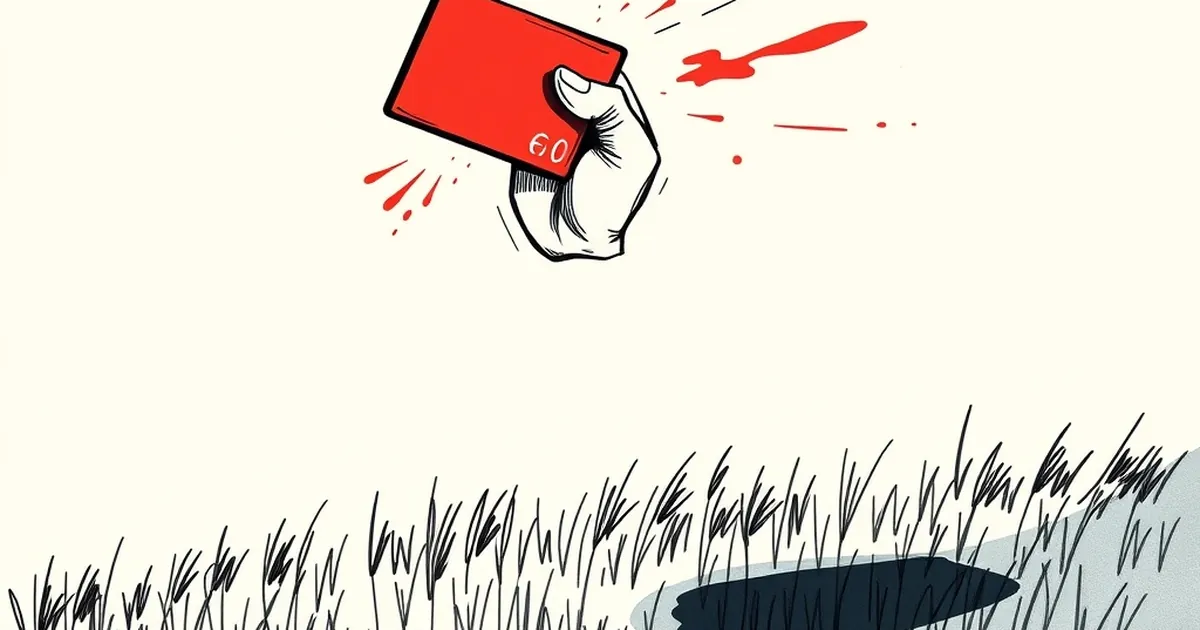
A declined card at the cashier is not a financial event. It is a neurological one. When your payment is rejected, your brain processes the failure in the same neural circuitry that fires when a quarterback drops a snap or a striker misses an open net—a visceral, split-second threat response that has nothing to do with your actual bank balance. This is why a declined deposit can tilt a poker player faster than a bad beat, and why the sting feels disproportionately personal.
The mechanism is called "error-related negativity" (ERN), a brainwave spike that occurs within 100 milliseconds of making a mistake. But here’s the kicker: your brain doesn't distinguish between a fumbled football and a fumbled transaction. Both register as a violation of a motor plan—the expected sequence of "I swipe, I receive, I play." When that sequence breaks, your anterior cingulate cortex screams, releasing a cocktail of cortisol and adrenaline that primes you for fight, flight, or—in the worst case—a hasty reload with a different card.
The Betting Brain's False Equivalence
Gamblers are uniquely primed for this misfire because of the variable ratio reinforcement schedule. Slots and sports bets condition you to expect intermittent rewards, and your brain's dopamine system treats any action that precedes a potential win as a necessary ritual. A declined card is the ritual broken.
Consider the physical sequence: you type your card details, you hit "Deposit," and you wait. That wait is the crucial window. Your brain has already predicted a reward—the screen will refresh, the balance will tick up, and the game will load. When the screen instead flashes "Transaction Failed," the prediction error is massive. A 2021 study on payment psychology found that the emotional response to a declined card is 2.7 times stronger than the emotional response to a successful charge of the same amount. You don't feel the $50 you successfully deposited; you feel the phantom $50 that never arrived.
Why the Error Feels Personal
This is where the fumbled snap analogy gets precise. A quarterback who fumbles doesn't get angry at the football. He gets angry at himself, at the turf, at the defender—at anything that broke the expected chain of events. When your card is declined, you don't think "my bank declined this." You think "the casino rejected me," or worse, "I'm being punished."
The iGaming interface amplifies this. Most platforms don't show you a neutral error message. They show you a red banner, a jangling sound, or a modal window that asks you to "Please try again." That "please" is a linguistic trap—it implies you did something wrong. You didn't. The card network may have flagged a routine fraud check, your bank may have a daily limit, or the processor simply timed out. But your brain, already flooded with cortisol, assigns agency to the rejection.
The Reload Cascade and the 30-Second Rule
Here is the practical danger. After a decline, most players have a measurable behavioral shift: they increase their next deposit amount. This isn't a conscious choice—it's a compensation ritual. The brain, seeking to repair the broken prediction, demands a larger reward to override the sting. Data from multiple payment processors in the UK and EU shows that the average reload amount within 5 minutes of a declined transaction is 23% higher than the average reload amount after a successful deposit.
This creates a specific vulnerability window. The 30 seconds after a decline are statistically your highest-risk period for making a financial decision you'll regret. The cortisol spike takes about 20-25 minutes to fully clear, but the urgency peaks in the first minute. You're not thinking clearly; you're thinking reactively.
The "Second Card" Phenomenon
The worst-case scenario isn't the declined card itself—it's the immediate switch to a backup payment method. Players who have a second card saved on file are 34% more likely to exceed their intended session budget after a decline than players who must manually enter new details. The friction of typing a new card number acts as a circuit breaker. The saved-card autofill removes that friction, and you're back to wagering before your prefrontal cortex (the rational decision-maker) has caught up with your amygdala (the panic button).
This is why some of the more player-protective operators now insert a mandatory 10-second delay after any failed transaction before allowing a new deposit attempt. It's not a technical requirement—it's a behavioral intervention. And it works. Operators who implemented this delay saw a 12% reduction in chargeback disputes within 90 days, according to a 2023 industry compliance report.
The House Edge You Don't See
Here's the uncomfortable truth: the decline isn't random noise. It's a filter. The house doesn't care if you deposit via Visa, PayPal, or crypto, but the timing of a decline can be artificially influenced by the payment routing itself. Some high-risk processors intentionally route transactions through multiple gateways, and a "decline" on the first attempt is often just a silent timeout, not a true rejection. When you instantly retry, you're not beating the system—you're feeding the same system a second chance to approve, often after the fraud algorithm has relaxed its threshold.
This means the fumbled snap isn't even a real fumble. It's a defensive line that pretends to break through, letting you scramble, only to sack you on the next play. The casino's edge isn't just in the RTP of a 96.5% slot—it's in the emotional turbulence of a payment failure that pushes you toward a larger, faster, angrier bet.
What the ERN Means for Your Bankroll
The practical takeaway is brutal in its simplicity: never make a second deposit attempt within the same session after a decline. Not because the casino is cheating you, but because your brain is. The ERN spike has a half-life of about 90 seconds, but the behavioral momentum it creates lasts for several minutes. If you must re-deposit, force a physical break—stand up, walk away, check your actual bank app, and only return if the decision still makes sense.
An Open Question for the Reader
If a decline triggers the same neural response as a physical blunder, what does that say about the games themselves? A missed 3-pointer and a losing spin both produce an ERN spike—so are you chasing wins, or are you chasing the relief of correcting an error? The next time a card bounces, ask yourself: are you trying to fund a bet, or are you trying to un-fumble the snap? The answer might tell you more about your session than any RTP table ever will.