Why Your Brain Treats a Card Decline Like a Fumbled Combo
Discover the neuroscience behind why a card decline triggers the same brain response as a fumbled fighting game combo
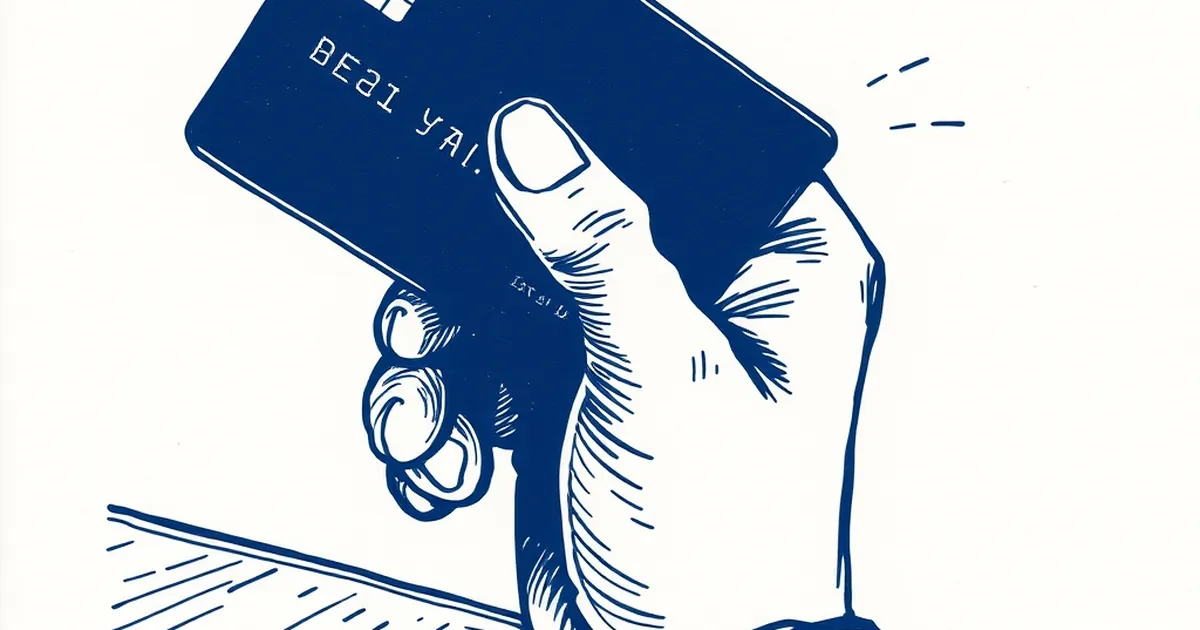
It’s a tiny moment, barely a second long. You tap your phone on the reader, and instead of the cheerful beep, you get a red screen with a single word: DECLINED. In the grand scheme of things, nothing happened. But in your brain, everything happened. A flush of heat, a spike of adrenaline, a sudden hyper-awareness of the person behind you in line. It feels less like a payment error and more like you just fumbled a perfectly executed combo in a fighting game—that split-second where your rhythm breaks, the opponent punishes you, and you lose your entire health bar.
Why? Why does a financial system rejection trigger the same physiological response as a failed physical or competitive performance? The answer isn't in the banking mainframe; it’s in the ancient reward-processing architecture of your skull.
The Psychology of the "Missed Input"
To understand the sting of a decline, we have to look at what a payment actually is from a neurological standpoint. It’s not a transaction; it’s a ritual of validation. You are performing a sequence of actions (grab card, tap, wait) that you have learned, through repetition, leads to a predictable positive outcome (approval, goods, services). This is operant conditioning at its most mundane.
When that sequence breaks, your brain doesn't process it as a "technical error." It processes it as a punishment for a botched action. In behavioral psychology, this is tied to the concept of error-related negativity (ERN) —a brainwave that spikes within 100 milliseconds of making a mistake, even a minor one. But here’s the kicker: the ERN is stronger when the mistake is unexpected.
If you know you have zero balance, a decline is annoying but bearable. But if you think you have funds, a decline is a violation of your predictive model. It’s the cognitive equivalent of dropping the ball on a routine catch. The surprise amplifies the neural alarm.
The "Fumbled Combo" Analogy
In competitive gaming, a combo is a sequence of inputs that must be executed perfectly to achieve a high-damage output. The moment you miss a button press, the combo drops. The opponent gets a "punish" window. The decline is your bank's "punish window" for your financial combo.
But there’s a deeper layer here: loss aversion. Nobel laureate Daniel Kahneman and Amos Tversky demonstrated that losses hurt roughly twice as much as equivalent gains feel good. A decline isn't just a lack of approval; it’s a loss of expected utility. You had already mentally spent the money, visualized the coffee, or planned the purchase. The denial forces a rapid cognitive reversal. You must un-buy the item, un-plan the purchase, and re-evaluate your social standing. That reversal is metabolically expensive for the brain, which is why you feel tired and embarrassed long after the transaction is forgotten.
Variable Rewards and the "Almost" Effect
Here is where the payment world gets truly fascinating. Why are we so addicted to tapping, swiping, and checking balances? It’s the same reason we can't stop checking our social media feeds: variable-ratio reinforcement.
B.F. Skinner famously discovered that if you reward a behavior every single time, the behavior extinguishes quickly when the reward stops. But if you reward it intermittently and unpredictably, the behavior becomes nearly impossible to extinguish. For most people, a card approval is a 99.9% probability. That’s almost a fixed ratio. But the 0.1% chance of a decline—or the occasional "fraud alert" that requires a manual override—introduces just enough variance to keep your dopamine system on edge.
Think about how you check your banking app. You don't check it because you expect a million dollars. You check it because there is a small chance something changed. That uncertainty is the hook. The decline is the "miss" in a slot machine of daily life—it’s the moment where the reels almost line up but don’t. Research on "near-miss" effects shows that the brain treats a near-miss as a partial reward, actually increasing the desire to try again. A decline, in a weird way, primes you for the next successful tap.
The Social Layer: Status and Competence
We can’t ignore the social dimension. In many cultures, paying is a public performance. The decline is a public failure of competence. This triggers the somatic marker hypothesis (Antonio Damasio), which suggests that emotional states are linked to physiological changes. The heat you feel is your body preparing for a social threat. You are not just failing a transaction; you are failing a subtle test of "are you a responsible adult?"
This is why contactless payments are so psychologically smooth. The less time you spend in the "ritual" (fumbling for a card, inserting a chip, signing), the less cognitive load there is. A decline on a fast tap feels more jarring because the speed of the interaction reduces your ability to anticipate the failure. You had no time to brace for impact.
The Financial "Combo Breaker" Strategy
So, if we know the brain treats declines as fumbled combos, how do we—as users, not institutions—reframe this? The first step is cognitive reappraisal. Instead of viewing a decline as a failure of your input, view it as a data point. The system is telling you something specific about your account state, not about your worth as a person. It’s a diagnostic tool, not a judge.
The second step is to build friction into your mental model. If you know you are prone to anxiety around payments, pre-check your balance. This reduces the "surprise" variable. When the surprise is removed, the ERN spike is less severe. You are, in effect, pre-empting the combo breaker by changing your expectations.
Designing for the "Recovery State"
For those of us who build or use financial tools, the future isn't about eliminating declines—that's impossible. It’s about optimizing the recovery state. In fighting games, a good player doesn't just accept the drop; they immediately defend, regroup, and find a new opening. The best payment apps are starting to do this by offering instant, actionable next steps on a decline screen: "Try a different card," "Check your balance," "Contact support."
This is moving from a binary "success/fail" model to a coaching model. Instead of just punishing the fumble, the system gives you the input to start a new combo. This aligns with the psychological concept of growth mindset (Carol Dweck). If the system tells you why you failed (insufficient funds vs. fraud flag), you can adapt. If it just says "DECLINED," you are stuck in a shame loop.
The New Combo: Micro-Uncertainty
Looking forward, the most interesting development is the gamification of financial health. We are moving away from hiding the uncertainty and towards embracing it. Apps like credit score trackers already show you your "progress" in a visual, level-up style format. The next step is integrating this into the payment flow itself.
Imagine a card that doesn't just decline, but shows you a "power meter" of your spending health before you tap. This is the ultimate combo: you are using the brain's reward loop (variable-ratio reinforcement) to build good habits, rather than just reacting to bad ones. You are turning the payment process from a passive risk into an active, skill-based interaction.
The decline will never feel good. It’s a primitive alarm bell. But by understanding that the alarm is a misattributed response to a fumbled input—not a verdict on your existence—you can reset your combo faster. You can tap again, with a clear head, and land the next hit. The financial game isn't about never dropping the combo; it's about how quickly you recover when you do. And in that recovery, you find the real mastery.