Why Your Brain Treats a Card Decline Like a Failed Jump
Why your brain reacts to a card decline with the same intensity as a physical misstep—rooted in survival wiring and behavioral psychology
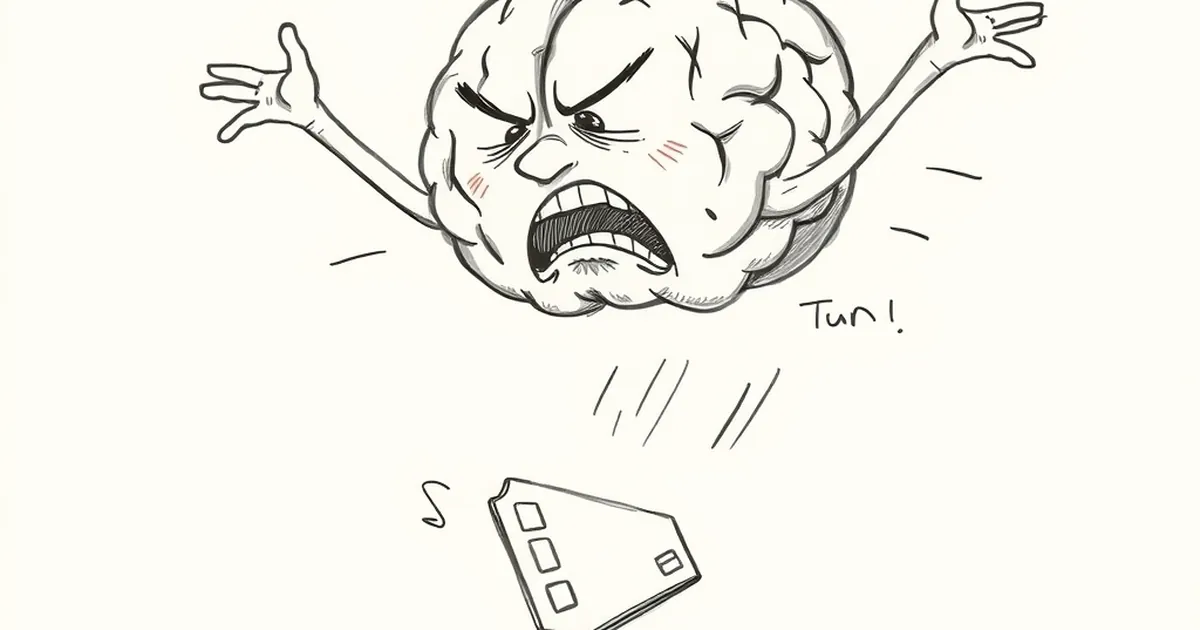
You’re standing at a register, phone pressed to the terminal, waiting for that tiny buzz of approval. Instead, the screen flashes red. Declined. Your stomach drops. Your face heats. For a split second, you feel a flush of something that looks a lot like shame—even though you know there’s money in the account, even though you know it’s probably a system hiccup. Your brain just treated a card decline like a failed jump.
Why does a payment failure hit so hard, so fast? The answer lives at the intersection of finance and behavioral psychology—where your brain’s ancient survival wiring meets a piece of plastic that represents trust, status, and future access. Let’s unpack what’s really happening behind that red screen.
The Neuroscience of “Nope”
Risk Prediction and the Anterior Cingulate Cortex
Every time you tap, dip, or swipe, your brain runs a tiny, unconscious simulation. Will this work? Will I get what I want? This is the work of the anterior cingulate cortex (ACC), a region that monitors conflict between expectation and outcome. When the terminal declines, the ACC lights up like a smoke alarm. It’s the same region that flags a misstep on a hiking trail—the moment your foot lands wrong and you realize, milliseconds before the fall, that you’re about to stumble.
Daniel Kahneman’s work on System 1 and System 2 thinking helps here. The payment process is a System 1 action—fast, automatic, low-effort. You don’t consciously evaluate the risk of a decline every time you tap. But the ACC is always scanning. When the expected “yes” becomes a “no,” your brain has to rapidly shift from autopilot to manual override. That cognitive jolt feels like a physical stumble because, to your neural circuitry, it is one.
The Physics of Falling
There’s also a literal body-mapping at play. Research on embodied cognition suggests that the brain maps social and financial failures onto physical space. A failed jump is a loss of altitude, a drop. A card decline is a drop in social standing, a drop in progress toward a goal. Your brain doesn’t distinguish neatly between the two. The same regions that process physical pain—the insula, the dorsal anterior cingulate—activate during social rejection and, yes, during financial losses. A decline isn’t just an inconvenience; it’s a micro-rejection, processed in the same neural real estate as a push off a ledge.
The Variable-Ratio Trap
Why Cards Are More Addictive Than Cash
Now for the uncomfortable part: the payment system is designed to hook you, and your brain’s reward circuitry is the target. The reason a decline stings so much is that the approval feels so good—and that good feeling arrives on a schedule that behavioral psychologists call variable-ratio reinforcement.
B.F. Skinner’s classic experiments showed that rats press levers most persistently when the reward comes at unpredictable intervals. Not every press, not every ten presses—just sometimes. That unpredictability supercharges dopamine release. Your card works most of the time, but not always. Occasionally, a transaction that should go through fails for no reason you can identify. Occasionally, a borderline one sails through. This unpredictability makes the act of paying itself mildly addictive. You’re not just buying a coffee; you’re playing a tiny slot machine for social approval and possession.
The Crash After the Spike
When the decline hits, the dopamine spike you expected doesn’t arrive. Instead, you get a cortisol dump—the stress hormone. Your brain interprets the missing reward as a threat. And because the reward schedule is variable, you can’t predict when the next success will come. That uncertainty amplifies the emotional impact. A failed jump isn’t just a fall; it’s a fall with no guarantee you’ll get back up. The brain hates that.
Loss Aversion and the Endowment Effect
The Card as an Extension of Self
Here’s a subtle twist: your card isn’t just a tool for spending. It’s a symbol of your financial identity, your creditworthiness, your social standing. Behavioral economists call this the endowment effect—once you own something, you value it more than its market worth. You’ve “endowed” your card with your reputation.
When the card is declined, you don’t just lose a transaction. You lose a bit of that endowed identity. Kahneman and Tversky’s prospect theory shows that losses hurt roughly twice as much as equivalent gains feel good. A decline is a loss of status, a loss of smooth progress, a loss of face. The brain applies the same 2:1 ratio to that micro-loss as it does to a major financial setback. No wonder your stomach drops.
The Social Amplifier
We don’t use cards in private. We use them in front of cashiers, behind us in line, on dates, at business dinners. The decline is witnessed. Social pain researchers like Naomi Eisenberger have shown that the brain processes social rejection in the same regions as physical pain. A declined card is a public failure—a small, witnessed stumble. It’s the neural equivalent of tripping on a curb in front of a crowd. Your brain treats the social exposure of a decline as part of the fall.
What This Means for the Future of Payments
Designing for the Stumble
This isn’t just an academic curiosity. The way payment systems are designed can either soften or amplify this neural stumble. Right now, most declines are silent, red, final. They offer no explanation, no path forward. They leave you in that cortisol spike with nowhere to go.
Forward-looking payment designers are starting to change that. Imagine a terminal that says, “Network issue—try again in 30 seconds,” instead of “DECLINED.” Imagine a notification that explains: “Your bank flagged this as unusual activity. Approve it in the app.” The goal isn’t to remove all friction—some security friction is essential—but to reframe the failure as a temporary glitch, not a personal rejection.
Behavioral Nudges for the Moment After
The real opportunity lies in the recovery. Once your brain has experienced the “fall,” what happens next? Right now, most people just try a different card or dig for cash. But what if the system could offer a micro-nudge? A simple message like “This happens to 1 in 20 transactions—it’s not you” could reduce the shame component. A gentle prompt to try again, with a countdown, could re-engage the reward system and turn the decline into a puzzle rather than a judgment.
Some fintech apps are already experimenting with “soft declines”—transactions that go through but trigger a warning about low balance or suspicious activity, rather than a hard stop. This preserves the feeling of success while still alerting you to a problem. It’s the difference between stumbling and catching yourself, versus falling flat.
The Takeaway That Isn’t a Conclusion
The next time your card gets declined, notice what happens in your body. That flush, that heat, that sudden urge to explain yourself—it’s not you being dramatic. It’s your ancient brain, built for physical survival, trying to process a modern social fall. The good news is that understanding this wiring gives you a tiny bit of control. You can take a breath, remind yourself that this is a system error, not a character flaw, and tap again.
And if you’re building or designing payment systems, you have a choice. You can keep delivering a flat, red “no”—a hard fall with no handrail. Or you can design for the stumble: cushion it, explain it, offer the user a way to stand back up. Because in a world where we tap dozens of times a day, every decline is a moment of trust broken and rebuilt. The systems that understand that—that treat the user’s brain like a human brain, not just an account number—will be the ones we actually want to use.