Why Your Brain Treats a Card Decline Like a Failed Combo
A card decline triggers the same brain response as a failed combo, disrupting your sense of completion
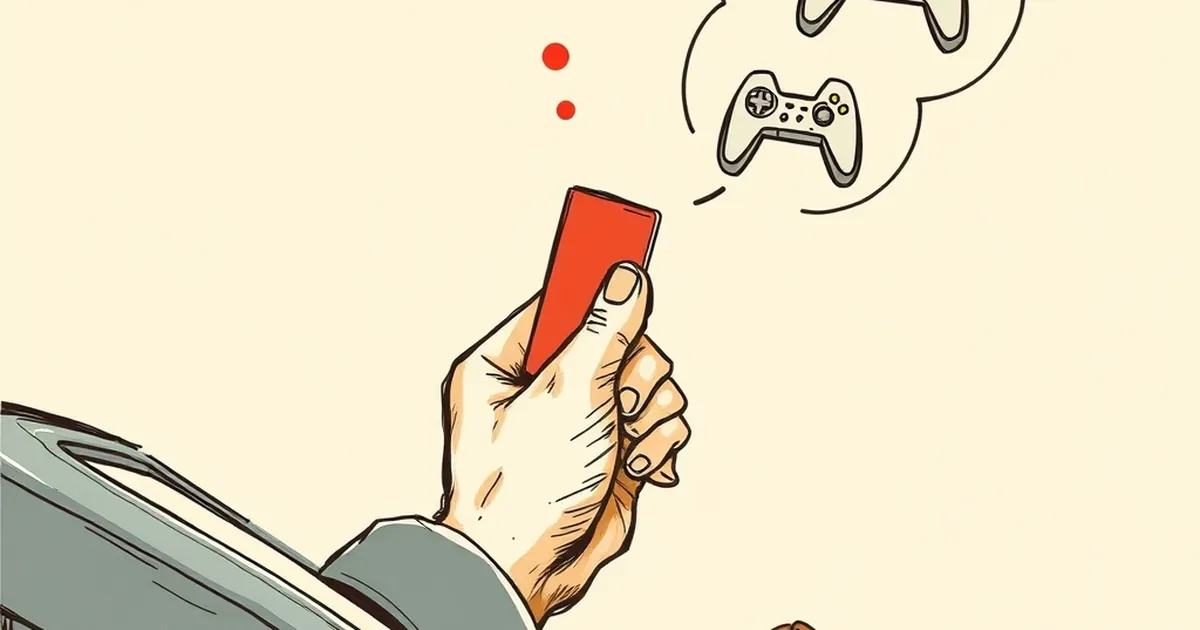
It’s a strangely specific kind of sting. You’re at the checkout, the terminal beeps, and the screen flashes that dreaded red notification. Your brain doesn’t just register a logistical hiccup; it registers a physical jolt, a micro-wave of shame and panic. We often think of payment failures as purely financial data points, but neurologically, they are much closer to dropping a 20-hit combo in a fighting game right before the final blow. It’s a broken sequence, and your brain hates broken sequences more than it hates losing money.
The connection between a declined purchase and a failed combo in a video game might seem flippant, but the underlying mechanics are identical. Both are systems of action and reward, governed by the same neural circuitry that dictates how we handle risk, expectation, and loss. Let’s pull back the curtain on why your amygdala treats a plastic card swipe with the same gravity as a missed button input.
The Dopamine Loop and the "Almost" Effect
To understand the panic, we have to look at the reward prediction error, a concept popularized by neuroscientist Wolfram Schultz. Your brain is a prediction machine. When you decide to buy a coffee, your brain doesn’t just anticipate caffeine; it anticipates the completion of the transaction. It predicts a seamless sequence: swipe, beep, receipt, coffee.
This sequence is driven by dopamine, which isn’t just the "pleasure" chemical—it’s the anticipation chemical. It spikes during the pursuit of the reward, not just the receipt of it. When you initiate a payment, your dopamine levels rise in preparation for the "win" (the product). The actual approval is a confirmation that releases the reward.
But a decline? That is a negative prediction error. The brain expected a hit and got a miss. This is the exact same signal that fires when you whiff a special move in Street Fighter or miss a jump in Super Mario that you’ve made a hundred times. The brain doesn't process this as "the machine said no." It processes it as "the expected reward was withheld." The frustration you feel is not about the money; it’s about the broken loop.
Loss Aversion: It’s Not the Money, It’s the Sequence
Kahneman and Tversky’s Prospect Theory tells us that losses hurt roughly twice as much as equivalent gains feel good. But in the context of a card decline, we aren't losing money—we're losing time and momentum. Yet, the brain treats the interruption as a loss.
Consider the "combo" metaphor. In competitive gaming, a combo is a string of inputs where timing is everything. If you drop the combo, the damage you would have dealt is gone. The opportunity cost is the loss. Similarly, when you’re at the register, your brain has already spent the money mentally. You’ve visualized the item in your bag, tasted the meal, or imagined the hotel room.
When the decline hits, that entire visual simulation is violently terminated. You are forced to revert to a state of "not having," which feels like a tangible loss. This is why people often apologize to the cashier or get irrationally angry at the terminal. They aren't angry about the debt; they are angry that their internal narrative was interrupted. The brain is reacting to the failure of the execution, not the financial shortfall.
Variable-Ratio Reinforcement: Why We Keep Swiping
Here is where the psychology gets interesting, and where the "game" aspect truly shines. Behavioral psychologist B.F. Skinner famously discovered that variable-ratio reinforcement schedules—where rewards are given after an unpredictable number of responses—are the most addictive and persistent.
Now, think about your spending habits. Most of the time, your card works. The approval is the reward. But occasionally, it fails. This creates a variable-ratio schedule. You never know when the "reward" (approval) is coming, and you never know when the "shock" (decline) will occur.
This unpredictability is precisely why we don't stop using cards after a decline. In a game, if a boss is unbeatable, you stop playing. But if a boss sometimes drops a rare item, you keep grinding. Your brain treats the payment terminal as a slot machine for goods. The decline isn't a "stop" signal; it's a "try again" signal. The uncertainty keeps the dopamine system engaged. You’re not just buying a product; you’re playing a game of "will it go through?" with a 95% success rate, which is the exact ratio designed to keep you hooked.
The "Friction" Factor: How the Industry Exploits Your Frustration
The payments industry is acutely aware of this psychological friction. This is why the "card declined" message is so jarring and abrupt. It is designed to be a hard stop. But the industry also knows that a hard stop is bad for business. So, they invented the "soft decline" and the "retry."
Think about the last time you got a notification saying, "Transaction failed due to insufficient funds, but we've authorized an overdraft." Or when your bank sends a push notification asking, "Did you just attempt this purchase?" This is the industry trying to re-engage the combo. They are giving you a "continue?" prompt, much like a game does when you die.
- The "2FA" Prompt: This is the "quick time event" of payments. It interrupts the flow, but if you hit the right buttons (enter the code) fast enough, you get back into the rhythm. It raises the stakes and makes the eventual approval feel more earned.
- The "Retry" Button: This is the classic "continue" screen. It exists because the industry knows that your loss aversion will push you to try again immediately, even if you know it will fail. They bank on your desire to close the loop.
The most successful payment experiences are the "invisible" ones—one-click purchases, stored credentials, tap-to-pay. These remove the friction of the sequence entirely. They are the equivalent of an auto-play mode. When that auto-play fails, however, the crash is harder. A silent decline on a subscription renewal feels more like a betrayal than a loud decline at a register, precisely because the reward loop was so seamless.
The Future: Designing for the "Save Point"
So, what does this mean for the future of money? If we accept that a decline is a psychological "combo-breaker," the next step is to design payment systems that offer "save points."
We are moving toward a world of "Smart Payments" where the system doesn't just say "no," but explains why and offers a path forward. Imagine a terminal that says: "Declined. You have $50 left in your main account, but $200 in savings. Transfer?" This is the financial equivalent of a game offering you a "continue with 10 coins" option.
This is the forward-looking shift: from rejection to redirection. The goal isn't to eliminate declines—that would be impossible—but to reduce the cognitive shock of the failure. The future of banking is not about processing numbers; it's about managing the player's emotional state.
By understanding that a decline is a broken combo, we can start to build systems that allow for "mid-combo adjustments." Instead of a hard stop, we get a "parry" or a "block." The next generation of payment apps will use behavioral cues to predict when a decline is likely and offer alternatives before the dopamine crash occurs.
Next time your card gets declined, don't just feel the shame. Recognize it for what it is: a beautifully complex neurological event. Your brain is mourning the loss of a sequence that never was. And the industry is racing to find a way to let you hit "restart" before you even realize you've lost the fight.