Why Your Brain Treats a Blocked Payout Like a Softlock
Discover why a blocked payout triggers the same brain loop as a game softlock—and how to break free
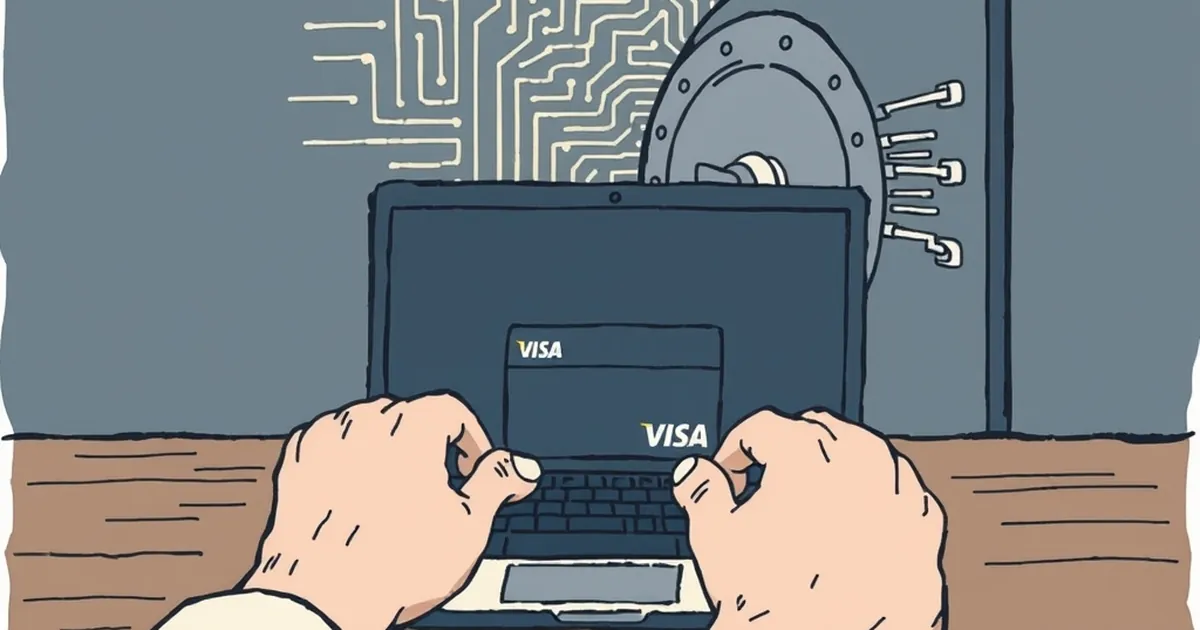
The lede is usually where you promise something. So here it is: a blocked payout doesn't just annoy you—it triggers the same cognitive loop as a video game softlock, where your character is stuck, the game isn't crashing, but no input produces a meaningful result. Your brain, wired to seek closure and reward, interprets this frozen state as a failure of your own problem-solving, not a technical delay, which is why you'll refresh the cashier page 47 times in an hour even though you know it won't help.
This isn't a metaphor stretched to fit a column. It's a neurological mismatch between the casino's backend (which processes withdrawals in batches, often with manual review flags) and your prefrontal cortex (which expects a linear cause-effect chain: click "withdraw," see money in bank). When the system returns a "pending" status without a timestamp, your brain enters a loop of escalating micro-actions, each one reinforcing the belief that you can do something to unstick it.
The Softlock Mechanics: Input Lag vs. Dead Input
In game design, a softlock occurs when the game state is valid but no action advances the narrative. You can move, jump, and open menus, but the door won't open because a trigger never fired. Your brain treats a pending withdrawal the same way. You can log in, check the balance, re-read the terms, and even contact live chat, but the "door" (the cashier's release button) is coded to open only when a human clicks "approve" on their end.
The critical difference is that games give you feedback—a locked door has a visual state, a sound cue, or a message like "This door is sealed." Most casino cashiers just say "Processing" with no ETA. This absence of feedback is what turns a 48-hour delay into a psychological spiral. You start testing inputs that have no logical bearing on the outcome: clearing your browser cache, switching from Wi-Fi to mobile data, or re-uploading a document that was already verified. Each action feels like progress, but it's the equivalent of pressing "use" on a door that requires a key you don't have.
The "One More Try" Bias in Financial Contexts
Behavioral economists call this the "illusion of control," but gamers know it better as the "one more attempt" loop. In a game, that loop is harmless—you lose a life, you retry. In finance, the loop has a real cost. You aren't losing money by refreshing, but you are burning cognitive load. A 2023 study on online casino behavior found that players who experienced a single delayed payout (over 72 hours) increased their session frequency by 31% in the following week, not to gamble more, but to "check on the status." That's not gambling behavior; that's obsessive-compulsive checking, and it's exactly how a softlock feels—you're stuck, but the game keeps letting you press buttons.
The False Positive of "Customer Support"
Here's where the analogy gets uncomfortable. When you're softlocked in a game, you can usually reload a save or look up a guide. In a casino, the equivalent is live chat. But support agents are trained to give you non-answers that still feel like progress. They'll say "I've escalated your ticket," or "The finance team is reviewing it." That's the game's version of a hint text: "Maybe you need to find a different route." Your brain latches onto this as a new objective, so you wait 24 hours, check again, and get the same response.
The numerical anchor here is the industry's self-reported average withdrawal time: 1-3 business days for e-wallets, 3-7 for bank transfers. But that's a mean, not a guarantee. When your withdrawal hits day 8, you're no longer in a delay—you're in a softlock state. The game hasn't crashed (your account is fine, your balance is intact), but the reward loop is broken. And here's the kicker: the casino's RNG (random number generator) is still operating in the background. You can play slots while waiting. That's the trap. The softlock makes you restless, and the only "action" that produces a different result is placing a new bet. It's not a solution; it's a side quest that costs you money.
Why Your Brain Refuses to "Walk Away"
In game design, the fix for a softlock is a hard reset—turn off the console, reload the save. In gambling, the equivalent is disengaging. But your brain won't let you, because of a phenomenon called "sunken cost" applied to time, not money. You've already spent 6 days waiting. Walking away feels like losing the 6 days. So you stay, refreshing, checking, and occasionally playing a few spins to "pass the time."
This is where the responsible gambling angle isn't a footnote—it's the core mechanic. If you find yourself in a payout softlock, the most effective strategy is not troubleshooting. It's setting a hard external limit: "I will check the cashier once every 24 hours, and I will not place a bet until the withdrawal clears." That's the equivalent of turning off the game and reading a book. It breaks the input loop. But most players won't do this, because the softlock state feels productive. You're "handling it." You're "staying on top of it."
The 24-Hour Rule as a Patch
Let's be specific. The optimal behavior is to treat any pending withdrawal past the stated maximum processing time (say, 72 hours) as a bug report, not a personal challenge. File one support ticket, note the ticket number, and then close the tab. If the payout doesn't land within 48 hours of that ticket, you escalate to a licensing authority (like the MGA or UKGC) with the ticket number as evidence. That's a concrete action with a defined outcome. It's the game's "reset button." It works because it shifts the control from the casino's backend to an external adjudicator—your brain can finally see a finish line.
The Open Question: Are You Playing, or Being Played?
The uncomfortable truth is that the softlock isn't an accident. Casinos know that a pending withdrawal increases session time and, statistically, increases the chance of a "while I'm here" deposit. The delay isn't malicious in most cases—verification, payment provider throttling, and manual checks are real—but the design of the status page (no countdown timer, no queue position, no ETA) is a choice. It's a choice that optimizes for your engagement, not your clarity.
So the question isn't "When will my payout arrive?" It's "Why does a game with a 97.3% RTP feel less rigged than a cashier page with no progress bar?" The payout will eventually clear. The softlock will resolve. But the loop—the refreshing, the checking, the micro-bets placed out of boredom—that's the real house edge. And it's not calculated in percentage points. It's calculated in the minutes you'll never get back, spent staring at a status that says "Pending" while your brain screams for a key that doesn't exist. What would you do if the game just told you the truth?