Why Your Brain Tracks Spending Like an XP Bar
Discover why your brain treats spending like a game, and how fintech taps into your innate need for progress and reward
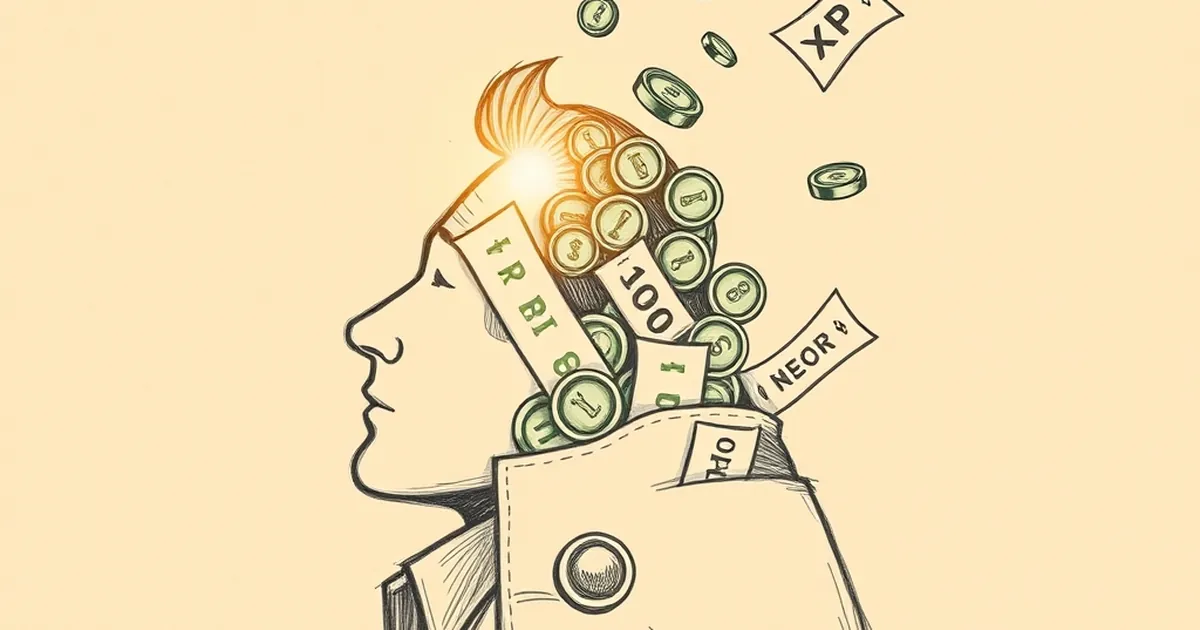
Have you ever noticed that strange little flutter of satisfaction when your credit card app pings you with a “rewards earned” notification? It’s not just the free coffee you’re accruing. There is something almost game-like about watching your available balance tick up after a paycheck, or seeing that progress ring fill up on your banking app’s savings goal. We treat our finances less like a ledger and more like a character sheet, and honestly, the psychology behind that is deeper than just being organized.
We’re wired to see patterns and progression, and modern fintech has figured out how to tap into that. But here’s the question that’s been rattling around in my head: are we tracking our money because it’s smart financial hygiene, or because our brains are literally treating our bank balance like an experience points (XP) bar in a video game? And more importantly, does that distinction even matter for our bottom line?
The Dopamine Loop of “Leveling Up”
Let’s talk about the reward system for a second. In behavioral psychology, there’s a concept called variable-ratio reinforcement, famously studied by B.F. Skinner. In simple terms, it means that if you don’t know when a reward is coming, you’ll keep pulling the lever. Slot machines are the classic example, but we’ve cleaned that up and put it in our pockets.
When you use a credit card that offers 2% cash back, you are operating on a variable schedule. You know you’ll get something, but you don’t know exactly which purchase will trigger a bonus category or a random “spend $500, get $10” offer. That uncertainty is precisely what keeps you engaged. Your brain releases a little dopamine when the reward hits, not because the $10 is life-changing, but because the prediction was fulfilled.
This is why the "gamification" of savings apps works so well. They turn the abstract concept of "paying off debt" into a tangible progress bar. When you see a visual ring fill up from 60% to 62%, your brain registers that as a mini-success. It’s the same neural circuitry that fires when you gain a level in a game—you’re not just saving money; you’re winning at a system you understand.
Loss Aversion: The XP Bar’s Dark Side
However, this isn’t all sunshine and rainbows. The same brain that loves leveling up is also terrified of losing progress. Daniel Kahneman and Amos Tversky’s Prospect Theory tells us that losses hurt roughly twice as much as equivalent gains feel good. This is where the "XP bar" analogy gets dangerous.
If you view your checking account as a health bar, then every single transaction—even the necessary ones—feels like a hit to your vitality. That morning latte isn't just a $5 spend; it’s a -5 HP reduction that you feel viscerally. This can lead to a phenomenon called "decision fatigue," where you become so anxious about the visual decline of your balance that you either:
- Stop checking entirely (ignoring the bar until it’s critically low), or
- Become pathologically frugal to the point where you avoid spending on essential experiences.
I’ve seen this play out in my own budgeting. I used to have an app that showed my "daily spending allowance" as a shrinking number. It was effective, sure, but it made me miserable. I was optimizing for the number rather than the value of the purchase. The brain conflates "losing money" with "losing status," which triggers a stress response that has nothing to do with actual financial security.
The "Near Miss" Effect in Subscription Billing
Here’s a specific intersection of behavioral economics and payment mechanics that often goes unnoticed: the subscription model. Subscription services are the masters of the "near miss" and the "sunk cost" fallacy. When you sign up for a gym membership or a streaming service, you’re making a decision for your future self—a self that you assume will use the gym or watch that content.
But the payment structure creates a weird cognitive loop. Because the charge happens automatically, you don't get the "pain of paying" that you do with a physical cash transaction. This is called the credit card premium—we spend more when the payment is abstract.
But here’s the behavioral twist: we keep the subscription active not because we use it, but because canceling feels like a permanent loss of potential. It’s like dropping a quest in an RPG; you feel like you’re losing the XP you could have earned, even if you haven't touched the game in months. The XP bar for your "future fitness" is full, but your actual bank account is bleeding slowly. Recognizing this bias is the first step to slashing $50 a month from your "convenience" budget.
From Gamification to Decision Architecture
So, if our brains are wired to treat money like a game, how do we use that to our advantage without becoming slaves to the dopamine? The answer isn't to uninstall all your banking apps and go back to a shoebox. It’s to be deliberate about the rules of the game you play.
Instead of tracking every penny to the cent (which triggers loss aversion), try bucket-based budgeting. This is where you allocate funds to specific "containers" (e.g., Groceries, Fun, Rent) that have their own sub-balances. This changes the XP bar from a single global health bar to multiple quest-specific quests. When you spend $30 on takeout, you aren't losing overall "wealth"; you're just reducing your "Fun" quest progress. This creates a sense of autonomy, which is a massive psychological motivator.
Another tactic is pre-commitment. Set up your savings to transfer automatically on payday, before you see the money in your checking account. This is essentially "cheating" the XP bar system. You trick your brain into thinking your baseline income is lower, so you never see the dip when you save. You’re leveling up your wealth stat without the anxiety of watching the progress bar move.
The Future is "Real-Time" Psychology
Looking forward, the fintech industry is moving away from simple spending trackers toward "financial wellness" scores and AI-driven coaching. The next generation of banking apps won't just show you a bar; they’ll analyze your spending patterns and alert you to emotional spending before it happens. Imagine a push notification that says, "You usually buy a coffee here on Mondays after a stressful meeting. You're up 2% on your budget this month. Treat yourself?"
That is the holy grail of behavioral design—not just rewarding past behavior, but predicting future stress points. We are moving toward a system where the "game" is not about hoarding points, but about maintaining a state of flow. It’s about using the psychological pull of progression to build resilience, not anxiety.
The next time you get that notification about a rewards milestone, don't just feel the dopamine. Ask yourself: Am I playing the system, or is the system playing me? The goal isn't to have the highest score; it's to design a game you actually enjoy playing for the next forty years. And that starts with realizing that your bank balance is just a tool, not a measure of your worth—even if it does look cool when the progress ring fills up.