Why Your Brain Spends Like It’s Playing a Mobile Game
Discover why frictionless payments trigger the same dopamine loops as mobile games—and what that means for your spending habits
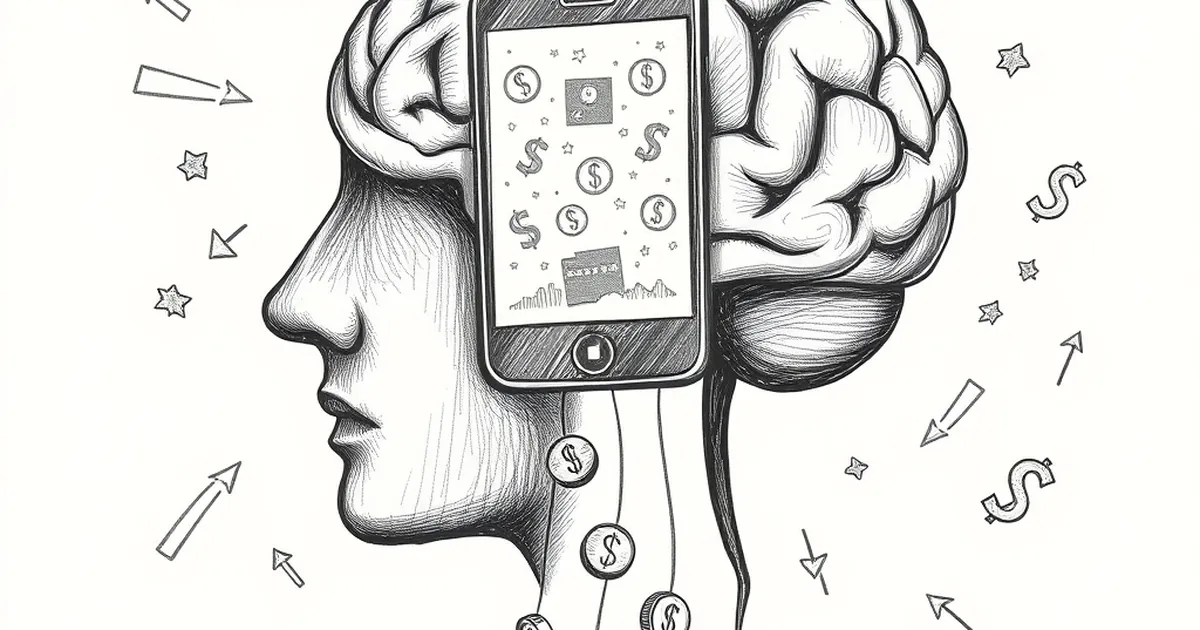
You’re unlocking your phone to check a balance, and three taps later you’ve bought a coffee, tipped a delivery driver, and activated a one-click subscription for a streaming service you’re not sure you want. The whole sequence took about as long as it takes to lose a life in a mobile game. And that’s the point. The payment experience has been deliberately engineered to feel frictionless, rewarding, and slightly compulsive — just like the games you tell yourself you don’t have time for.
The question is: why does your brain treat a routine transaction the same way it treats a dopamine hit from a match-three puzzle? And what does that mean for how you’ll spend money tomorrow?
The Same Loop, Different Currency
Behavioral psychology has a name for the mechanism that makes both mobile games and modern payments so sticky: variable-ratio reinforcement. It’s the principle B.F. Skinner documented in the 1950s, where a reward is delivered after an unpredictable number of responses. In a game, you don’t know if the next swipe will drop a rare power-up or just another common gem. That uncertainty keeps you tapping.
Now look at your spending life. You don’t know whether the next tap of your phone will bring a boring notification or a delightful surprise — a cashback reward, a free trial conversion, a “you saved $5” message from a price-comparison app. Each transaction carries a tiny, unpredictable emotional payoff. The brain doesn’t distinguish between the variable reward of a loot box and the variable reward of a surprise discount. It just registers: keep tapping.
This isn’t a metaphor. Researchers at the University of Chicago’s Center for Decision Research found that the mere act of swiping a card (or tapping a phone) reduces the “pain of paying” — the aversive feeling that normally accompanies handing over cash. The less you feel the loss, the more you behave like a player chasing the next reward, not a rational budgeter.
Loss Aversion Meets the One-Click Checkout
Daniel Kahneman and Amos Tversky’s prospect theory taught us that losses hurt roughly twice as much as equivalent gains feel good. That’s why we hesitate before a big purchase — the brain weighs the potential regret more heavily than the potential satisfaction.
Mobile game designers know this. They structure purchases as “offers” that expire in 15 minutes, creating artificial scarcity and time pressure. They frame a $5 purchase not as a loss of money, but as a gain of 500 gems — a mental accounting trick that bypasses loss aversion entirely.
Modern payment systems have copied this playbook, but they’ve gone further. When you save a card to a digital wallet, you’ve already made the mental commitment. The actual transaction is stripped of its emotional weight. You’re not spending $20; you’re “unlocking” a premium feature, a faster delivery slot, or a membership tier. The loss is reframed as a gain, and the friction is gone.
A concrete example: in 2022, researchers from the University of Toronto published a study in the Journal of Marketing Research showing that consumers who used a one-click payment method spent 23% more on average than those who manually entered card details, even when the total cart value was identical. The study controlled for income, age, and shopping frequency. The difference was purely behavioral: the absence of friction removed the brain’s natural braking system.
The Scoreboard Effect
Mobile games are built on visible progress bars, streaks, and leaderboards. You don’t just play; you accumulate. You earn a “day streak” badge, you level up, you see your rank compared to friends. This taps into what psychologists call the “endowment effect” — we value things we already own more than things we don’t, including our own progress.
Payment apps have quietly adopted this architecture. Think about the last time a banking app showed you a “spending score” or a “savings streak.” Think about the gamified cashback challenges: “Spend $500 this month and earn 5% back on groceries.” You’re not just paying for groceries; you’re completing a mission. The transaction becomes a data point in a personal scoreboard.
This can be genuinely useful. Gamified savings apps like those that round up purchases to the nearest dollar have helped millions of people save without thinking. The problem is that the same mechanics can make you spend more to “win” a reward that isn’t really a win. If you spend $450 to unlock a $25 cashback bonus, you’ve still lost $425 in net terms. But the brain sees the bonus as a trophy, not a net loss.
The Attention Tax
There’s a less discussed overlap between mobile games and payments: attention residue. In game design, every level, notification, and pop-up is competing for your cognitive bandwidth. The goal is to keep you in a state of partial focus, never fully committed but never fully disengaged.
Payment systems now operate the same way. Subscription reminders, “your card is about to expire” alerts, push notifications for a limited-time offer — each one is a micro-interruption designed to pull you back into the transaction loop. A 2023 study from the London School of Economics found that people who received three or more payment-related notifications per day were 40% more likely to make an unplanned purchase within the same hour.
This isn’t about willpower. It’s about design. The brain’s executive function — the part that makes deliberate, long-term decisions — has a limited capacity. Every notification consumes a tiny slice of that capacity. After enough slices, you’re not deciding; you’re reacting. You’re playing the game, not designing it.
Designing Your Own Rules
The good news is that awareness changes the game. Once you see the pattern, you can build your own friction — not to block spending, but to make it deliberate.
Start by turning off all payment-related notifications except for confirmations of completed transactions. This removes the attention tax at the source. Then, create a “cool-down” rule: any purchase over a threshold (say, $20) requires a 15-minute wait before you tap. This reintroduces the pain of paying, giving your brain time to weigh the loss against the gain.
You can also reframe the scoreboard. Instead of chasing cashback bonuses, track a different metric: “money not spent.” Some digital banks now offer a “pause spending” mode that temporarily disables one-click payments. Use it. The goal isn’to spend less; it’s to spend with intention.
Finally, treat your payment apps like you treat a game you’ve decided to quit. You don’t delete it immediately — you reduce the triggers. You move the icon off your home screen. You turn off the sounds and badges. You stop checking the leaderboard. The spending won’t stop, but the compulsive loop will.
The future of payments will likely get faster, more embedded, and more invisible. Biometric authentication, ambient checkout, and AI-driven purchase suggestions are already here. That means the behavioral design will become even more powerful. The only defense is to understand the mechanics before they become invisible.
Your brain will always spend like it’s playing a mobile game. The question is whether you’re the player — or the one writing the rules.