Why Your Brain Spends Like a Player Chasing a Score Multiplier
Why your brain treats credit card rewards like a game—and how payment mechanics exploit your dopamine for spending
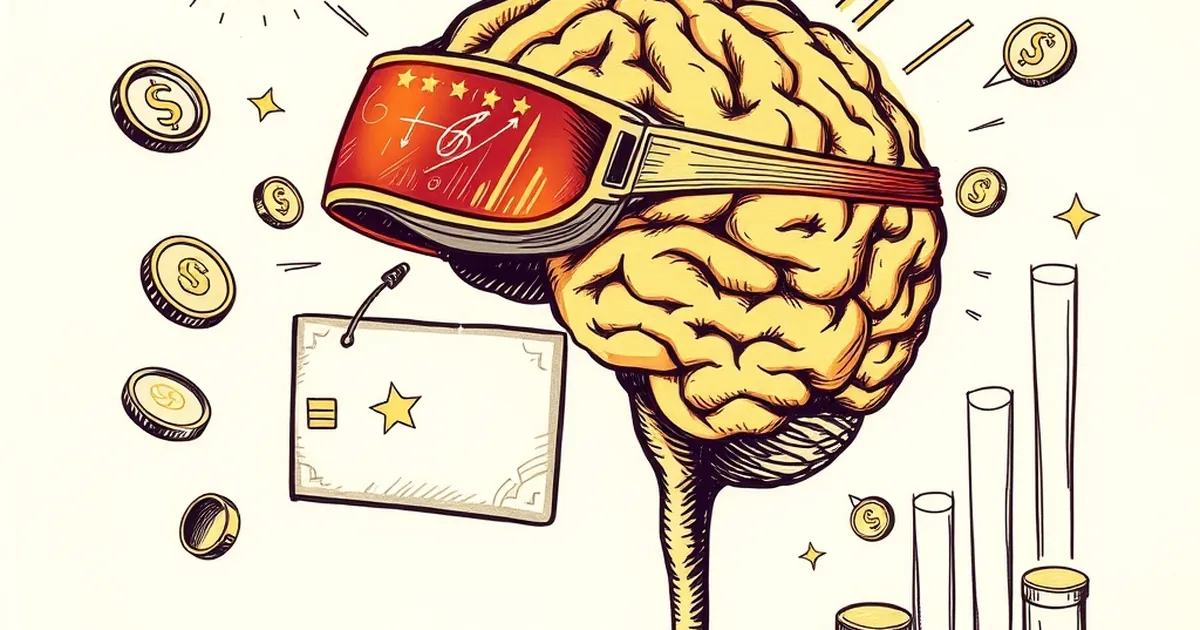
Ever stared at a credit card rewards portal the way a kid stares at a pinball machine—watching the points tick up, wondering if that next purchase is the one that flips the multiplier from 2x to 5x? You're not alone. The question I keep circling back to is this: why does a simple transaction, a boring transfer of funds, feel so much like a high-score chase? The answer isn't in the fine print of your cardholder agreement; it's buried deep in the dopamine pathways of your brain, where the mechanics of modern payments have hijacked ancient reward circuitry.
The Slot Machine in Your Wallet
Let’s be honest: if I told you that a bank would pay you 3% cash back on groceries, you’d yawn. But if I told you that you might get 5% back on a random Tuesday purchase, or that your points balance could suddenly triple during a "mystery bonus week," your attention snaps into focus. This is the engine of variable-ratio reinforcement—the same schedule that keeps laboratory rats pressing levers and humans refreshing their inboxes for a reply that may never come.
Psychologist B.F. Skinner first mapped this in the 1950s, showing that rewards delivered at unpredictable intervals produce the most persistent behavior. Your credit card issuer didn't invent this; they just industrialized it. When your spending app pings you with a "surprise bonus" or a "limited-time category boost," it’s triggering the same neurological cocktail that makes a game player grind for a rare drop. The score multiplier isn't a feature—it's a behavioral hook. You’re not just buying coffee; you’re playing a game where the rules change mid-round, and your brain loves the uncertainty more than the reward itself.
Loss Aversion: The Invisible Fee That Stings More Than a Charge
Now, let's flip the coin. We've talked about the thrill of the chase, but what about the pain of the penalty? Behavioral economist Daniel Kahneman and his late collaborator Amos Tversky demonstrated that losses loom roughly twice as large as equivalent gains. This is why a $35 overdraft fee feels like a financial gut-punch, while a $35 interest payment barely registers. But here’s where it gets interesting: the threat of a loss can be just as motivating as a reward.
Think about the last time you saw a "0% APR for 18 months" offer. Your brain didn't just see free money; it saw a ticking clock. The fear of the interest retroactively applying—the "deferred interest" trap—is a loss-aversion masterpiece. You spend more to "beat the clock," even if the optimal financial decision is to save cash. This is the same psychology that makes a player hoard health potions in a video game, refusing to use them even in a boss fight, because the idea of running out is worse than the actual combat damage. In payments, we don't just optimize for value; we optimize for avoiding regret.
The Competitive Play of "Beating the System"
There's a subculture of finance that thrives on what I call "structured competition"—the points-and-miles hobbyist. On the surface, it's about travel hacking. Beneath the surface, it's a zero-sum game against the issuer's algorithms. The thrill isn't the business-class seat; it's the execution of the strategy. You're not a consumer; you're a player in an adversarial game where the house (the bank) sets the odds, and you're trying to count cards.
This is where behavioral economics meets game theory. Consider the "minimum spend to earn a sign-up bonus." That's a classic challenge—a quest with a hard deadline. The reward (e.g., 100,000 points) is a clear goal, but the intermediate feedback loop is the real driver. You check your spending tracker like a player checks their XP bar. The act of routing everyday purchases through a specific card becomes a competitive play against the system's own rules. And when you win—when you beat the algorithm at its own game—the satisfaction is less about the prize and more about the mastery. A 2021 study in the Journal of Consumer Research even found that consumers who engage in such "gamified" spending report higher satisfaction when they achieve the bonus, regardless of the actual redemption value. The win is the point.
But Here's the Catch: The House Always Adjusts
The uncomfortable truth is that the system is designed to learn from your play style. Every time you optimize, the issuer's predictive models update. The moment you master the 5% rotating categories, they shrink the eligible merchant list. The moment you churn a sign-up bonus, they add a "once per lifetime" clause. This is the meta-game—the arms race between your prefrontal cortex (rational planning) and the issuer's data science team (adaptive algorithms). Understanding this doesn't make you cynical; it makes you a better player. You start to see the architecture of the game, not just the flashing lights.
The Science of the "One More Purchase" Loop
Let's get granular for a second. Why do we keep spending when we know we should stop? It's not just about the reward; it's about the near-miss. In a study on lottery scratch-offs, researchers found that the "near-miss"—where you get two matching numbers but the third is just off—activates the same reward regions of the brain as an actual win. Your payment app replicates this with "progress bars" toward a free gift card. You're at 82% toward a $200 bonus, and the bar glows a little brighter with each purchase. The closeness to the goal is the dopamine hit, not the goal itself.
This is why "tap to pay" is so dangerous. The physical friction of swiping a card, waiting for a receipt, and signing a slip used to create a cognitive pause. Now, a one-second tap is a micro-transaction that bypasses your reflective brain entirely. It's the equivalent of a game's "autoplay" feature—you're just watching the score increase without any conscious input. The future of payments is frictionless, but the future of wise payments might need a little more friction, not less.
A Practical, Forward-Looking Close
So where does this leave us? You can't opt out of the game—you live in a financial system built on these loops. But you can change your character class. Stop playing the issuer's game and start playing your own. Here's the shift: treat your spending limits like a game designer treats difficulty curves.
First, embrace deliberate friction. Set a two-day rule for online purchases. That's not a delay; that's a cooldown timer. It lets the dopamine spike from the "want" subside, allowing the rational brain to evaluate the actual utility.
Second, reframe the rewards. Instead of chasing a multiplier, set a static goal that the points serve. You're not grinding for points; you're saving for a specific asset—say, a plane ticket to visit family. The points become the scoreboard, not the game. This aligns with research on "implementation intentions"—when you link a specific behavior to a concrete outcome, your follow-through rate doubles.
Finally, build your own meta-game. Use a budgeting app that hides your points balance until the end of the month. Force yourself to play the long game of net worth, not the short game of cash back. The most successful players in any system aren't the ones who react to every bonus; they're the ones who set the rules of engagement before the round begins.
The next time your phone buzzes with a "limited-time offer," pause. Ask yourself not "What's the multiplier?" but "Who set the odds?" Because in this game, the only high score that truly matters is the one that compounds in your favor—and that's a variable ratio you can actually control.