Why Your Brain Sees a Payment Decline as a Game Over Screen
A payment decline triggers the same brain regions as losing a video game, fueling frustration and irrational persistence
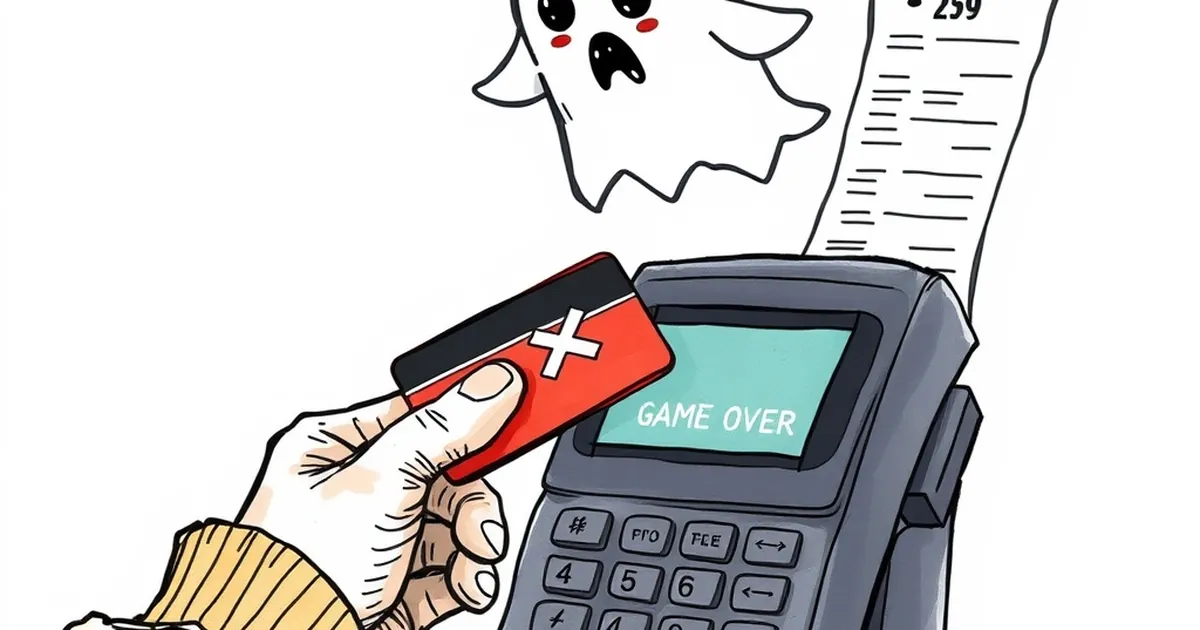
It’s 11:58 PM. You’ve just added a last-minute item to your cart, your thumb hovers over the “Pay Now” button, and you feel that little flutter of anticipation. Then it happens. The screen flickers, and a stark, impersonal message appears: “Transaction Declined.” Your heart rate spikes. You feel a strange mix of embarrassment, panic, and—if we’re being honest—a flicker of pure, competitive rage. You weren’t just trying to buy a pair of socks; you were playing a micro-game of strategy against the universe, and you just lost a life.
Why does a simple error message feel so visceral? Why does a declined payment trigger the same neural circuitry as a “Game Over” screen in a video game? The answer lies not in the payment rails, but in the wetware between your ears. The intersection of behavioral psychology and payment technology is a fascinating arena where our ancient survival instincts collide with modern financial infrastructure, often with explosive results.
The Dopamine Loop of the Transaction
To understand the sting of a decline, we first have to understand the high of an approval. Every successful transaction is a tiny, variable-ratio reinforcement schedule—the same mechanism that makes slot machines (and, ahem, certain mobile games) so compelling. You don't know exactly when a payment will be approved, how long it will take, or if a random security check will pop up. This uncertainty is the key.
When you hit “Pay,” your brain releases a small pulse of dopamine in anticipation of the reward (the product, the service, the completion of a task). If the transaction goes through, you get a reward confirmation that reinforces the behavior. You feel a sense of closure, a tiny victory. This is why "one-click" purchasing feels so dangerously good; it shortens the interval between the urge and the reward, creating a frictionless dopamine loop. The payment network has effectively gamified the act of spending, turning it into a series of micro-challenges with high-frequency, low-stakes rewards.
Loss Aversion: The Psychology of the "No"
But what happens when the loop is broken? This is where Daniel Kahneman and Amos Tversky’s Prospect Theory comes roaring into the conversation. Their foundational research on loss aversion shows that the psychological pain of losing is roughly twice as powerful as the pleasure of gaining. A $50 loss hurts about twice as much as a $50 gain feels good.
Here’s the twist: a payment decline is processed by your brain as a loss, even though no money has left your account. You have lost the potential gain. You've lost the item. You've lost the time spent. More importantly, you've lost the status of being a valid, trustworthy participant in the transaction. This isn't just about money; it's about ego. When the card is declined, the brain interprets it as a social rejection—a signal that you are not "good enough" or "worthy enough" to complete the task. This triggers the anterior cingulate cortex, the same region activated by physical pain. No wonder it feels like a punch to the gut.
The "Near Miss" Effect in Payments
Behavioral scientists have studied the "near miss" effect in competitive play—the phenomenon where a loss that is close to a win feels more motivating than a total failure. Payment declines have a fascinating version of this.
Consider a card that is declined at the last second after a long "processing" spinner. That delay builds anticipation. When the decline comes, it feels like a near miss. You were so close to success. This often leads to a "try again" behavior, not out of logical necessity, but out of a stubborn belief that the outcome is due to luck or a glitch, not a fundamental problem. This is why people will repeatedly attempt a declined card, sometimes trying different cards, in a frantic bid to "beat the system." We are biologically primed to chase the near miss, because in an evolutionary context, persistence in the face of near-success often paid off.
The "Player vs. Environment" Dynamic
In game design, there are two types of conflict: Player vs. Player (PvP) and Player vs. Environment (PvE). When a transaction fails, you are thrust into a PvE scenario against a faceless, unyielding antagonist: the bank's risk algorithm.
This is where things get spicy. The algorithm is designed to be risk-averse. It uses a massive dataset of behavioral heuristics to determine if you are acting like a criminal. Did you just travel to a new country? Are you buying something expensive at 3 AM? Is your purchase velocity higher than usual? These are "environmental hazards" in the game.
But here’s the rub: the algorithm is also a black box. You don't know the rules. This creates a feeling of learned helplessness, a concept from Martin Seligman's research. When you are repeatedly exposed to an uncontrollable negative event (the decline), you stop trying, even when you can control the outcome. You might abandon the cart entirely, not because you can't afford the item, but because the psychological cost of fighting the environment is too high. The decline isn't just a "no"; it's a statement that you have no agency in this digital world. It’s the equivalent of a game refusing to let you jump over an invisible wall.
Rewriting the Game Script
So, what does this mean for the future of payments? It means we are on the cusp of a massive shift in how financial institutions design for human psychology. The current system is built on a binary logic: Approve or Decline. This is archaic. It’s like a game that only has a "Win" or "Lose" screen with no nuance.
The forward-looking solution is adaptive friction. Instead of a flat "Decline," imagine a system that understands the player's context. For example:
The "Co-op Mode" Authorization: Instead of a hard fail, the system could offer a "soft decline" with a clear, actionable path. "Hey, we noticed you're in a new country. Reply 'YES' to the text we just sent to verify it's you, and this goes through." This transforms the experience from a game over to a side-quest. It gives the user agency, turning a moment of loss aversion into a moment of problem-solving.
The "Difficulty Setting" Notification: What if your bank sent you a proactive notification before you hit the pay button? "You're about to make a purchase that's 200% above your normal spending pattern. This might trigger a block. Want to pre-authorize it?" This is like a game giving you a warning that you're entering a high-level zone. It respects the player's intelligence and prevents the jarring "Game Over" moment entirely.
Reframing the "Losing" State: The language of decline is currently punitive. "Declined" sounds like a verdict. Forward-thinking fintechs are experimenting with language that frames it as a technical glitch or a security protocol rather than a personal failure. "We paused this transaction to protect you" is a vastly different psychological experience than "Transaction Declined." The former makes you feel cared for; the latter makes you feel accused.
The next frontier of payment design isn't about faster processing times or higher security alone. It's about emotional engineering. We are finally understanding that every time you tap a card, you are not just moving money; you are engaging in a complex psychological interaction with a system that currently has all the emotional intelligence of a brick wall.
The goal is to turn the "Game Over" screen into a "Respawn" screen—a chance to continue the game with better information and a sense of control. The payments industry is learning that the best way to win the game isn't to never let the player lose, but to make the act of losing feel like a challenge, not a condemnation. And that, my friends, is a game we can all get behind.