Why Your Brain Reads a Card Decline Like a Critical Hit
Discover why a card decline triggers the same brain response as a critical hit, and what that reveals about your psychology
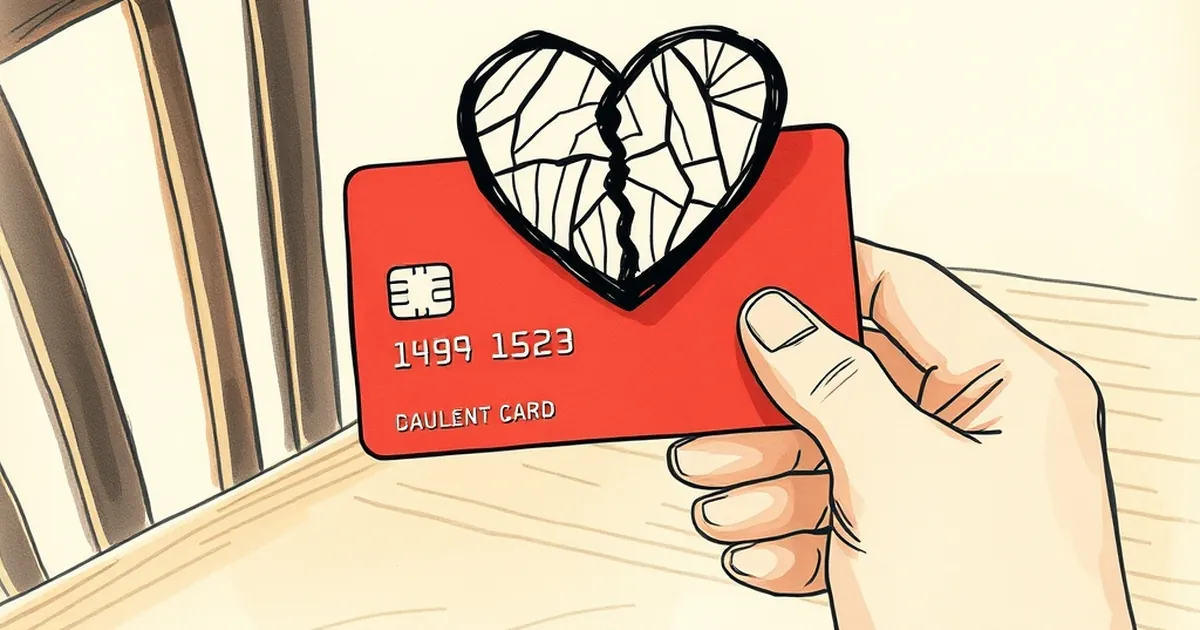
The moment is so quick that your conscious mind barely registers it. The card slides out of the terminal, the screen flashes a generic error, and the waiter offers a polite, practiced apology. But inside your body, something has already happened. Your stomach tightens. A flush of heat creeps up your neck. It feels absurdly disproportionate to the event—a routine administrative failure, not a personal attack. Yet your brain processes that decline with the same neural urgency as a physical blow in a video game. Why does a financial "no" hit so hard?
The answer lies in the strange intersection of payment infrastructure and behavioral psychology. We tend to think of credit cards as neutral tools, but they are actually sophisticated interfaces for human decision-making under uncertainty. And when that interface fails, it doesn't just disrupt a transaction—it triggers a cascade of evolutionary and cognitive responses that we are only beginning to map.
The Pain of Paying Is Real, and So Is the Pain of Being Denied
Economists and psychologists have long studied the "pain of paying"—the negative affect we experience when handing over money. This is why cash feels different from credit. Handing over physical bills activates the insula, a brain region associated with disgust and pain. Swiping a card is comparatively smooth, which is why we spend more with plastic.
But what happens when the friction is sudden and involuntary? A decline is not a smooth transaction; it is an abrupt rupture. Research from the field of neuroeconomics, particularly the work of Brian Knutson at Stanford, shows that anticipating a financial loss activates the amygdala and the anterior insula—the same circuitry that processes physical threat and visceral discomfort. A card decline is a loss event, not a neutral signal. It is a loss of purchasing power, a loss of social standing in that moment, and a loss of the smooth narrative we had constructed about our day.
What makes it feel like a "critical hit" in gaming terms is the element of surprise. In behavioral psychology, the brain's error-detection system—the anterior cingulate cortex—fires strongest when an outcome violates a prediction. You predicted approval. You had already mentally spent the money. The decline is a prediction error, and prediction errors are how your brain learns to update its model of the world. The bigger the error, the more salient the signal. A declined card is a massive prediction error, especially if your account balance was fine.
Variable-Ratio Reinforcement and the Slot-Machine Architecture of Credit
Here is where the payment industry intersects with the psychology of reward loops in a way that is both fascinating and slightly uncomfortable. Consider how credit card rewards are structured. Points, cashback, and miles are delivered on a variable-ratio reinforcement schedule—the same schedule that B.F. Skinner famously found to be the most resistant to extinction in animal learning. You don't know exactly when you'll get a bonus, only that it will come eventually. This uncertainty keeps you engaged, checking your app, optimizing your spending.
Now flip that logic. If rewards are delivered on a variable schedule, so are the "punishments" of overdraft fees, unexpected holds, or declines. The unpredictability of these negative events makes them more anxiety-provoking than a predictable fee would be. When you know a charge is coming, you can prepare. When you don't, your brain remains in a state of hypervigilance. This is why a decline at a restaurant feels worse than a declined subscription renewal at home—the social stakes are higher, and the reward/punishment schedule is less predictable.
There is a well-documented phenomenon called "loss aversion," from Kahneman and Tversky's prospect theory, which states that losses are psychologically weighted roughly twice as heavily as gains. A $50 unexpected charge feels worse than a $50 surprise discount feels good. A decline is a concentrated dose of loss aversion: you lose the item, you lose time, you lose face, and you lose the anticipated dopamine hit of a completed purchase. No wonder the reaction is visceral.
The Social Layer: Status, Shame, and the Poker Face
We cannot talk about card declines without acknowledging the social context. In most of the world, paying is a public act. You hand over the card, the terminal pauses, and the room waits. This is where behavioral game theory enters the picture. In competitive play—whether we're talking about negotiation, auctions, or even a friendly game of chess—showing weakness is costly. A decline is a visible signal of resource constraint. It doesn't matter if the decline was a bank error or a temporary hold; the social perception is that you lack funds.
This creates a fascinating double bind. The brain's social pain network—the dorsal anterior cingulate cortex and the anterior insula—activates not only for physical pain but also for social rejection. A card decline in front of peers can trigger the same neural response as being excluded from a group. This is why people often overreact, demanding to "run it again" or switching to another card with almost frantic energy. It is not about the transaction anymore; it is about restoring social equilibrium.
There is a striking study from the Journal of Consumer Research that examined how people behave after a card decline. The researchers found that participants who experienced a decline were more likely to subsequently choose higher-priced items when they were able to complete a purchase. This seems counterintuitive—if you were just denied, why would you spend more? The explanation is that the decline threatened the individual's sense of status, and the subsequent purchase was an attempt to reassert that status. It is a behavioral "critical hit" followed by a defensive buff.
Designing for the Hit: What Payment Systems Can Learn from Game Design
If we accept that a decline feels like a critical hit, then the question becomes: how do we design payment systems that minimize the damage? Game designers have long understood that failure states are inevitable, but the way you present failure determines whether a player quits or tries again. A poorly designed game kills you and says "Game Over" in red letters. A well-designed game kills you and says "You were so close—try a different approach."
The same logic applies to payments. Currently, most declines are presented as dead ends. The terminal beeps, the message is cryptic ("Transaction not approved"), and there is no information about why. Is it insufficient funds? A fraud flag? A technical glitch? The user is left in a state of maximum uncertainty, which amplifies the threat response. Forward-thinking payment companies are starting to experiment with "soft declines"—real-time updates that tell the customer the issue and offer a path forward, like "Your bank flagged this as unusual. Confirm with your app to retry."
This is not just about user experience; it is about behavioral economics. When you reduce uncertainty, you reduce the amygdala's activation. A decline that comes with a clear explanation and a potential solution is no longer a critical hit; it becomes a minor setback with a visible recovery path. The same neural circuitry that makes us panic can be redirected toward problem-solving if the system gives us a clue.
The practical takeaway for consumers is also rooted in this psychology. Awareness of the "critical hit" response is the first step to mitigating it. Next time your card is declined, recognize the spike of shame or anger for what it is: a biological artifact, not an objective measure of your financial worth. Pause, breathe, and ask for the specific reason. Often, the decline is a fraud protection feature—a clumsy guardian angel—not a judgment on your balance. And if you are a business owner or a product manager, consider how your payment flow handles failure. Are you delivering a "Game Over" screen, or are you offering a "continue?" prompt?
The intersection of finance and behavioral psychology is still a young field, but the lessons are clear. Our payment systems are not neutral infrastructure; they are emotional interfaces. When they fail, they fail loudly, in a language our brains interpret as threat. But just as we can retrain our responses to rejection in social settings, we can retrain our responses to financial friction. The next time you hear that dreaded beep, remember: it is not a critical hit to your character sheet. It is just a data point. And data points, unlike critical hits, can be debugged.