Why Visa and Mastercard Flag a Payment You Already Approved
Discover why Visa and Mastercard can decline a payment you already approved, and how hidden verification triggers block transactions
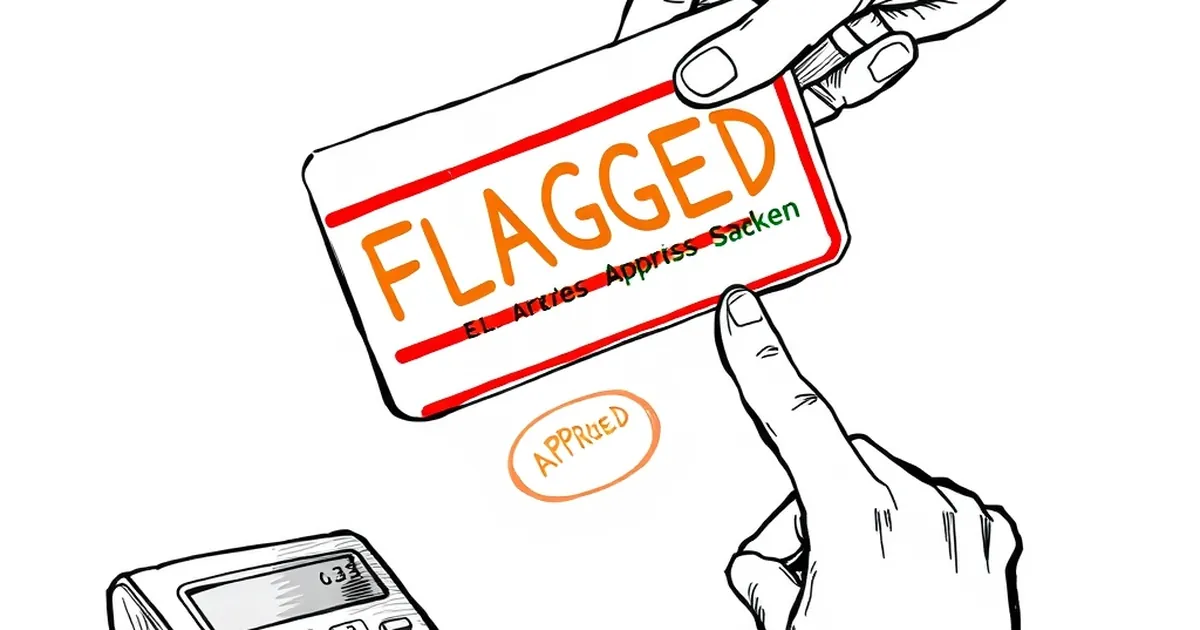
You’re sitting at a blackjack table, you’ve already punched in your card details, the bank sent the one-time code, you hit confirm—and then nothing. The screen spins. Your bank app pings with a declined transaction. The casino chat bot says “authorization failed.” You just approved the payment. So why did Visa or Mastercard pull the rug?
It’s not a glitch. It’s not your bank being petty. It’s a two-step verification process that most players don't know exists, and it’s triggered by a mismatch between the transaction you approved and the transaction the card network actually sees. That mismatch can be a few cents, a merchant category code, or a delay measured in milliseconds. Here’s where it breaks.
The Silent Second Check: Card-Not-Present Authentication
When you buy groceries with a chip, the transaction happens in a closed loop: your card, the terminal, the bank. With online gambling, you’re in a “card-not-present” (CNP) environment. Visa and Mastercard don’t just check the CVV and the OTP. They run a second, invisible layer called 3D Secure (3DS) 2.0.
3DS 2.0 is a risk-scoring engine. It looks at your device fingerprint, your IP location, how fast you typed the card number, and—crucially—the merchant’s risk profile. Online casinos sit in a high-risk bucket. Most legal jurisdictions require them to use 3DS, but the card networks also apply their own “velocity checks” on top.
Here’s the stat that catches players: Visa’s own rules cap gambling transactions at 25 attempts per card per 24-hour period before the issuer is required to auto-decline. That doesn’t mean 25 deposits. It means 25 authorization requests. If you hit “deposit” and the casino’s system sends the request twice due to a timeout, you’ve just burned two of those 25 slots. Hit it three times because the page lagged, and now you’re down five attempts. By the time you get the OTP and approve, the network has already flagged the account for “excessive authorization attempts.”
Why “Approved” Doesn’t Mean “Cleared”
The OTP you typed is a cardholder authentication. It proves you are you. But that’s only step one. Step two is the transaction authorization, which happens milliseconds later at the issuer’s end. This is where the bank’s fraud engine checks the final amount against the amount sent in the initial request.
If the casino’s system updated the deposit amount between the OTP request and the final submission—say, due to a bonus recalculation or a currency conversion rounding error—the amounts don’t match. Visa’s system sees a $50 authorization request and a $50.03 final charge. That 3-cent delta can trigger a “soft decline.” The card network returns a code that says “amount mismatch,” and the casino’s payment gateway interprets that as a generic failure. You see “declined.” The bank sees a flagged transaction. Nobody tells you it was three cents.
Merchant Category Code Triggers
Every business has a four-digit Merchant Category Code (MCC). Groceries are 5411. Airlines are 3000. Online gambling is 7995 for most jurisdictions, though some offshore operators use 7994 (video game arcades) or 7299 (miscellaneous personal services) to bypass restrictions. Visa and Mastercard know this.
When you approve a payment, your bank checks the MCC against your personal spending profile. If you’ve never gambled online before and suddenly a 7995 transaction hits your card, the issuer’s risk engine flags it as “unusual activity.” But here’s the twist: even if you’ve gambled before, the card network might have a regional block. Mastercard, for example, blocks all gambling transactions for cards issued in the United Arab Emirates, regardless of where the casino is licensed. If you’re a UAE resident using a local card to play at a Curacao-licensed site, the approval you gave is meaningless. The network kills it at the routing level.
The “Soft Decline” Loop
A soft decline is a response code that says “try again later” rather than “transaction denied.” It’s designed for temporary issues—a server timeout, a daily limit that resets in two hours. Casinos often auto-retry soft declines. That retry creates a new authorization request. If the soft decline was caused by a bank-side daily gambling limit (common in the UK, where many issuers cap gambling spend at £500/day), the retry hits the same limit. The bank issues another soft decline. The casino retries again. Now you have three authorization requests against one deposit.
Visa’s “Excessive Authorization Attempt” rule kicks in after five such attempts within a rolling 24-hour window. The issuer then blocks all gambling transactions from that merchant for 24 hours, even ones you approve. You didn’t do anything wrong. The casino’s auto-retry logic burned your card.
The Timeout Trap
3DS 2.0 has a session timer. Once you receive the OTP, you typically have 5 minutes to enter it. But the authentication session itself—the encrypted handshake between the casino, Visa, and your bank—has a shorter lifespan: usually 90 seconds. If you take longer than that to type the code, the session expires. The casino’s system then sends a new authentication request. That new request creates a fresh authorization attempt.
If you’re on a slow connection or using a VPN, the lag compounds. I’ve seen cases where a player typed the OTP correctly, but the session had expired 12 seconds earlier. The casino sent a new request. The bank saw two OTP approvals for two different sessions. The fraud engine read that as a replay attack and locked the card. The player thought they’d been hacked. Really, they just hesitated.
The “Zero-Amount” Pre-Authorization
Some casinos run a $0.00 pre-authorization to verify the card is active. This is common in the US and Canada. Visa allows these pre- auths, but they still count as authorization requests. If the casino runs a $0.00 check, then you deposit $50, then the casino runs a second $0.00 check because the first one timed out, you’ve used three authorization requests for one deposit. On a card with a 25-attempt limit, that’s fine. But if you’re also making withdrawals to the same card—those also count as authorization requests—you can hit the limit faster than you expect.
Mastercard is stricter. Their rules for gambling transactions require the full amount to be authorized in a single request. No incremental authorizations. If the casino’s system sends a $0.00 check followed by a $50 charge, Mastercard may reject the $50 charge as a “split authorization,” even though you approved the $50 amount. The casino’s payment gateway doesn’t always tell them this. It just says “declined.”
What This Means for You
Next time a payment you approved fails, don’t just try again. Wait 15 minutes. The 25-attempt limit resets on a rolling 24-hour clock, not at midnight. Trying again immediately burns another attempt. If you’re on a VPN, turn it off—the IP mismatch between your VPN exit node and your card’s billing address is a major 3DS 2.0 trigger. And if you’re using a card from a country with strict gambling MCC blocks (Singapore, UAE, parts of India), no amount of approvals will push it through. The network is blocking the merchant type, not your identity.
The bigger question: as card networks tighten these rules in response to regulatory pressure—Mastercard’s 2024 policy update explicitly targets “high-risk digital merchants”—are we heading toward a future where the only reliable payment method for iGaming is crypto or e-wallets? Or will the networks eventually create a dedicated gambling MCC with its own approval flow, stripping out the friction? For now, you approved it. The network didn’t. And nobody’s in a hurry to explain why.