Why Payment Networks Use Game Design to Make You Spend
Discover how payment networks borrow game design tactics to encourage spending and keep you engaged with rewards and notifications
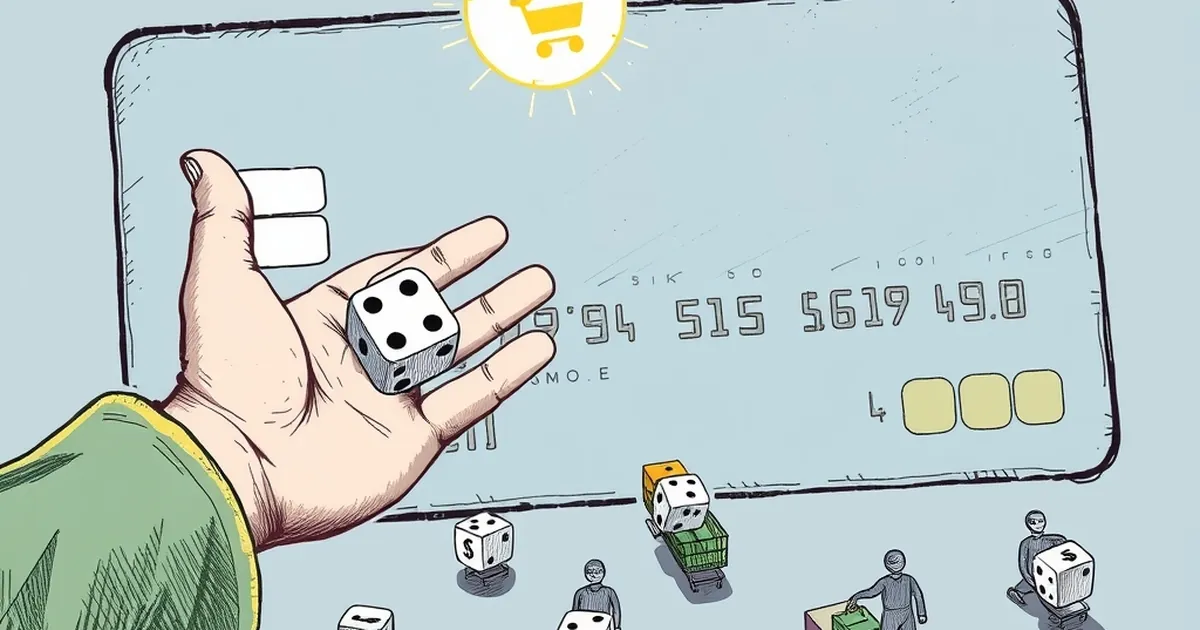
You tap your phone to pay for coffee, and a few hours later, a notification pops up: “You’re only $12 away from a $5 reward.” It feels like a gentle nudge, maybe even a little victory waiting to happen. But if you stop to think about it, the structure of that message is doing something more than just informing you. It’s borrowing directly from the playbook of game design — specifically, the mechanics that keep players engaged in digital worlds. The question isn’t whether payment networks are using these tactics; the question is why they’ve become so essential to modern spending, and what that means for your wallet.
The Variable-Ratio Reinforcement of the “Surprise” Cashback
One of the most powerful tools in game design is variable-ratio reinforcement. This is the psychological principle that a reward delivered at unpredictable intervals is far more motivating than a reward delivered on a fixed schedule. It’s why pulling a slot machine lever feels compelling even when you know the odds — the brain’s dopamine system lights up more for the possibility of a win than for a guaranteed one.
Payment networks like Visa and Mastercard don’t operate slot machines, but they have quietly adopted this principle through their rewards ecosystems. Think about the “spend $500, get $100 back” offers that appear in your banking app. The key isn’t the amount of money — it’s the surprise. You didn’t plan for it. You weren’t grinding toward a known goal. The offer appeared, and suddenly your brain is in a different mode. The uncertainty of when the next offer will drop — and how good it will be — creates a small but measurable engagement loop.
A 2020 study in the Journal of Marketing Research found that consumers who received surprise bonus rewards spent 22% more in the following month than those who received predictable, scheduled rewards. The researchers called it the “delight effect,” but it’s really just variable-ratio reinforcement wearing a friendly mask. Visa and Mastercard don’t design these programs directly — they license the rails — but the banks and fintechs that issue their cards have learned that the most effective way to increase transaction volume is to make spending feel like a game you might win.
Loss Aversion and the “Almost There” Notification
Kahneman and Tversky’s loss aversion — the idea that losses hurt roughly twice as much as equivalent gains feel good — is the backbone of another classic game mechanic: the countdown or progress bar. In video games, a health bar that’s nearly full creates tension. You don’t want to lose the progress. You’ll take risks to avoid that loss.
Payment networks use this same logic, but they call it “spend-based thresholds.” You’ve seen it: “You’re 85% of the way to your quarterly bonus.” The psychological trick here is that the progress bar doesn’t just represent a gain — it represents the impending loss of that gain if you don’t act. The bar is already almost full. The pain of not reaching 100% feels worse than the pleasure of the reward itself.
Consider the Mastercard “Priceless” campaign, which evolved into a digital platform offering exclusive experiences. The mechanics behind it are identical to a loyalty program in a mobile game: you earn “points” by using the card, and certain experiences are gated behind thresholds. But the notification that you’re “only two visits away from a dinner reservation at a chef’s table” is designed to trigger a specific behavioral response — not delight, but urgency. The system has already invested you in the progress. Walking away now feels like losing.
The Competitive Leaderboard (Without the Leaderboard)
Multiplayer games use leaderboards to drive engagement because they tap into social comparison — the innate human tendency to evaluate ourselves relative to others. Payment networks can’t exactly show you a leaderboard of your neighbors’ spending habits (that would be a privacy nightmare), but they’ve found a clever workaround: tiered status systems.
Visa’s Signature and Infinite tiers, or Mastercard’s World and World Elite tiers, function as implicit leaderboards. They create a hierarchy where the reward isn’t just the points — it’s the status of being in a higher tier. You don’t know exactly how many people are below you, but you know the next level exists, and the system constantly reminds you of what you’re missing.
This is a straight lift from behavioral economics. Research on positional goods shows that people derive more satisfaction from being better off than their peers than from absolute wealth. By creating visible tiers — often with subtle design cues like a different card color or a dedicated phone line — payment networks turn spending into a status competition with yourself and an imagined peer group. The game isn’t about winning a prize; it’s about not being demoted to a lower tier next year.
The Concrete Example: The “Spend More, Get More” Cascade
Let’s look at a specific, real-world example: the Chase Sapphire Reserve card, which runs on the Visa Infinite network. The card offers a 50,000-point sign-up bonus after spending $4,000 in the first three months. That’s a standard offer. But the game design kicks in when you realize the card also offers a $300 annual travel credit, triple points on dining and travel, and a points multiplier for using the Chase travel portal.
The cascade works like this: You sign up for the bonus. You hit the $4,000 threshold. Now you have 50,000 points. But to maximize their value, you need to use the Chase portal. Using the portal requires more spending. Meanwhile, the $300 travel credit resets each year, creating a recurring mini-objective. The card’s structure doesn’t just reward spending — it creates a series of nested goals that feel like a game campaign. You’re not just paying for things; you’re completing missions.
Chase reported in 2023 that Sapphire Reserve cardholders spend an average of $25,000 annually on the card — nearly three times the average credit card user. The game design isn’t a side effect; it’s the engine.
A Practical, Forward-Looking Close
So what do you do with this knowledge? You might be tempted to game the system back — churning cards, timing purchases to hit thresholds, treating the whole thing as a meta-game. That can work, but it’s a trap if you’re not careful. The real leverage comes from recognizing that these mechanics are designed to bypass your rational decision-making.
Here’s a forward-looking approach: Set a spending budget that ignores all rewards. Treat cashback, points, and status as a bonus you never plan for. If you hit a threshold, great. If you don’t, you haven’t lost anything. This sounds obvious, but it’s hard to do because the game design is working against you — it’s creating a sense of progress that makes spending feel like a positive achievement rather than a cost.
In the next few years, expect payment networks to get even more sophisticated. We’re already seeing early experiments with dynamic rewards — offers that change based on your location, time of day, or recent purchase history. The line between a payment transaction and a game level will blur further. The best defense isn’t to opt out entirely (that’s increasingly impractical). It’s to recognize the game for what it is: a system designed to make you spend, not to make you rich. Play it if you want, but never forget that you’re the one writing the code — not the one being coded.