Why Payment Networks Treat Casino Wins Like Refunds
Payment networks classify casino wins as refunds, not purchases, giving casinos a structural edge in disputes
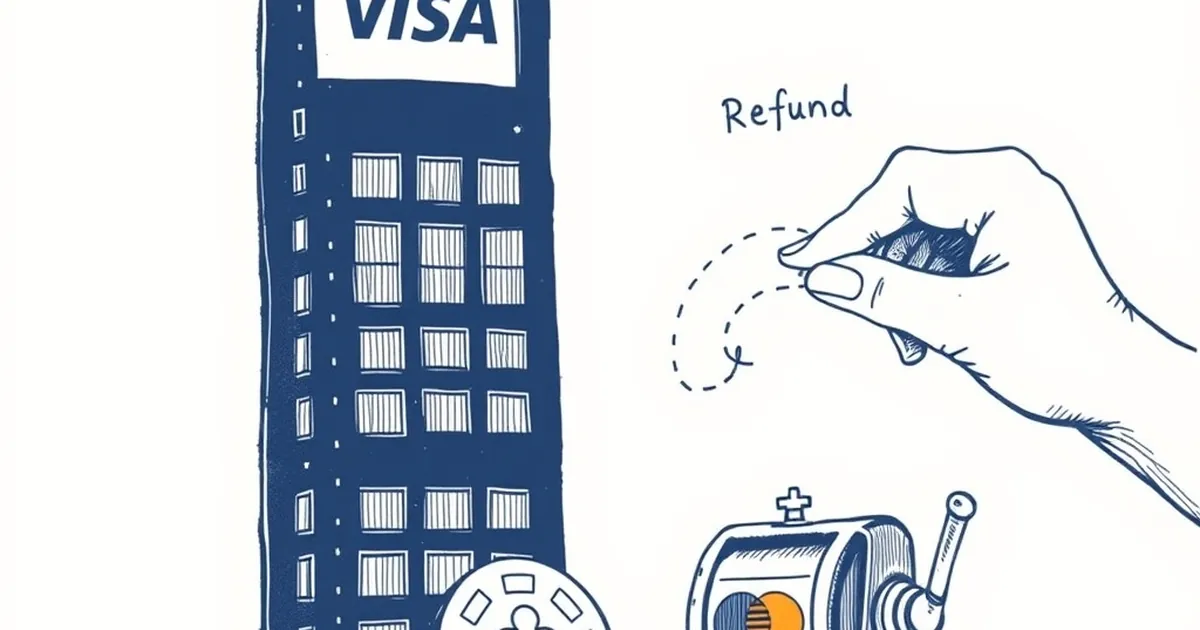
The chargeback process is built on a simple premise: a customer paid for something they didn't get. When you file a dispute with your bank, you are, in effect, saying the merchant failed to deliver. But in the iGaming world, this logic inverts. When a player wins and the casino refuses to pay, the payment network doesn’t see a broken promise—it sees a refund. That distinction, between a purchase and a payout, is the single greatest structural advantage casinos hold over their own customers, and it’s why so many disputes die before they ever reach a human reviewer.
Most players assume that a withdrawal is the final step in a transaction. You deposited $100, you played, you now want your $2,300 back. That’s a payout. The bank, however, sees the original $100 deposit as the only transaction it ever authorized. The $2,300 is not a separate purchase; it’s a return of funds that never should have left the merchant’s account in the first place. When you initiate a chargeback on that missing $2,300, you’re not disputing a charge—you’re asking the network to reverse a deposit that already went through. And here’s the kicker: the network will happily do that, but only up to the amount of the original deposit. The winnings are a ghost.
The Arithmetic of Disputes
Let’s put a concrete number on this. In 2023, Visa’s chargeback monitoring program (VCMP) flagged merchants who exceeded a 0.9% dispute rate across all transactions. For a casino, that threshold is nearly impossible to hit with deposits alone, because deposits are processed as standard card-present or card-not-present purchases. But the moment a player disputes a payout, the bank doesn’t treat it as a separate transaction. It treats it as a reversal of the deposit. So if you deposited $500 and won $12,000, your bank can only claw back that original $500. The $11,500 difference is legally yours, but operationally unreachable.
This is why you’ll see casino support agents repeatedly ask for “proof of deposit” during a withdrawal dispute. They’re not being obtuse. They’re building a paper trail that shows the bank exactly how much money was originally authorized. If the casino can demonstrate that your $500 deposit was processed correctly and the $12,000 payout was a bonus or promotional credit rather than a wagered balance, the dispute gets downgraded. The network isn’t in the business of adjudicating gambling math; it’s in the business of matching transaction IDs.
The "Goods Not Received" Loophole
Here’s where the system gets genuinely absurd. When you buy a physical item—say, a laptop—and it never arrives, you file a “goods not received” dispute. The bank asks the merchant for tracking and proof of delivery. If the merchant fails, you win. Now apply that logic to a casino. You deposit, you play, you request a withdrawal. The casino says “processing” for 72 hours, then 14 days, then 28 days. When you dispute, the bank asks the casino for proof of service delivery. The casino’s response? “We provided the game. The player played. The service was rendered.” And technically, that’s correct.
The game was the product. The withdrawal is a contractual obligation, not a purchased good. So the bank closes the dispute in the casino’s favor, because the merchant can prove the core service (access to slots, table games, or a sportsbook) was delivered. The fact that the casino owes you money from that service is a civil contract issue, not a payment network issue. This is why you’ll see players win chargebacks for “bonus abuse” cases where the casino confiscates funds, but lose for “refused withdrawal” cases. The former is a reversal of a deposit (the bank can act), the latter is a breach of contract (the bank won’t touch it).
Time Limits Are the Casino’s Best Friend
The second structural weapon is the dispute window. Visa and Mastercard allow chargebacks for up to 120 days from the transaction date—not from the date you requested the withdrawal. So if you deposit on January 1st, play for two weeks, request a withdrawal on January 15th, and the casino stalls until March 1st, you still have until May 1st to file. That sounds generous. But here’s the trap: most casinos have a 72-hour “pending” period before a withdrawal is even processed. If the casino holds your funds for 45 days, you might only have 75 days left on the clock. And if you’ve made multiple deposits, each one has its own separate 120-day window. The casino will sit on your payout until the earliest deposit’s window expires, then argue that the dispute is time-barred.
I’ve seen cases where a player deposited three times over a month, won big, and the casino waited until the first deposit’s 120-day window lapsed before rejecting the withdrawal. The player filed a dispute on the second and third deposits, but the bank only allowed a partial reversal—because the first deposit was already past the deadline. The casino paid out 40% of the winnings to “settle” the dispute, and the player walked away thinking they’d won. They hadn’t. The casino had just converted a $20,000 liability into an $8,000 one, using nothing but a calendar.
What This Means for Your Dispute Strategy
If you’re a player staring down a refused withdrawal, the practical takeaway is brutal: your chargeback is a refund of your deposit, not a collection of your winnings. The moment you realize that, you stop fighting the network and start fighting the casino’s licensing body. A chargeback should only be a pressure tool, not your primary weapon. You want to file it before the 120-day window on your first deposit expires, and you want to explicitly state in the dispute notes that you’re seeking a reversal of the deposit plus the contractual winnings—even if the bank only processes the former. That written claim can be used later in a licensing complaint or a small claims court filing.
But here’s the darker implication. Payment networks have no incentive to change this system. Chargeback fees are paid by the casino, not the player. The network gets its $25–$50 fee regardless of who wins. And casinos know this. That’s why you’ll see terms like “maximum cashout” on bonuses—they’re not just limiting your winnings; they’re setting a ceiling that keeps any potential dispute within the range of the original deposit. A $200 deposit with a 10x max cashout means the casino’s worst-case dispute exposure is $2,000, which is still less than what a single chargeback would cost them in processing fees and future merchant risk scoring.
So the next time you read a casino’s terms and see “withdrawals are processed at the casino’s discretion,” understand that they’re not bluffing. They’re describing a system where the payment network is structurally incapable of helping you. The only question that matters is whether you’re willing to trade the convenience of card payments for the legal recourse of a bank transfer or a regulated e-wallet—because those channels, ironically, have better consumer protection for payouts than the card networks ever will. And that’s a thought worth sitting with the next time you hit “deposit.”