Why Payment Networks Track Your Location Without Asking
Why payment networks track your location without asking—and what it means for your privacy and security
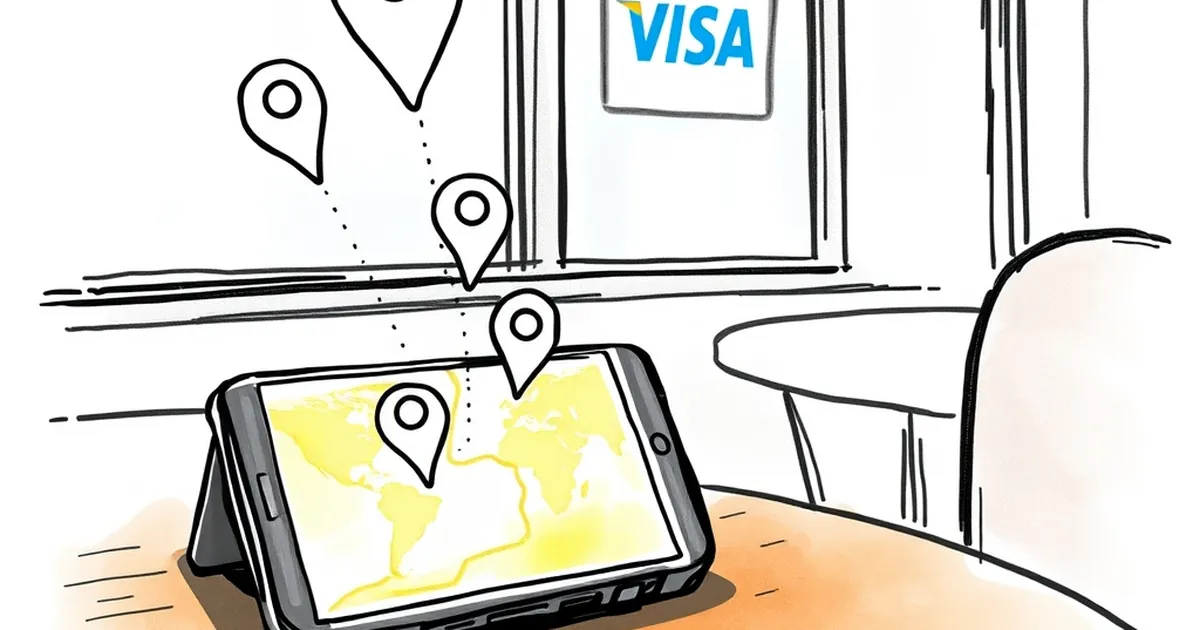
You tap your phone to pay for coffee. Within seconds, Visa or Mastercard processes the transaction. What you might not realize is that the payment network now also knows roughly where you are. Not your street address—but close enough to matter.
Why do they do this without asking? And more importantly, should you care?
The Short Answer: Fraud Prevention
Payment networks track location primarily to stop criminals from using your card. If Visa sees a transaction in London at 10 AM and another in Dubai at 11 AM, something is clearly wrong. That second transaction gets blocked instantly.
This is called velocity checking or geolocation analysis. It’s been around for years, but it used to be clunky. Banks would call you and ask, “Did you just buy a laptop in Tokyo?” Now the system flags suspicious activity before you even hang up the phone.
Mastercard’s own documentation explains that location data helps them build a “behavioral profile” of where you normally spend. When a transaction deviates, the risk score jumps. No manual approval needed.
How It Actually Works
Your phone doesn’t beam GPS coordinates to Visa. That would be creepy and unnecessary. Instead, the system uses the merchant’s location. When you swipe or tap at a store, that store’s terminal sends its physical address along with the transaction data.
The payment network then compares that merchant address against your typical spending pattern. If you live in Berlin and suddenly appear at a gas station in rural Brazil, the algorithm takes notice.
The key point: the network does not know your precise location. It knows the location of the merchant you are using. That’s a meaningful distinction, but it still raises privacy questions.
The Real Reason: Network Optimization and Routing
Fraud prevention is the headline. But there’s a quieter, more profitable reason payment networks care about location: routing optimization.
Every time you pay, the transaction travels through a complex chain—your bank, the merchant’s bank, the card network, and sometimes a third-party processor. Where these entities are located affects fees and speed.
Visa and Mastercard operate regional processing centers. If a transaction originates in Singapore, they want it routed through the Singapore hub, not the one in Frankfurt. That saves milliseconds and reduces costs. Multiply that by millions of transactions daily, and the savings are enormous.
Cross-Border Fees and Regulatory Compliance
Location also determines which fees apply. Cross-border transactions carry different interchange rates than domestic ones. A payment made in France with a French-issued card costs less than one made in France with a U.S.-issued card.
By tracking merchant location, networks ensure the correct fee structure applies. This protects banks from losing money and protects you from unexpected charges—though sometimes the system gets it wrong.
I once bought a train ticket in Austria using a card issued in the UK. The merchant’s terminal was registered in Germany. The system flagged it as a cross-border transaction, and I got hit with a fee. A quick call to my bank fixed it, but it shows how location data can have real consequences for your wallet.
The Privacy Trade-Off: What You Give Up
Here’s the uncomfortable part: you never explicitly consented to this location tracking. It’s buried in the terms of service that no one reads. Visa’s privacy policy mentions “transaction location data” in a dense paragraph about fraud detection. Mastercard’s is similar.
The networks argue that this is necessary for security. And honestly, they have a point. Would you rather have your card blocked when someone tries to use it in another country? Most people say yes.
But the line gets blurry. Some payment processors now use location data for marketing. If you frequently pay at a coffee chain, the network might share aggregated data with that chain to help them decide where to open new stores. Your individual identity is anonymized, but the pattern is still yours.
Can You Opt Out?
Technically, yes—but practically, no. You can disable location services on your phone, but that only affects apps that use GPS. The merchant’s terminal still sends its location. Your bank can’t process the transaction without that data.
Some banks offer “location-based alerts” that let you set geographic boundaries. If your card is used outside those boundaries, you get a notification. That’s a feature, not an opt-out.
The real solution is to use a virtual card number or a privacy-focused payment app that masks your transaction details. Services like Privacy.com or Revolut’s disposable cards give you more control. But these are workarounds, not fixes.
An Anecdote That Changed My Perspective
A few years ago, I was traveling in Southeast Asia. I lost my wallet in Bangkok. By the time I realized it, I had already received three notifications from my bank: a declined transaction at a electronics store, another at a luxury boutique, and a third at a hotel.
Visa had flagged all three because the merchant locations didn’t match my typical spending pattern in Thailand. My card was frozen within minutes. I didn’t lose a single dollar.
That experience made me grateful for location tracking. It also made me realize how invisible this system is. You only notice it when something goes wrong.
The Future: Biometrics and Real-Time Location
Payment networks are moving toward even more granular location data. Mastercard is testing “biometric checkout” that combines facial recognition with location verification. Visa is experimenting with “tokenized location”—encrypted data that proves you were at a specific place at a specific time without revealing the exact coordinates.
This could eliminate fraud entirely. Imagine a world where your card only works within a 50-meter radius of your phone. That’s where we’re heading.
But it also raises new questions. Who owns that data? How long is it stored? Can law enforcement access it? These are conversations that regulators in the EU, U.S., and Asia are just beginning to have.
A Practical Takeaway
Don’t panic about location tracking—but do pay attention. Check your bank’s privacy policy. Look for options to set spending limits or geographic alerts. Use a credit card with strong fraud protection, not a debit card, because credit cards offer better liability protection.
And next time you get a fraud alert that feels invasive, remember: that alert exists because someone somewhere tracked your location. It’s a trade-off. Just make sure you understand what you’re trading.