Why Payment Networks Charge Merchants More for Premium Cards
Discover why premium credit cards cost merchants more in swipe fees and how interchange rates impact small business profits
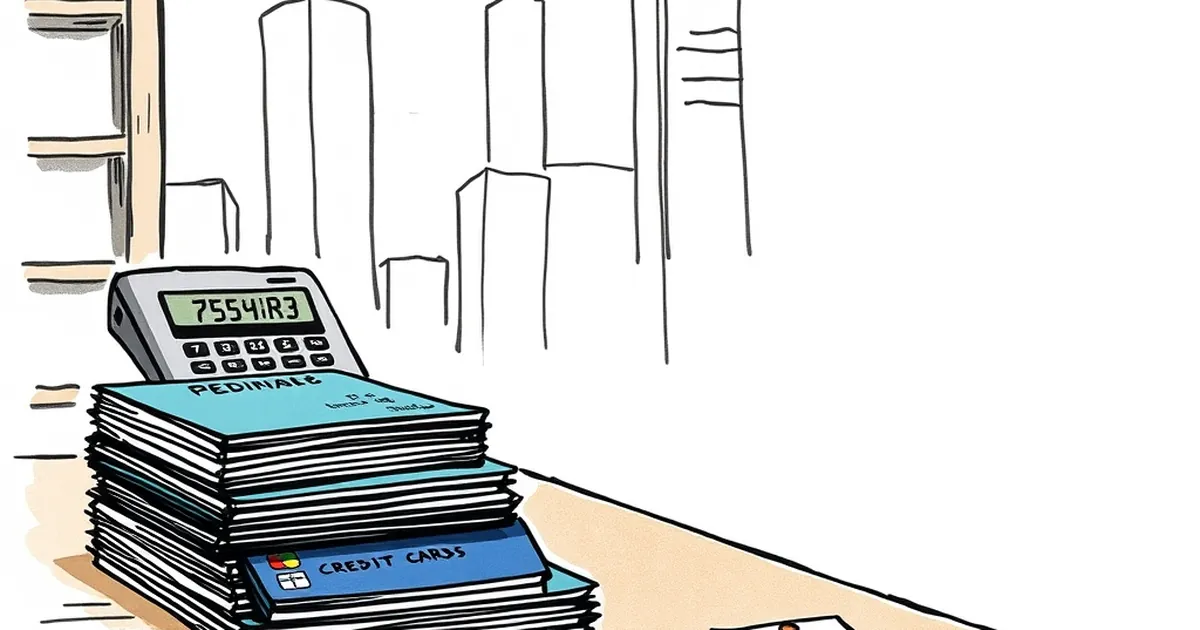
You walk into a coffee shop, tap a metal card that feels heavy in your hand, and the owner winces. Not because of the coffee, but because of the card. That piece of plastic—or metal—is costing them significantly more than the debit card the next customer is using. Why does a simple piece of plastic determine how much a merchant pays, and why are the "better" cards actually more expensive for the people selling you things?
The Fundamental Math of an Interchange Fee
Every time you swipe, dip, or tap a card, a fee changes hands. This is the merchant discount rate, and it isn't a single, flat number. It is a bundle of costs, but the largest slice is the interchange fee. This is the fee that the merchant’s bank pays to your card-issuing bank.
Think of it as a toll road. A basic debit card is a bicycle lane—low cost, low maintenance. A standard credit card is a sedan. A premium rewards card is a supercar that requires a helicopter escort and a private bridge. The network (Visa or Mastercard) sets the base toll for each vehicle type. The more "value" the card theoretically provides to you, the higher the toll the merchant has to pay.
The core reason is simple: premium cards offer cashback, miles, points, and insurance. Someone has to pay for that champagne. It isn't the bank, and it isn't you. The cost is baked into the interchange fee that merchants must accept if they want your business.
The "Premium" Trap: How Rewards Drive Costs
Here is the uncomfortable truth: the most expensive cards for merchants are often the ones you think are the "best." Networks have created entire categories for these premium products, and they carry the highest interchange rates.
The World Elite and Infinite Effect
Mastercard has the World Elite tier. Visa has the Infinite and Signature tiers. These cards are designed for high-spending consumers. They come with benefits like concierge services, travel credits, and purchase protection. To fund these perks, the networks set a higher interchange fee for these specific product codes.
I have seen the raw data. A standard Visa Credit card might have an interchange rate of around 1.5% plus a small fixed fee. A Visa Infinite card? You can easily see that jump to 2.5% or higher. That 1% difference is massive. On a $1,000 flight, that is an extra $10 the merchant pays just because you used a different piece of plastic. The merchant sees none of that value. You get the lounge access, but the merchant pays for the door.
Corporate and Purchasing Cards
It is not just consumer cards. Corporate cards and commercial purchasing cards are the most expensive of all. These cards often have interchange rates that are double or triple those of a standard consumer card. The logic is that they offer better data reporting and extended payment terms for businesses.
But for a small supplier or a local restaurant that accepts a corporate card from a client’s lunch meeting, it is a hidden tax. They might pay 3% or even 4% on a transaction that could have been paid by check or ACH for pennies. The merchant is essentially subsidizing the big company’s accounting department.
The "Honor All Cards" Rule: The Merchant’s Trap
This is the part that frustrates merchants the most. The payment networks have a rule called "Honor All Cards." If a merchant accepts Visa, they must accept every Visa card, from the basic debit to the super-premium Infinite.
They cannot refuse a specific type of Visa or Mastercard. They cannot charge you a different price at the register for using a premium card (in most jurisdictions). They are legally bound by their contract to accept the most expensive version of the card if they accept the network at all.
This creates a bizarre economic situation. A merchant might have a razor-thin profit margin of 5%. Accepting a premium card with a 2.5% fee immediately eats half of their profit on that sale. The merchant is forced to raise prices for everyone to cover the cost of the few customers using premium cards. You are paying for the guy behind you who flew business class on points.
A Concrete Example: The Local Bike Shop
I spoke with a friend who owns a small bike repair shop. He had a customer buy a new high-end road bike for $5,000. The customer proudly tapped a metal American Express Platinum card (which has its own even higher rates, but the principle holds). My friend’s cost for that transaction was roughly $150.
He made a profit of $200 on the bike. So, after the card fee, he made $50 for a sale that took an hour of his time and tied up thousands in inventory. The customer got 5x points on the purchase. The bank got the $150. My friend got the equivalent of a tip. That is the reality of premium card economics at the small business level.
The Future: Surcharging and Consumer Choice
The landscape is shifting, however. In many parts of the world, merchants are now legally allowed to surcharge for premium cards. This means they can pass the specific cost of your "World Elite" or "Infinite" card directly to you at the point of sale.
You might see a sign that says: "3% surcharge for premium credit cards." This is the market correcting itself. It forces you, the consumer, to make a choice. Do you want the points and the insurance? Great, pay the fee. Do you want the lowest price? Use a debit card or cash.
This is the most honest system, but it is still clunky. The networks fight surcharging aggressively because it threatens their premium card business model. If consumers see the actual cost of their rewards, they might choose differently.
What This Means for You
The next time you get an offer for a card with 100,000 bonus miles and a $695 annual fee, remember the bike shop. Remember that those rewards are not free. They are a transfer of wealth from the merchant to you, facilitated by the network. The merchant doesn’t hate you for using the card. They hate the fee.
A practical forward-looking note: Pay attention to how you pay. If you are at a small, independent business you love, consider using a debit card or cash. You are not being a hero; you are simply ensuring the owner keeps more of their margin. If you must use a premium card for the points, don’t be surprised if prices continue to rise. The cost of your convenience is built into the price of everything you buy. The only question is who pays the toll at the counter.