Why Payment Networks Borrow Game Design Tricks to Shape Your Decisions
Discover how payment networks use game design psychology to subtly influence your spending decisions and financial behavior
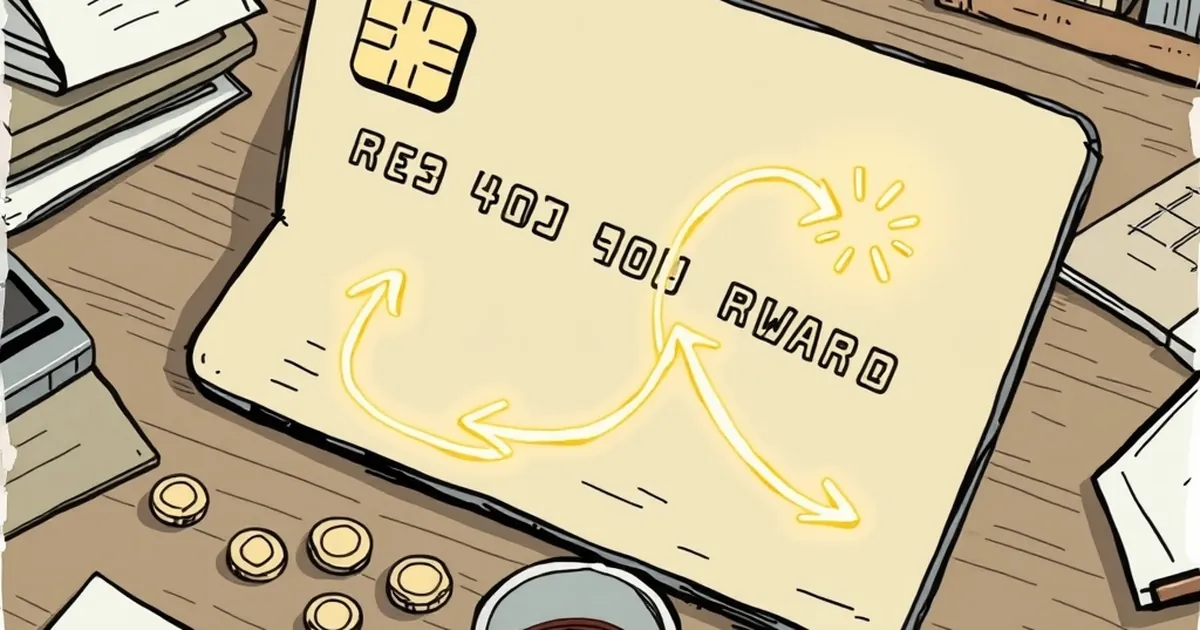
You’re tapping your phone to pay for a coffee. A notification pops up: “You earned 50 bonus points for using your card 10 times this month.” You feel a small jolt of satisfaction. A few days later, a different notification warns: “Your 0% intro APR expires in 30 days.” You feel a low-grade urgency to pay down that balance.
These two moments—the reward and the warning—are not random. They are carefully designed interactions, and they borrow directly from the same behavioral playbook that makes certain games so compelling. Payment networks like Visa and Mastercard don’t just process transactions. They orchestrate a series of micro-decisions, using mechanics that feel almost playful to steer your financial behavior.
The question is: why does a payment network need game design tricks at all? The answer lies in how our brains handle uncertainty, competition, and time.
The Variable-Ratio Reinforcement of a Credit Card
One of the most powerful forces in behavioral psychology is variable-ratio reinforcement. It’s the principle that made B.F. Skinner’s pigeons peck at levers for hours, and it’s the reason why checking your phone for a new like feels so addictive. The reward doesn’t come every time. It comes unpredictably. That unpredictability supercharges the dopamine system.
Credit card rewards programs are a textbook application of this principle—without the slot machine imagery. When you swipe a card, you rarely know exactly how many points you’ll earn on that specific purchase. Some categories offer 1x, others 5x. Bonus categories rotate. Promotional offers appear randomly in your app. You might earn “bonus points” for a single large purchase, or a “mystery offer” that doubles your cashback on dining for a week.
This isn’t accidental. Visa and Mastercard work with issuers to structure reward engines that deliver variable outcomes. The uncertainty keeps you engaged. You’re more likely to use that card over a debit card or cash because the reward schedule feels like a mini-game. You’re not gambling. You’re playing a low-stakes game where the prize is a few cents per dollar spent. But the mechanism is the same one that makes loot boxes in video games so sticky: you don’t know exactly what you’ll get, so you keep pulling the lever.
The "Near Miss" in a Spending Report
There’s a subtler cousin of variable reinforcement: the near miss. In game design, a near miss is when you almost achieve a goal—almost hit the target, almost unlock the level. It actually increases motivation more than a clear win or a clear loss.
Payment networks embed near misses into your monthly statements and app dashboards. You see “You were 3 transactions away from unlocking Platinum status this quarter.” Or “You spent $2,450 out of $3,000 needed for the sign-up bonus.” That gap feels like a miss, but it’s a motivating miss. It triggers loss aversion (more on that in a moment) and compels you to close the gap. The network didn’t need to raise your credit limit or offer a bonus. It just needed to show you the gap.
Loss Aversion and the Urgency of Expiring Benefits
Daniel Kahneman and Amos Tversky’s prospect theory taught us that losses hurt roughly twice as much as equivalent gains feel good. Payment networks have internalized this deeply. They don’t just dangle carrots. They create scenarios where you feel you might lose something.
Consider the ubiquitous “0% intro APR” offer. It’s framed as a benefit, but the clock is ticking. The network sends you reminders: “Your promotional rate ends in 14 days.” That’s not neutral information. It’s a loss-aversion trigger. You’re motivated to pay down your balance not because you want to save money on interest (a gain), but because you want to avoid the pain of seeing that interest rate jump back up (a loss).
Mastercard’s “Priceless” campaigns often use a similar trick, but with time. Limited-time experiences—a private dinner, a concert meet-and-greet—are dangled with expiration dates. The scarcity of the experience (only 100 spots, ends in 48 hours) creates a sense of potential loss. You don’t want to miss out. That’s why you click. That’s why you register your card.
The "Sunk Cost" of a Points Balance
Another cognitive bias that payment networks exploit is the sunk cost fallacy. Once you’ve accumulated a large points balance, you become emotionally invested. You’ve spent time and money earning those points. Abandoning them feels like a loss.
Visa and Mastercard encourage issuers to show your points balance prominently—often in the same font size as your available credit. That visual weight makes the points feel like real money. You’re less likely to switch to a competitor’s card because you’d be leaving behind a “pile” of points. The network doesn’t need to lock you in with contracts. It just needs to make your points balance feel like a treasure chest you can’t walk away from.
Competitive Play and Social Comparison
Humans are social creatures, and we are wired to compare ourselves to others. Payment networks have started borrowing from leaderboard mechanics to nudge spending behavior.
Some premium credit cards now include features like “Spending Insights” that show you how your spending compares to other cardholders in your demographic. You might see: “You spent 15% more on dining this month than similar cardholders.” That’s a competitive comparison. It can trigger either shame (you’re overspending) or aspiration (you want to spend like the top tier). Either way, it influences your next purchase decision.
Mastercard’s “Priceless” platform, for example, sometimes uses tiered access to events. The more you spend, the higher your “status” within the program. That status is displayed in the app. It’s a leaderboard without the numbers. You know you’re in the Gold tier. You know there’s a Platinum tier above you. The gap between tiers is the game. The network doesn’t need to offer a tangible prize for reaching Platinum. The status itself is the reward.
A Concrete Example: The Starbucks App and Prepaid Cards
It’s not a credit card, but the Starbucks app is a masterclass in game design applied to payments—and it’s powered by Visa’s network on the backend. The app uses a progress bar (a classic game mechanic) that shows you how many stars you need for a free drink. That bar creates a feeling of momentum. You’re not just buying coffee. You’re filling a meter.
A 2019 study published in the Journal of Marketing Research found that customers who were shown a progress bar toward a reward increased their purchase frequency by 20% compared to a control group. The bar didn’t change the reward. It just made the progress visible. That’s pure game design: turning a transaction into a level-up.
Practical, Forward-Looking Close
So what does this mean for you as a consumer or a business owner? It means you are playing a game every time you tap, dip, or swipe. The rules are written by behavioral psychologists and product designers who work for payment networks. They are not evil. They are just very good at understanding what makes you tick.
The forward-looking opportunity is to become a more conscious player. Recognize the variable-ratio reinforcement for what it is: a system designed to keep you engaged, not necessarily to make you richer. When you see a “near miss” in your spending dashboard, ask yourself: “Am I closing this gap because it benefits me, or because the gap itself is designed to feel urgent?”
For businesses, the lesson is clearer than ever. Payment networks are no longer just utilities. They are behavioral platforms. The next generation of payment products will not compete on speed or security alone. They will compete on how well they design the game. Expect to see more progress bars, more limited-time offers, more social comparisons embedded directly into the checkout flow. The winning payment experience will be the one that makes you feel like you’re winning—even when you’re just buying groceries.
The game is already running. The only question is whether you’re playing it, or it’s playing you.