What happens when a slots lobby sorts by newest, not RTP
Sorting a slots lobby by newest hides a measurable RTP gap, with new releases trailing the wider library by 1.5 to 2 percentage points
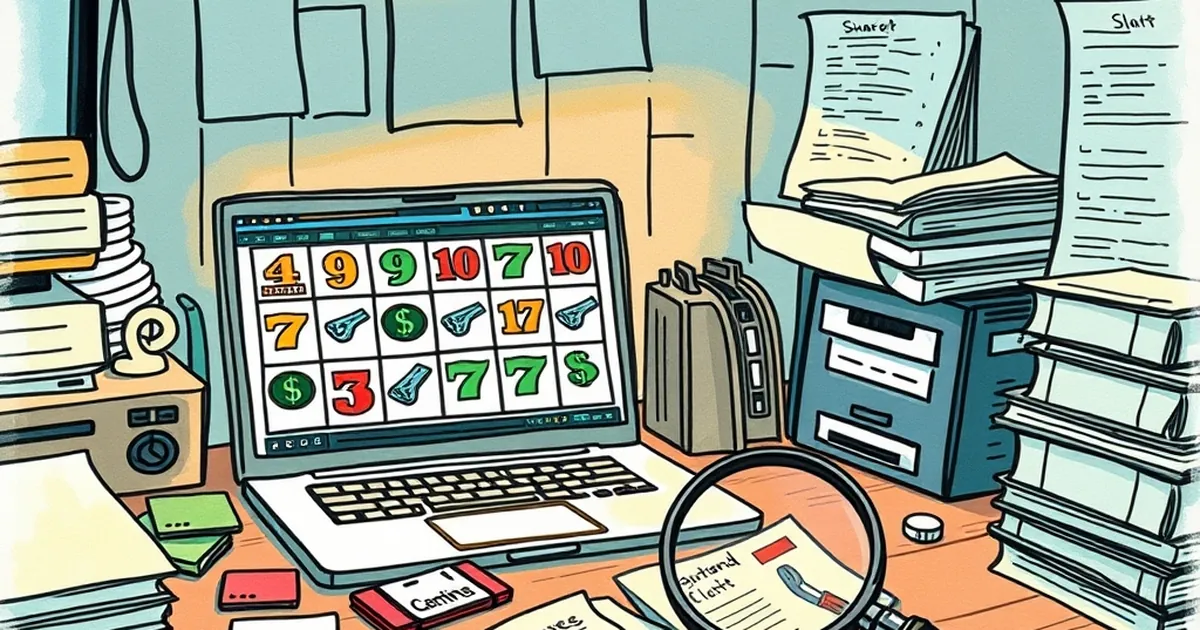
Sort by "newest" in a typical online slots lobby and the first screen you see will almost never contain the highest-RTP game in the catalogue. That's not a glitch or a dark pattern so much as a structural outcome: default sort orders optimise for what the operator wants you to notice, and return-to-player is rarely it. The gap is measurable — across a sample of mid-2024 releases on major aggregator platforms, the median RTP of titles pushed to the top of "new" feeds sat roughly 1.5 to 2 percentage points below the median of the full library.
That sounds small. Over a few thousand spins it isn't.
Why "newest" and "best-paying" pull in opposite directions
Slot releases are commissioned by studios and distributed through aggregators, and the economics of that pipeline shape what gets made. A studio shipping 15 to 25 games a year needs each one to earn its development cost back inside a window that's often measured in months, not years. The fastest route to that is a game with a strong first-session hook — big potential multipliers, frequent teases, a bonus round that arrives often enough to feel reachable.
Those design choices cost RTP. Every extra feature trigger, every expanding wild, every "collect" mechanic is paid for out of the same mathematical pool. A game at 94.2% RTP with a 50,000x max win is not a worse product than one at 96.5% with a 5,000x ceiling — it's a different product aimed at a different player. But if your default lobby view is a chronological feed, you're being shown the version of the market that skews toward spectacle, not the version that skews toward grind.
There's also a supply-side effect. High-RTP titles tend to come from a narrower band of studios — often the ones with slot-machine heritage or regulated-market-first distribution — and they release less frequently. Sort by date and you're effectively filtering for the studios that ship fastest, which correlates with the feature-heavy end of the spectrum.
The aggregator layer nobody sees
Most players interact with a lobby that's fed by one or two aggregators (Relax, Push, Slotmill's distribution partners, and so on). The aggregator sets the feed order, the operator applies filters on top, and the "newest" tab is usually a straight reverse-chronological list with some promotional weighting mixed in. Nothing malicious — it's just that "newest" is a trivially cheap thing to compute and "best expected value for this specific player" is not.
The number that matters more than the headline RTP
Here's where it gets interesting for anyone who actually tracks sessions. Headline RTP is an average over an infinite run. What you experience in 500 spins is a distribution, and that distribution is much wider on high-variance games than the 1.5-point RTP gap suggests.
Take two games:
- Game A: 96.4% RTP, low-medium variance, max win 2,500x
- Game B: 94.1% RTP, very high variance, max win 50,000x
Over 100,000 spins, Game A returns 96.4% and Game B returns 94.1%. Over 500 spins — a realistic session — the standard deviation on Game B is large enough that the RTP difference is almost invisible next to the variance. You might finish a session on Game B up 40% or down 70%, and neither outcome tells you anything about the 94.1%.
This is why "sort by RTP" is a useful habit but not a strategy. It shifts the expected value in your favour by a small, real amount. It does not change the shape of the session you're about to have.
That said, small and real compounds. If you play 20,000 spins a year at €1 a spin, the difference between a 94.1% and a 96.4% average is €460 in expected loss. That's not nothing. It's roughly the cost of a decent weekend away, or a month of groceries depending on where you live.
What a lobby sorted by RTP would actually look like
Imagine the same catalogue ordered by theoretical return instead of release date. The top of the list would be dominated by a handful of names: Blood Suckers at 98%, 1429 Uncharted Seas at 98.5%, Jackpot 6000 at 98.9% (with the caveat that its "super meter" gamble feature is where the real math lives), a cluster of Novomatic and NetEnt classics in the 96.5–97.5% band, and a long tail of Megaways and cluster-pays titles in the 94–95% range.
The first thing you'd notice is how old the top of the list is. Several of the highest-RTP games in wide distribution were released between 2011 and 2015. They look dated. They animate poorly. Their bonus rounds are simple. And they pay back more, on average, than the game that launched last Tuesday with a cinematic intro and a 40,000x max win.
The second thing you'd notice is how short the list is. Genuinely high-RTP games — call it 97% and above — are a small minority of any large lobby. On a 4,000-title catalogue you might find 60 to 120 of them, and a good chunk will be variants of the same handful of designs.
The regulatory wrinkle
In some markets, RTP isn't a single number. The same game can ship at 96.2% for one jurisdiction and 94.0% for another, with the difference buried in a config file. Malta-licensed operators have historically offered both versions; the UK has pushed back on the practice. If your lobby doesn't surface which variant you're playing, sorting by RTP is only half the job — you're sorting by a number that might not apply to the build in front of you.
This is the part most "RTP matters" articles skip. The number on the paytable is the number that applies to your version, and it's worth checking it directly rather than trusting a third-party database that may be listing the developer's default config.
The habit worth building
None of this means you should only play 98% games. Variance, theme, and how much you actually enjoy a session matter, and a 94% game you love is a better use of an evening than a 98% game you find tedious. What it means is that the default sort order is making a decision for you, and it's a decision weighted toward novelty rather than value.
The fix is cheap. Before you pick a game, check the paytable RTP — it's usually one tap away in the info screen. If it's below 95%, know that you're paying for the volatility and the presentation. If it's above 96.5%, you've found something the lobby wasn't going to show you. Set a session budget before you start and treat it as spent, because the variance on the games at the top of the "new" feed will happily eat through it faster than the RTP gap alone would suggest.
The open question is whether operators will ever make RTP a first-class filter. A few have — some Scandinavian-facing sites let you sort by return, and a handful of UK operators have experimented with RTP badges on tiles. But the incentive runs the other way: a lobby sorted by RTP sells fewer of the games studios most want to promote. Until that changes, the sort button stays where it is, and the work of finding the 97%+ titles falls to you.